Editorial Expression of Concern: Maternal gut bacteria promote neurodevelopmental abnormalities in mouse offspring
Nature - Editorial Expression of Concern: Maternal gut bacteria promote neurodevelopmental abnormalities in mouse offspring
Stay updated with the latest developments in Artificial Intelligence
Nature - Editorial Expression of Concern: Maternal gut bacteria promote neurodevelopmental abnormalities in mouse offspring
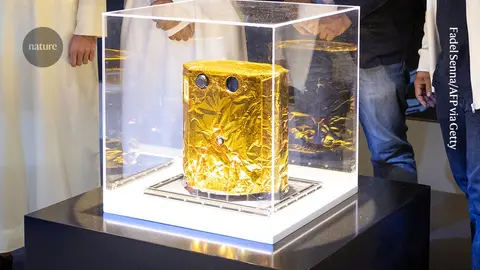
The device will be launched on a joint UAE-US-built craft. Some researchers say it could be the last mission constructed with outside help.
Scientists worry that increasingly capable large language models will beat them to discoveries.
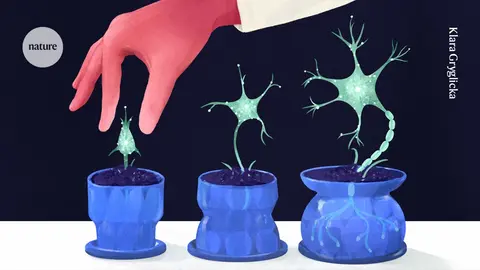
Scientists have debated for decades whether the human brain sprouts new neurons throughout life. What would it mean if it could — and how much evidence is enough?
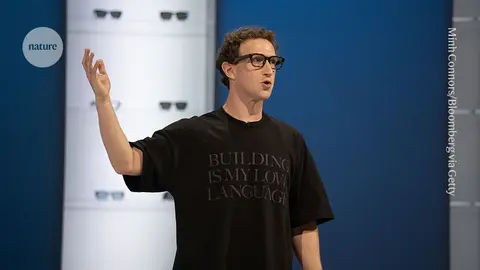
As AI wearables become discreet, cheap and mainstream, they risk normalizing non-consensual recording in everyday spaces.
Fabio Y. S. Motoki University of Texas Rio Grande Valley, Edinburg, Texas, USA. View author publications Search author on: PubMed Google Scholar
Jingyi Chen University of Macau, Macau. View author publications Search author on: PubMed Google Scholar
Francis Halzen wins the 2026 award for his work on a neutrino observatory at the South Pole that has helped to unlock mysteries of the Universe.
Cases in the Northern Hemisphere are cropping up weeks early, and they are dominated by a virus with a concerning mutation.
Scientists are using cell-free transcription and translation systems to synthesize proteins, design biology-based sensors and develop synthetic cells.
Emmanuel Chidiebere Edeh Shanghai University, Shanghai, China. View author publications Search author on: PubMed Google Scholar
International students explain the advantages and challenges that come with pursuing a doctoral degree in China.
When supply chains fail, it’s often because of energy, computer or data-network failures. Addressing these requires a way to make interdependencies visible.
Two reports highlight the changes needed in academia to facilitate the fast, collaborative, responsive and inclusive research that aids global decision makers.
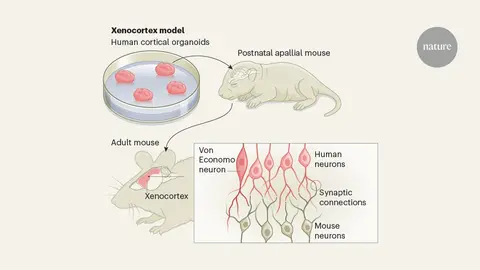
Cell-based models of the human cortex transplanted into mice produce neurons that are inaccessible in vitro, and could enable scientists to link brain injury to behaviour.
Zeke Hausfather’s call for governments to prepare for the developing super El Niño should extend to ecosystems that have been weakened by repeated climate extremes (see Nature 657, 858; 2026). The Great Barrier Reef, for example, is entering this event during a fragile recovery window.
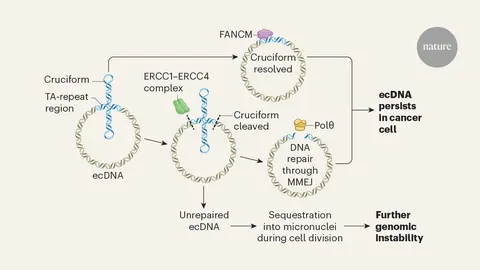
Repetitive sequences make extrachromosomal DNA vulnerable to breaks, which could be exploited for therapy — but might also promote tumour evolution.
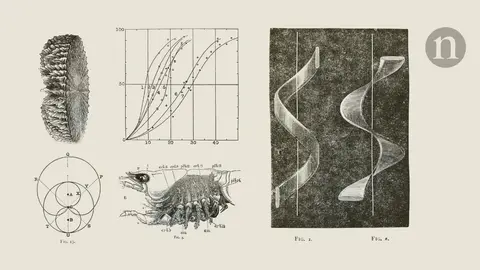
A satisfying congruence between genetics and cell-biology findings, and experiments at altitude with a rotating device that measures radiant energy, in this week’s peek at Nature’s archive. Snippets from Nature’s past.
Showing 72 of 113 stories
Load more storiesGet the top AI news and tools straight to your inbox every week.
Weekly · AI news from Nature AI
Join 15,000+ AI enthusiasts