The Bitter Lesson Explained: Richard Sutton's 26 Words (2026)
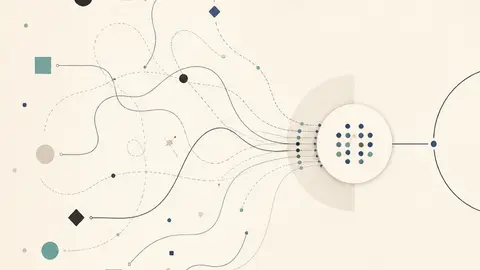
Richard Sutton compressed The Bitter Lesson into 26 words. What it means, why he now says LLMs break it, and what it changes for anyone building with AI.
Taskade Blog32 min read
229 stories
Richard Sutton compressed The Bitter Lesson into 26 words. What it means, why he now says LLMs break it, and what it changes for anyone building with AI.
A Markov chain predicts the future using only the present. How one 1913 argument about free will produced PageRank, Monte Carlo, and modern language models.
Dreaming makes an agent's memory better. Only measurement makes the agent better. Anthropic's Dreams, ChatGPT, Codex, Gemini CLI and OpenClaw all rewrite agent memory offline — and every gate they document checks whether the rewritten memory is tidy, not whether the agent improved.
Give an AI agent persistent memory as a filesystem in SurrealDB: computed file paths, fused full-text and vector search, and RBAC in a single PERMISSIONS clause
Coworker AI explains context engineering: the discipline of deciding what goes into a model's window, why less beats more, and how to measure it.
Coworker AI explains MCP vs API: MCP is a standard layer built on top of APIs, what it removes, what it costs, and when a direct call is still better.
Coworker AI explains RAG vs MCP: retrieval fetches knowledge, MCP is a connection standard. They solve different problems and most systems need both.
Coworker AI explains context rot: why model accuracy falls as the context window fills, how to measure it, and why retrieval and a knowledge graph beat volume.
Cobrainer runs graph-based agent memory and a Rust-native agentic graph RAG on SurrealDB, replacing a separate vector store and search engine.
Ryan is joined by Praveen Bodigutla, Principal AI Researcher at LinkedIn, to chat about the four-layer memory system his team built to give LinkedIn's hiring assistant a persistent, personalized state.
⭐️ Highlights 🪝CompactionHook and Built-in Compactors for Context Length Management Experimental context compaction for Agent. Runs before LLM calls and shortens the conversation once it crosses a configured fraction of the context window.
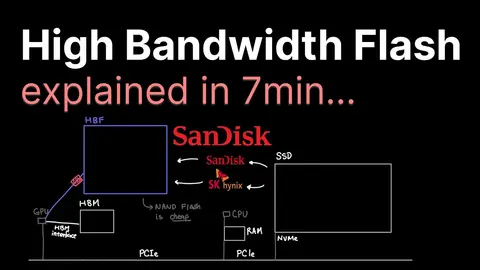
High Bandwidth Flash (HBF) is a misunderstood AI hardware announcements right now. 3 TB/s NAND does not mean SSD that behaves like HBM, really the real trick is massive parallelism. Reads can approach HBM-like aggregate bandwidth. Writes are still NAND writes.
Guideless has raised €1M in pre-seed funding led by Superhero Capital to accelerate product development, team growth, and expansion across the UK, Europe, and the US.
Creao used Reflexio to turn successful agent behavior into reusable guidance—cutting median model calls by 75%, reducing task failures by 36%, and showing positive impact from retrieved learnings in 47% of evaluated cases.
AI memory and agent self-improvement sit in the same slot, use the same storage, and are sold against the same failure — which is why they get confused. The difference is what has to happen before the system writes anything down. One writes when something is said.
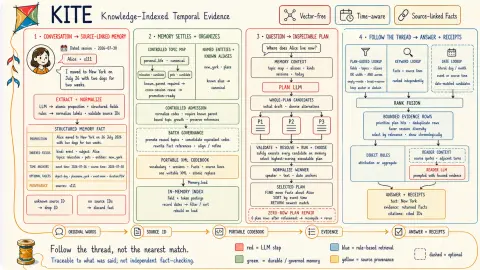
KITE is a vector-free memory engine that retrieves the memory that's true now, with inspectable, source-linked evidence.More
Graph engineering stops at the diagram. The harder half is the context graph underneath: whether relations, vectors and memory share one consistency boundary.
How to use asOf in Agent Memory to allow gating of spoilers to ensure that spoiler-filled memory, even if already ingested, does not show up if it should not.
Showing 162 of 229 stories
Load more storiesGet the top AI news and tools straight to your inbox every week.
Weekly · AI news
Join 15,000+ AI enthusiasts