Open-Source Voice AI Frameworks Compared: Pipecat, LiveKit, TEN
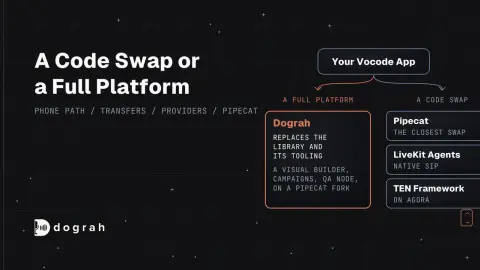
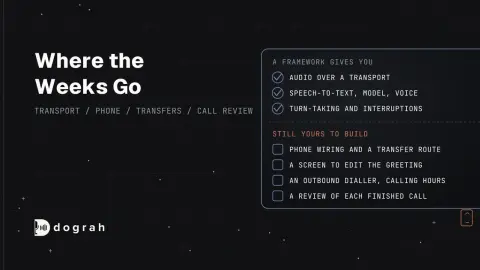
Open-source voice AI frameworks compared: Pipecat, LiveKit Agents, TEN Framework, Vocode and Dograh on transport, phone calls and transfers, licence and the work you still do yourself.
302 stories
Open-source voice AI frameworks compared: Pipecat, LiveKit Agents, TEN Framework, Vocode and Dograh on transport, phone calls and transfers, licence and the work you still do yourself.
A LiveKit Agents tutorial with working code: install the CLI, create an agent from the Python starter, talk to it, deploy it to LiveKit Cloud, connect a phone number with an inbound trunk and dispatch rule, then add the ops pieces yourself.
A Pipecat tutorial with working code: scaffold the quickstart, read the pipeline, add Twilio's WebSocket transport at 8 kHz, answer and place real phone calls, then see what a production phone agent still needs.
Vocode alternatives compared: what a Vocode codebase needs from a replacement, Pipecat, LiveKit Agents, TEN Framework and Bolna compared, and Dograh as the full platform with a visual workflow builder.
Claude Code for voice agents, compared three ways: the same phone agent brief on LiveKit Agents, on Pipecat and through Dograh's MCP server, with what Claude Code writes and what each route leaves you to finish.
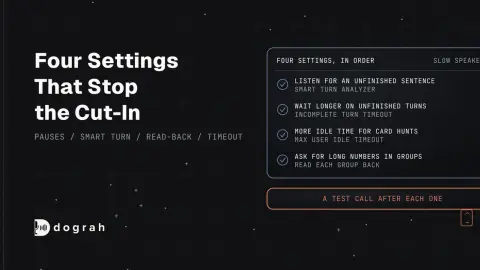
Why voice agents cut in on slow speakers and callers reading out numbers, a timed example on both turn modes, four settings that stop the cut-in, and test lines to prove the fix on a real phone call.
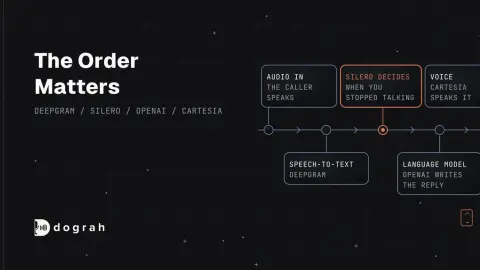
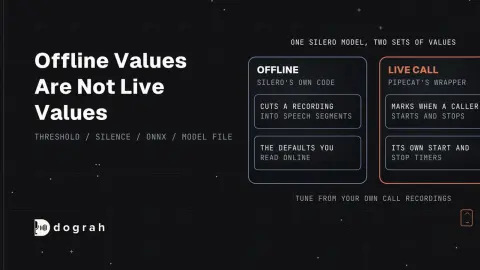
Silero VAD for voice agents: what changed from v6.0 to v6.2.3, what each setting means on a live call, why the model state is reset, which model file Dograh runs and where Silero is skipped.
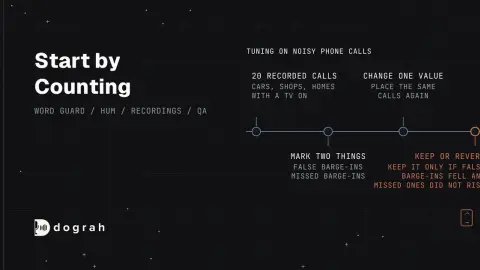
VAD settings for noisy phone calls: match each kind of noise to the setting that handles it, put the word guard first, see what each detector value trades and measure false barge-ins on 20 recorded calls.
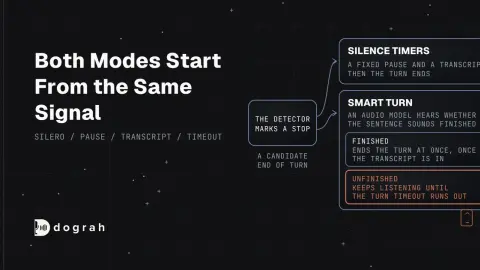
Smart Turn vs silence timers in Dograh: the timer chain in each turn mode, a side-by-side table, where each fails on phone calls, the speech-to-text path that overrides both and a test script to compare them.
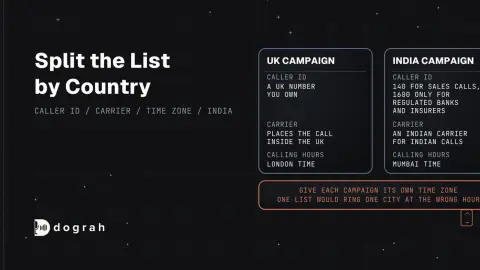
International SIP trunks for AI calling: local numbers and their paperwork, caller ID rules in the UK and India, the carrier settings that block calls and the Dograh settings for regions and time zones.
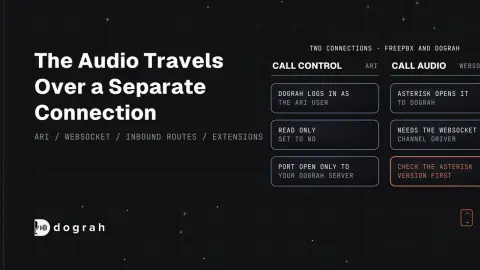
Connect FreePBX to an AI voice agent over Asterisk ARI: the version check, the ARI user, the WebSocket client, a Custom Destination into Stasis, outbound routes and transfers to extensions.
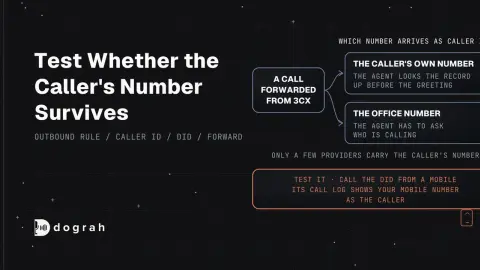
Add an AI voice agent to 3CX without replacing it: check the 3CX trunk and DIDs, connect a carrier number to the agent, forward chosen calls with an outbound rule and transfer callers back to staff.
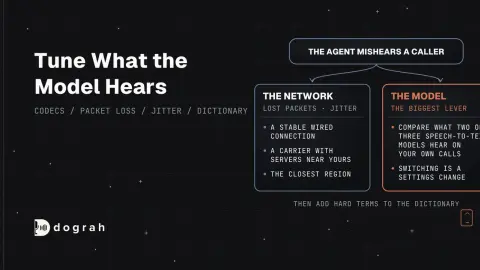
Why voice agents mishear callers on the phone: the 8 kHz band limit, codecs and transcoding chains, packet loss, the routes that carry 16 kHz audio and the settings that help speech-to-text.
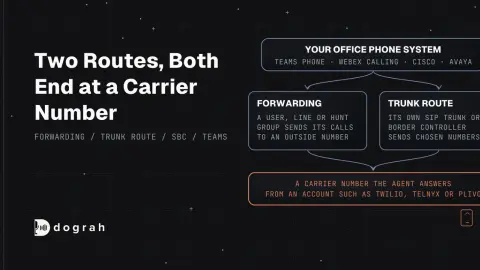
How Teams Phone, Webex Calling and on-premises Cisco and Avaya systems reach an AI voice agent: forwarding or a SIP trunk route to a carrier number, the Teams PSTN options and getting callers back to staff.
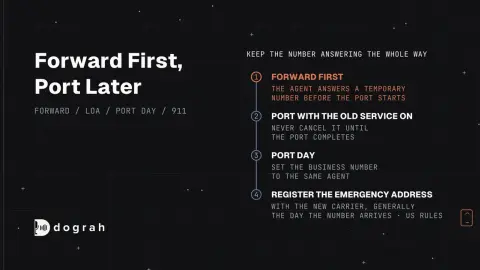
Move a business number to an AI voice agent with no dead line: forward to a temporary number first, port with the old service on, switch on port day and register the emergency address.
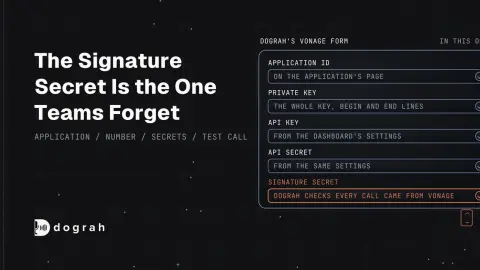
Connect a Vonage number to an AI voice agent: create a Voice application, link the number, copy the keys and signature secret into Dograh, assign the agent and test a 16 kHz call.
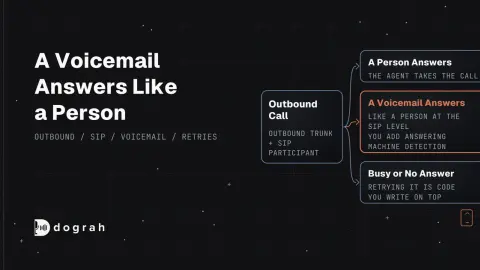
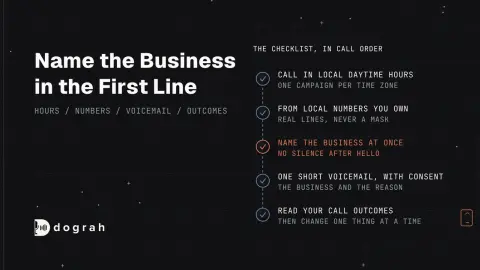
A checklist for low answer rates on AI outbound calls: read your call outcomes, call inside local hours, how caller ID rotation meets state three-call limits, local numbers used openly, the first seconds after hello and voicemail.
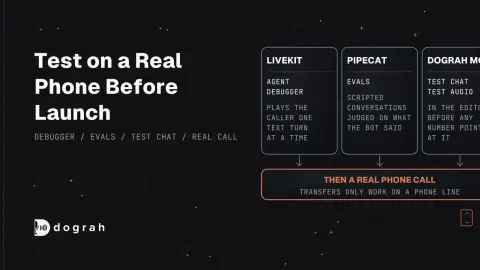
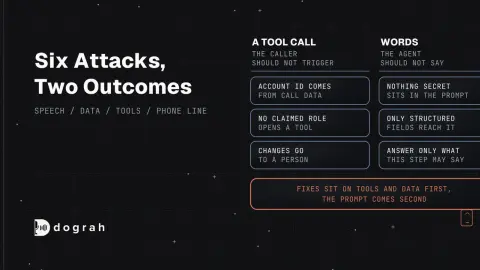
Six example prompt injection lines callers use on voice agents, where each one enters a call, the tool and data limits that stop it, and how to red-team an agent over a real phone line.
Showing 54 of 302 stories
Load more storiesGet the top AI news and tools straight to your inbox every week.
Weekly · AI news
Join 15,000+ AI enthusiasts