Kubernetes 1.34 End of Life: What Actually Happens on EKS, GKE, and AKS
Kubernetes 1.34 reaches end of life on October 27, 2026. What that date and the EKS, GKE, and AKS deadlines around it actually do to your clusters, and what to check.
53 stories
Kubernetes 1.34 reaches end of life on October 27, 2026. What that date and the EKS, GKE, and AKS deadlines around it actually do to your clusters, and what to check.
Explains why short-lived SPIFFE/SPIRE SVIDs still depend on node integrity, what a laboratory cgroup-spoofing test showed, and which Kubernetes controls can limit the impact.
AI is changing expectations around infrastructure and operations, including Kubernetes management. When models run close to the data they use, The post The rise of agentic AI on Kubernetes: unleashing the new infrastructure layer appeared first on The New Stack.
Google has published benchmarks for GKE Pod snapshots, reporting up to 89% lower startup latency and a 70B model loading in 37 seconds. The feature checkpoints CPU and GPU memory through gVisor into Cloud Storage.
Welcome to another edition of Road to KubeCon, where we’re tracking the major movements in the Kubernetes and cloud native The post OpenTelemetry and Prometheus are getting along. What’s still missing? appeared first on The New Stack.
A GPU cluster can pass every health check and still fail to run an AI workload. Even when every GPU, network link, and pod reports healthy, a 512-GPU training...
Kubernetes manages what runs on your nodes. Managing the nodes themselves is the challenge: kernel settings, system packages, storage layouts, security agents,...
AI factories are power-limited systems that deliver maximum value when fully optimized. GPU workload placement is a key optimization. Poor workload placement...
CVE-2026-75885 fixes are available across seven OpenShift 4 trains. Upgrade to the fixed release for the train you operate.
Nadav Erell took Radar through a live broken cluster on Cloud Native FM. The short version: why a cluster is a graph, and what MCP actually changes.
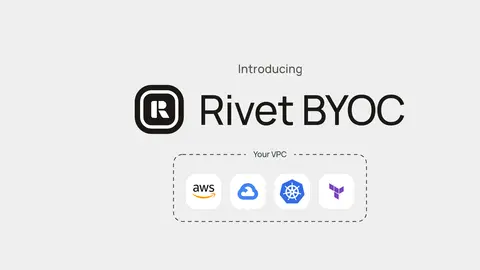
Run the Rivet control plane inside your own AWS or Google Cloud VPC, fully managed by Rivet. Your data stays in your account and Rivet Cloud never needs inbound access.
A field guide to Karpenter failures: pending pods, LaunchFailed, VCPULimitExceeded, NodeRegistrationHealthy, and DisruptionBlocked - what each one means and where the evidence lives.
Kubernetes 1.37 removes 25 feature gates, an alpha scheduling API, and 18 kubelet flags, and starts the nftables transition. What breaks, and how to check your cluster.
Compare Lens, Aptakube, Headlamp, K9s, Portainer, and Nuphos to find the right Kubernetes GUI for your workflow and team.
Pods Ready, Service green, curl times out. Radar's Reachability tab traces the declared network path and live-probes it, naming the first hop that breaks.
Kubernetes events expire after one hour by default, and many of the changes that cause incidents never become events at all. How to keep history that survives.
Three failure modes share the OOMKilled status. A field guide to telling a leak from a limit from a changed baseline, drawn from three of our own incidents.
Two sentences get said in every meeting where a team wires an AI agent into a cluster: it's read-only, and just use the service account. Both are wrong later.
Showing 36 of 53 stories
Load more storiesGet the top AI news and tools straight to your inbox every week.
Weekly · AI news
Join 15,000+ AI enthusiasts