Phish or Legit: Do LLMs Know When NOT to Cry Wolf?
Kaggle Benchmarking Challenge Submission by Anio Joseph What I Benchmarked Most security benchmarks ask: "Can the model detect the threat?" That's the easy part.
Dev.to AI4 min read
53 stories
Kaggle Benchmarking Challenge Submission by Anio Joseph What I Benchmarked Most security benchmarks ask: "Can the model detect the threat?" That's the easy part.
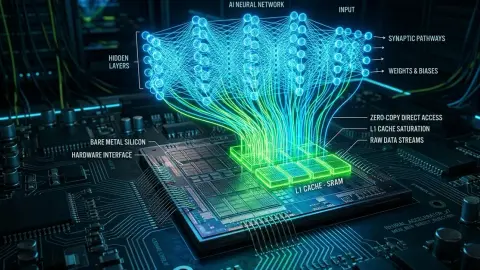
This is a submission for the Kaggle Benchmarking Challenge. What I Benchmarked I set out to measure Hardware-Aware Code Generation. Most AI benchmarking focuses on generic leetcode problems or standard web frameworks. I wanted to test something brutal: bare-metal hardware constraints.
This is a submission for the DEV x Kaggle Benchmarking Challenge. What I Benchmarked An agent I was running called a ranking tool with limit: 8. The tool had no limit parameter and rejected the call: unknown argument "limit".
In 1978, researchers asked 60 people at Harvard Medical School a single question. A disease affects 1 in 1,000 people. The test for it has a 5% false positive rate. A patient tests positive. What's the chance they actually have it? The most common answer was 95%. The right answer is about 2%.
This is a submission for the Kaggle Benchmarking Challenge What I Benchmarked I built a Kaggle benchmark called Liquidity Event Identification to test whether large language models can reason about liquidity events in controlled price-action scenarios.
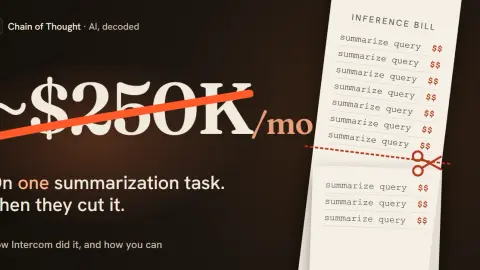
Narrow steps that run on every request, on a model stronger than that step needs, are candidates for a cheaper model. Measured spend then shows where the savings lie. Prove the step on the strongest model, move that one job to a smaller or fine-tuned model, and keep the product metric where it was.
Businesses that sell technical products answer the same kind of question every day. "What's the accuracy on this range?" "Can it measure through a coating, and how thick?" "Does it come with a calibration certificate?" The answers sit in product datasheets and manuals.
Originally published at aideazz.xyz — cross-posted here with canonical link. A 429 HTTP status code, "You have reached your ten_secondly_rolling limit," hit my hs-watch-manual-emails process recently.
Almost every modern language model looks impressive on a two-step demo. You ask it to check a database or summarize a document, it calls the right tool, formats the answer, and looks like an autonomous engineer.
This is a submission for the Kaggle Benchmarking Challenge. What I Benchmarked FrameFlip48 measures whether a model tracks the translation frame in a short robot-motion program. Each of 24 matched pairs has identical numbers and commands.
My research agent had read about 20,400 documents. It had concluded nothing. Not metaphorically. The knowledge store held roughly twenty thousand rows — papers, articles, PDFs, nightly log entries — and there was nowhere in the system that said what any of it meant.
The failure mode I couldn't stop thinking about Every time I use [a model / an agent] for [multi-step reasoning / code generation / tool use], I notice the same thing: [describe the failure in one or two sentences, e.g. "it confidently skips a step and the final answer looks right but isn't"].
Online fashion shopping has become convenient, but one important problem remains: customers cannot see how a product will actually look on them before buying it. A product page can show high-quality photos, measurements, fabric details, reviews, and size information.
This is a submission for the Kaggle Benchmarking Challenge What I Benchmarked I work freelance, writing and grading tasks for AI coding agents. After enough of those reviews you pick up a reflex: when every test is green, you go looking for the if statement that shouldn't be there.
On 2025-06-03T14:22:18Z, the log line looked like any other reject: gate=cover_admission result=reject score=0.75 threshold=0.60 model=cover-v3 I’m Fantasy Elf, and I work on AI safety. This is the story of a threshold that lied to us.
Building an AI agent is getting easier. Running one reliably in production is still the hard part. At Interrupt 2026, LangChain introduced a major set of updates focused on production agent infrastructure.
This is a submission for the Kaggle Benchmarking Challenge. Public leaderboards love telling us how well models solve LeetCode problems or pass high school exams.
Beyond One-Shot Success: How AREX-2 Teaches LLM Agents to Reflect and Persevere Current autonomous LLM agents are often evaluated by their ability to solve a task in a single pass or through a short sequence of scripted interactions.
Showing 36 of 53 stories
Load more storiesGet the top AI news and tools straight to your inbox every week.
Weekly · AI news from Dev.to AI
Join 15,000+ AI enthusiasts