Introducing Quine: An AI research system designed for the complexity of biology
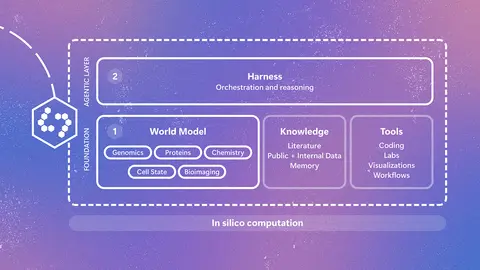
Biology doesn't operate in silos, and neither should the AI representation of it. Quine is an early-stage research effort to create a multimodal world model of biology.
28 stories
Biology doesn't operate in silos, and neither should the AI representation of it. Quine is an early-stage research effort to create a multimodal world model of biology.
Since launching a year ago, the Microsoft Research Asia — Singapore lab has established a strong foundation, deepened collaboration across government, academia, and industry, and explored how frontier AI research can create real-world value.
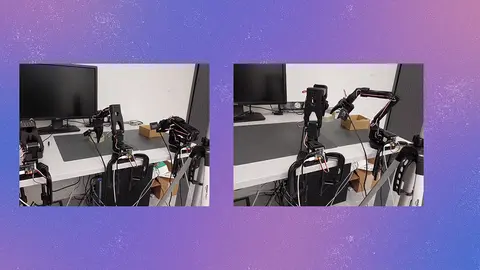
Robots are getting smarter, but how can their hardware match that growth? New Microsoft Research findings show that moving AI inference beyond the robot can improve task success, boost efficiency, and support more advanced physical AI workloads.
Custom-made molecules are advancing medicine, materials, and agriculture, but producing them is slow and expensive. A new Nature paper highlights RetroChimera, a predictive model that helps accelerate chemical synthesis, helping researchers explore a wide range of molecules.
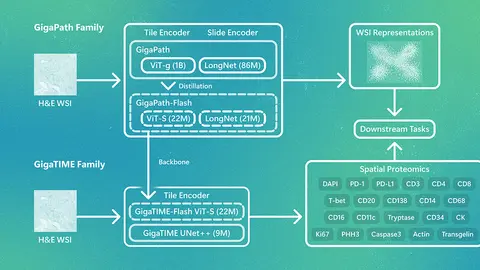
What if pathology foundation models could do more with less? GigaPath-Flash and GigaTIME-Flash cut computational demands while maintaining strong performance, opening the door to larger studies and broader exploration.
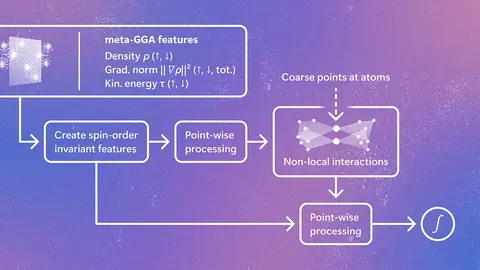
Skala 1.1, the updated deep-learning exchange-correlation functional from Microsoft Research, provides greater accuracy, expanded accessibility across the computational chemistry ecosystem, and a living benchmark to track computational performance.
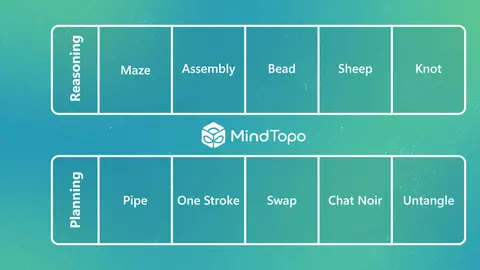
A path, a fence, a knot. MindTopo sets a new benchmark for testing how AI understands topological relationships and highlights new opportunities to strengthen spatial reasoning and planning. The post MindTopo reveals VLMs’ spatial reasoning abilities appeared first on Microsoft Research.
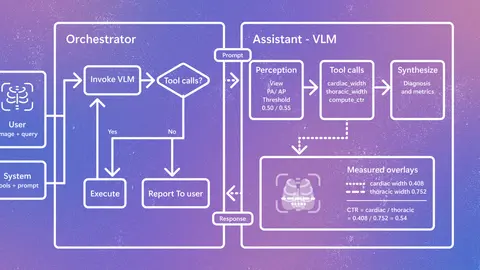
Radiology AI is evolving beyond report generation. CARE-X explores a unified approach that combines flexible reasoning, calibrated predictions, and measurement-based tools for chest X-ray interpretation.
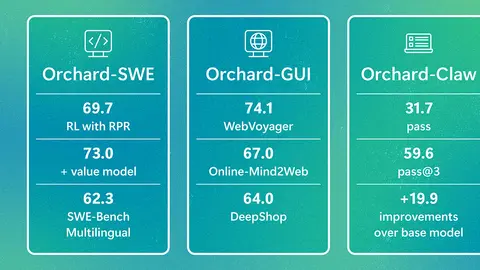
Orchard is an open-source framework for the research community to train and evaluate AI agents across task types. It reduces complexity while supporting strong performance from smaller models by enabling researchers to reuse the same infrastructure.
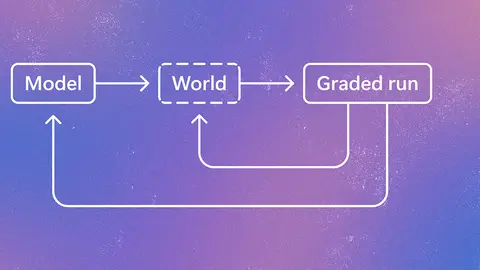
Computer-use AI agents struggle with multi-step workflows like email and customer support. Echoverse trains agents in realistic environments rather than simply providing more training tasks, helping them improve as the tasks, tests, and environments evolve.
Showing 28 of 28 stories
You're all caught up.
Get the top AI news and tools straight to your inbox every week.
Weekly · AI news
Join 15,000+ AI enthusiasts