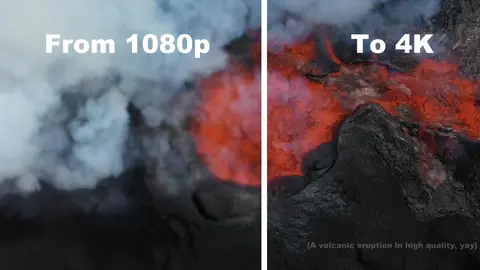
How to upscale video online?
Your favorite video has a low resolution, looks grainy, it’s a real pain to watch it and a shame to post? Or do you want to convert it from 1080p to 4K? Try our AI filters and enjoy the result in no time.
109 stories
Your favorite video has a low resolution, looks grainy, it’s a real pain to watch it and a shame to post? Or do you want to convert it from 1080p to 4K? Try our AI filters and enjoy the result in no time.
How to make it 4K and 60 fps, colorizing, deflickering, denoise, and other tips.
We haven't shared a product news in a while, so let's see what neural.love has in store.
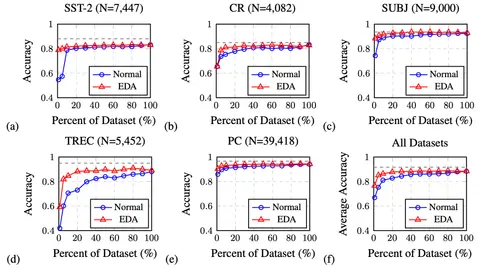
Here comes the Part 3 on learning with not enough data (Previous: Part 1 and Part 2). Let’s consider two approaches for generating synthetic data for training. Augmented data.
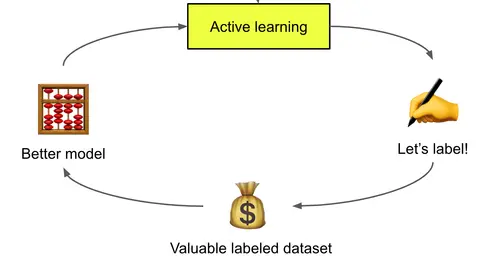
This is part 2 of what to do when facing a limited amount of labeled data for supervised learning tasks. This time we will get some amount of human labeling work involved, but within a budget limit, and therefore we need to be smart when selecting which samples to label.
When facing a limited amount of labeled data for supervised learning tasks, four approaches are commonly discussed.
[Updated on 2022-03-13: add expert choice routing.] [Updated on 2022-06-10]: Greg and I wrote a shorted and upgraded version of this post, published on OpenAI Blog: “Techniques for Training Large Neural Networks”
[Updated on 2021-09-19: Highly recommend this blog post on score-based generative modeling by Yang Song (author of several key papers in the references)]. [Updated on 2022-08-27: Added classifier-free guidance, GLIDE, unCLIP and Imagen. [Updated on 2022-08-31: Added latent diffusion model.
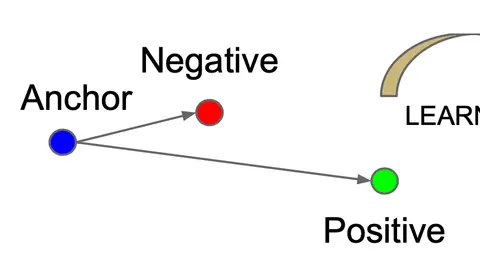
The goal of contrastive representation learning is to learn such an embedding space in which similar sample pairs stay close to each other while dissimilar ones are far apart. Contrastive learning can be applied to both supervised and unsupervised settings.
Large pretrained language models are trained over a sizable collection of online data. They unavoidably acquire certain toxic behavior and biases from the Internet. Pretrained language models are very powerful and have shown great success in many NLP tasks.
[Updated on 2021-02-01: Updated to version 2.0 with several work added and many typos fixed.] [Updated on 2021-05-26: Add P-tuning and Prompt Tuning in the “prompt design” section.] [Updated on 2021-09-19: Add “unlikelihood training”.]
[Updated on 2020-11-12: add an example on closed-book factual QA using OpenAI API (beta). A model that can answer any question with regard to factual knowledge can lead to many useful and practical applications, such as working as a chatbot or an AI assistant🤖.
Although most popular and successful model architectures are designed by human experts, it doesn’t mean we have explored the entire network architecture space and settled down with the best option.
[Updated on 2020-06-17: Add “exploration via disagreement” in the “Forward Dynamics” section. Exploitation versus exploration is a critical topic in Reinforcement Learning. We’d like the RL agent to find the best solution as fast as possible.
[Updated on 2023-01-27: After almost three years, I did a big refactoring update of this post to incorporate a bunch of new Transformer models since 2020. The enhanced version of this post is here: The Transformer Family Version 2.0. Please refer to that post on this topic.]
[Updated on 2020-02-03: mentioning PCG in the “Task-Specific Curriculum” section. [Updated on 2020-02-04: Add a new “curriculum through distillation” section.
[Updated on 2020-01-09: add a new section on Contrastive Predictive Coding]. [Updated on 2020-04-13: add a “Momentum Contrast” section on MoCo, SimCLR and CURL.] [Updated on 2020-07-08: add a “Bisimulation” section on DeepMDP and DBC.] [Updated on 2020-09-12: add MoCo V2 and BYOL in the “Momentum…
Stochastic gradient descent is a universal choice for optimizing deep learning models. However, it is not the only option. With black-box optimization algorithms, you can evaluate a target function $f(x): \mathbb{R}^n \to \mathbb{R}$, even when you don’t know the precise analytic form of $f(x)$ and…
Showing 108 of 109 stories
Load more storiesGet the top AI news and tools straight to your inbox every week.
Weekly · AI news
Join 15,000+ AI enthusiasts