Announcing Agentic Development Security (ADS)
Announcing Snyk Agentic Development Security, a new Evo solution that helps organizations securely adopt AI-driven development with visibility, governance, and control.
501 stories
Announcing Snyk Agentic Development Security, a new Evo solution that helps organizations securely adopt AI-driven development with visibility, governance, and control.
AI agents introduce security risk through the actions they take, not just the code they produce. Learn how agent behavior governance helps teams observe, steer, and block risky actions in real time.
AI coding agents are adding a new layer to the software supply chain. Learn what Snyk found in nearly 10,000 developer environments and how to secure the tools, instructions, and permissions behind agentic development.
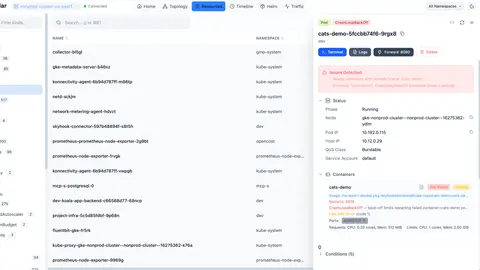
Most multi-cluster dashboards copy your cluster state into a backend cache. Radar Cloud doesn't. Here's why the reverse-proxy model is the right call.
How Radar's in-cluster install works: outbound-only TLS, read-only RBAC by default, ~32MB RSS. The five questions every platform team asks, answered.
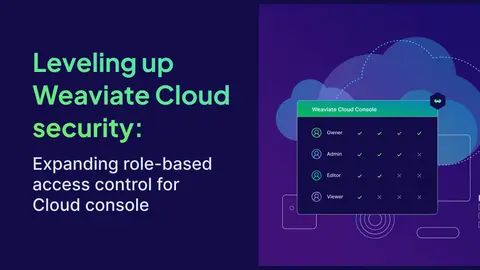
Weaviate Cloud now supports more granular role-based access control with new Editor and Viewer roles for improved security and organizational management.
An anti-detect browser gives every profile its own fingerprint and cookie store. How that works, who relies on it, what it costs, and how to test one.
How Arcjet hosts AI security models using Python, Open Inference Protocol, Go, and Modal: the architecture behind prompt injection detection.
How to configure OpenCode permission rules to keep child agents within their assigned git worktree — external_directory guard, bash restrictions, and per-agent overrides.
How to self-host OpenHands for issue-to-PR workflows when compliance blocks hosted coding agents — sandbox design, LLM routing, access control, and a compliance checklist.
How to wire OpenCode permission events into a mobile approval queue — event-driven design, queue schema, mobile UX patterns, and policy placement for remote agent workflows.
Most agent safety controls are advisory until they sit on the tool-call path. VellaVeto is positioned as a runtime proxy for MCP tools: every call is evaluated against policy before execution, and policy failures deny the call. That fail-closed posture matters for agents that can read files, call Sa
Prompt injection becomes operationally dangerous when an agent can both read secrets and make network or tool calls. Pipelock addresses that boundary problem by sitting between the agent, MCP servers, and the network. This article is for developers running coding agents locally or in CI who want a p
Most clusters fail the same checks. Radar's built-in audit runs 31 of them inline against your live state. Inspired by Polaris and the NSA / CISA hardening guide.
Defense in Depth: How Replit Secures Every Layer of the Vibe Coding Stack Vibe coding is changing how software gets built. But as AI agents write more of our code, the question security teams are asking has shifted from "Can AI build this?" to "Can I trust what AI builds?".
At Netlify, we think the principle here is simple: your work belongs to you, and no one should train on it without your say-so.
Netlify reaffirms its commitment to developers: you own your content. Learn how we protect your data, avoid selling your code, and ensure AI training only happens with your explicit consent.
How we built a two-stage prompt injection classifier that achieves 0.99 F1 with sub-10ms latency.
Showing 486 of 501 stories
Load more storiesGet the top AI news and tools straight to your inbox every week.
Weekly · AI news
Join 15,000+ AI enthusiasts