Model routing for coding agents: the plan and price numbers developers measured in September 2026
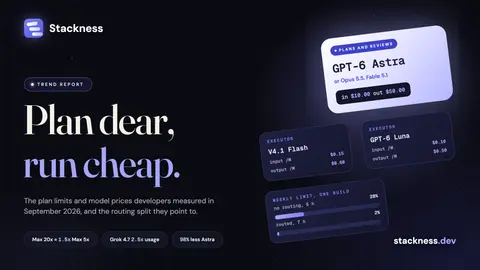
Model routing for coding agents in September 2026: a frontier model plans, a cheap one executes. The plan and price numbers developers measured.
51 stories
Model routing for coding agents in September 2026: a frontier model plans, a cheap one executes. The plan and price numbers developers measured.
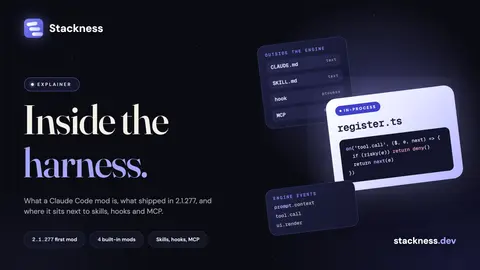
A Claude Code mod is a plugin whose TypeScript hooks module runs inside Claude Code. What shipped in 2.1.277, what is only announced, and when to use one.
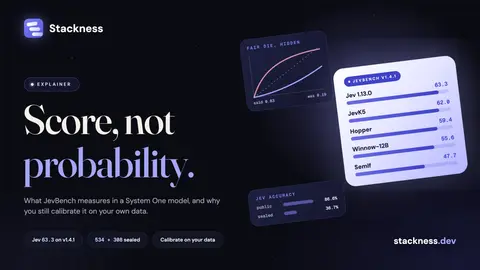
JevBench scores System One models on accuracy, calibration, speed and cost, and puts Jev first at 63.3. Why calibration still needs your own data.
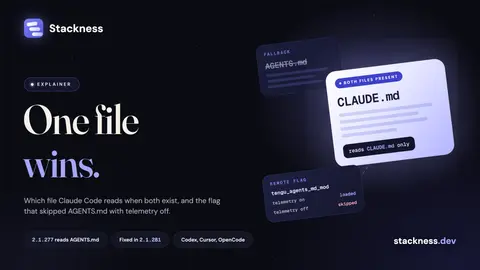
Since 2.1.277, Claude Code reads AGENTS.md only when no CLAUDE.md or CLAUDE.local.md is on the path. Before 2.1.281, telemetry off skipped it silently.
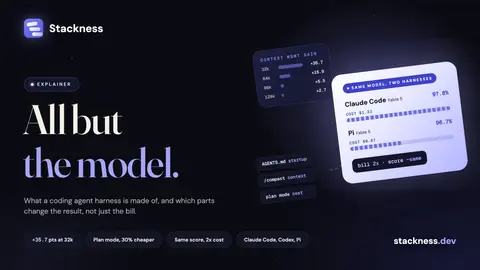
A harness is everything in a coding agent except the model. On strong models, two September 2026 studies found it moves the bill more than the pass rate.
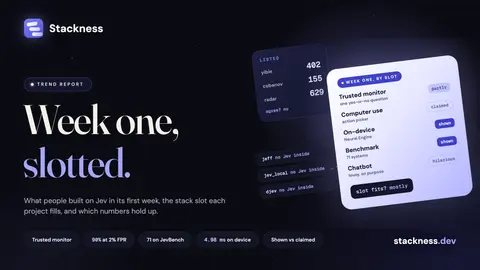
Jev's first week brought a trusted monitor, computer-use agents, self-hosted clones, a benchmark and a joke chatbot: the slot each fills and which numbers hold.
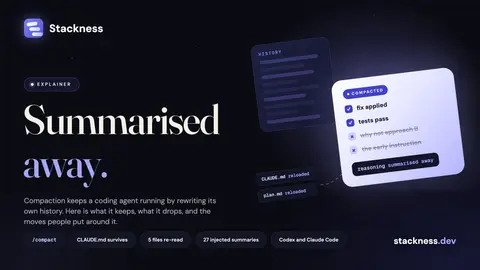
Compaction is the step where a coding agent summarises its own history to keep working: what it keeps, what it drops, and what OpenAI found in its summaries.
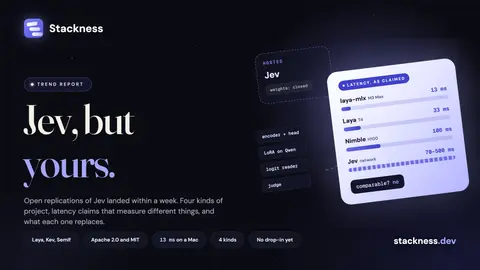
The open-source alternatives to Jev are Laya, Kev, SemIf, Open-Jev and Nimble. They are four kinds of project, and here is what each one replaces.
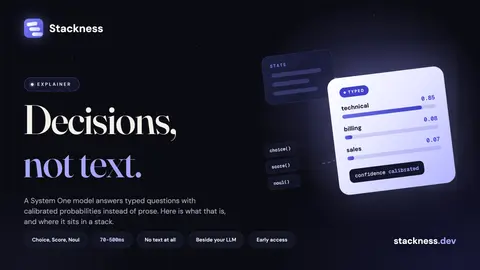
A System One model answers typed questions with typed answers and a probability, not text. It sits beside your LLM and takes the small, frequent decisions.
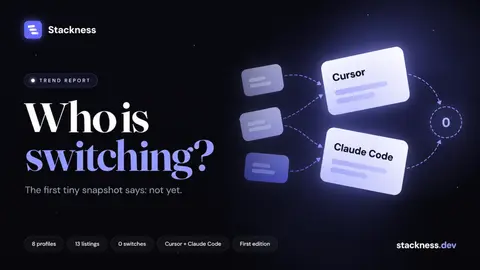
Cursor and Claude Code tie at five of eight real Stackness profiles in September 2026. Co-use beats switching, and no one has recorded a switch yet.
Stackness is on Product Hunt today. What it is, the three kinds of feedback that would help most, and where to leave them, in public or in private.
What shipped before the 12 September Product Hunt launch: public trending pages, ten category hubs, move cards for your README and tile quick look.
A move is how you use your tools: a technique, habit or workflow in your own words. What counts as a move, what does not, and how to write one.
Your stack page is now a bento grid you arrange yourself: subspaces, five tile sizes and drag-to-group clusters. Plus bookmarks, one History tab and MCP parity.
A new picker fills your stack from what people run together. Tap the tools you use, watch related ones show up next to them, publish the lot as one update.
Showing 51 of 51 stories
You're all caught up.
Get the top AI news and tools straight to your inbox every week.
Weekly · AI news
Join 15,000+ AI enthusiasts