
Background Agents: Running AI Agents 24/7 Without You at the Keyboard
Learn how background agents run on schedules and triggers, keep working when your laptop sleeps, and handle recurring business operations safely.
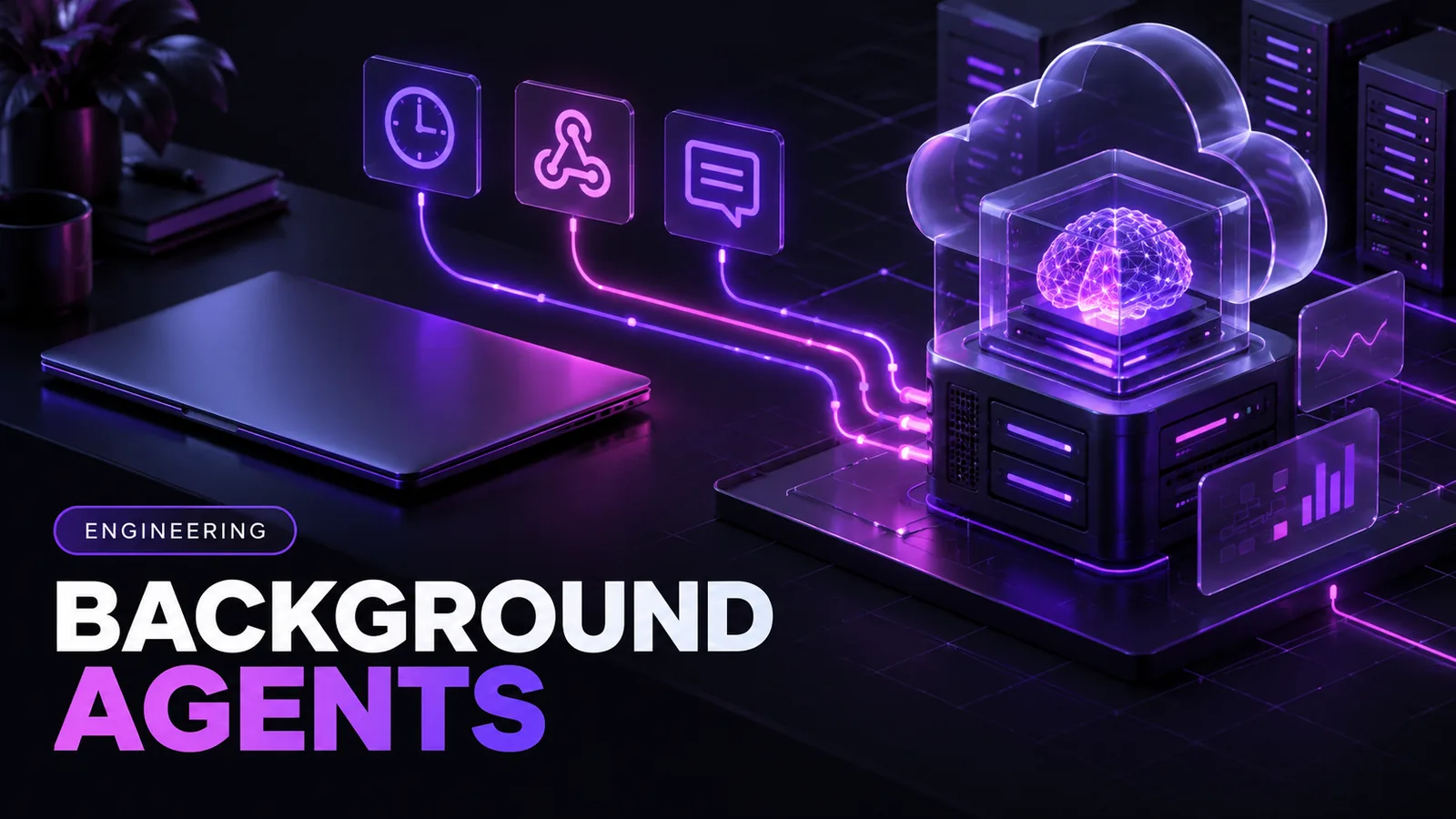
This article explains the concept of background agents—AI systems that operate autonomously on cloud infrastructure, execute tasks without constant human supervision, and handle business operations through scheduled or event-driven workflows.
What happened
The article describes background agents as AI systems designed to run independently on cloud infrastructure, triggered by schedules, events, or messages. It outlines their architecture, compares them to chat assistants, and provides use cases for automating business workflows while maintaining human oversight.
Why it matters
Background agents enable automation of repetitive, time-sensitive tasks in business and development workflows, improving efficiency and reducing human error. They allow organizations to scale operations while maintaining control through structured approval processes and observability.
- Use background agents for repetitive, measurable tasks with clear success criteria.
- Implement safety controls like read-only access and approval gates for critical actions.
- Prioritize systems with persistent state and retry mechanisms for reliability.
- Choose tools that support asynchronous execution and human-in-the-loop workflows.
- Start with low-risk tasks to build trust before expanding agent scope.
The bigger picture
By enabling 24/7 task execution without human intervention, background agents reduce operational overhead and improve reliability. They allow teams to focus on high-value decisions while automated systems handle routine operations, as demonstrated by examples like Stripe's 1,300 weekly merged pull requests.
Background agents represent a shift from interactive AI systems to autonomous, scheduled workflows that handle business operations efficiently. They combine AI capabilities with structured controls to enable scalable, reliable automation.
Technical details
- Remote runtime execution on cloud machines
- Asynchronous task execution with persistent state management
- Triggers: schedules, webhooks, events, or manual inputs
- Tool integration with scoped permissions (e.g., CRM, analytics, databases)
- Approval gates for irreversible actions (e.g., payments, deletions)
FAQ
What distinguishes background agents from chat assistants?
Background agents operate independently on cloud infrastructure, execute tasks asynchronously, and require no continuous user input, unlike chat assistants that rely on active prompts.
Can background agents handle non-coding tasks?
Yes, they can manage business workflows like reporting, CRM updates, monitoring, and administrative tasks when the work has clear definitions of done.
How are background agents made safe?
Safety is ensured through scoped permissions, isolation of environments, logging, retry limits, and human approval gates before irreversible actions.
What are common use cases for background agents?
Examples include daily reporting, monitoring competitor data, inbox triage, lead research, SEO audits, and recurring administrative tasks.
How do background agents handle failures?
They use checkpointing to resume from the last known state, limit retries, and escalate failures to human operators when needed.
This summary and analysis were generated with AI from the original article and may contain errors. Read the original for the full story.
Read the full story
Originally published by Rerun Blog on Oct 10, 2026.
Comments
Sign in to join the discussion.