
Faster Developers Don’t Make a Faster Team
What engineering teams tell us about working with AI agents. Part 1 in the series. Over the past few months, I’ve spent a lot of time on discovery calls with engineering organizations, from a 16-developer software agency to telcos, game studios, and consultancies with thousands of developers.
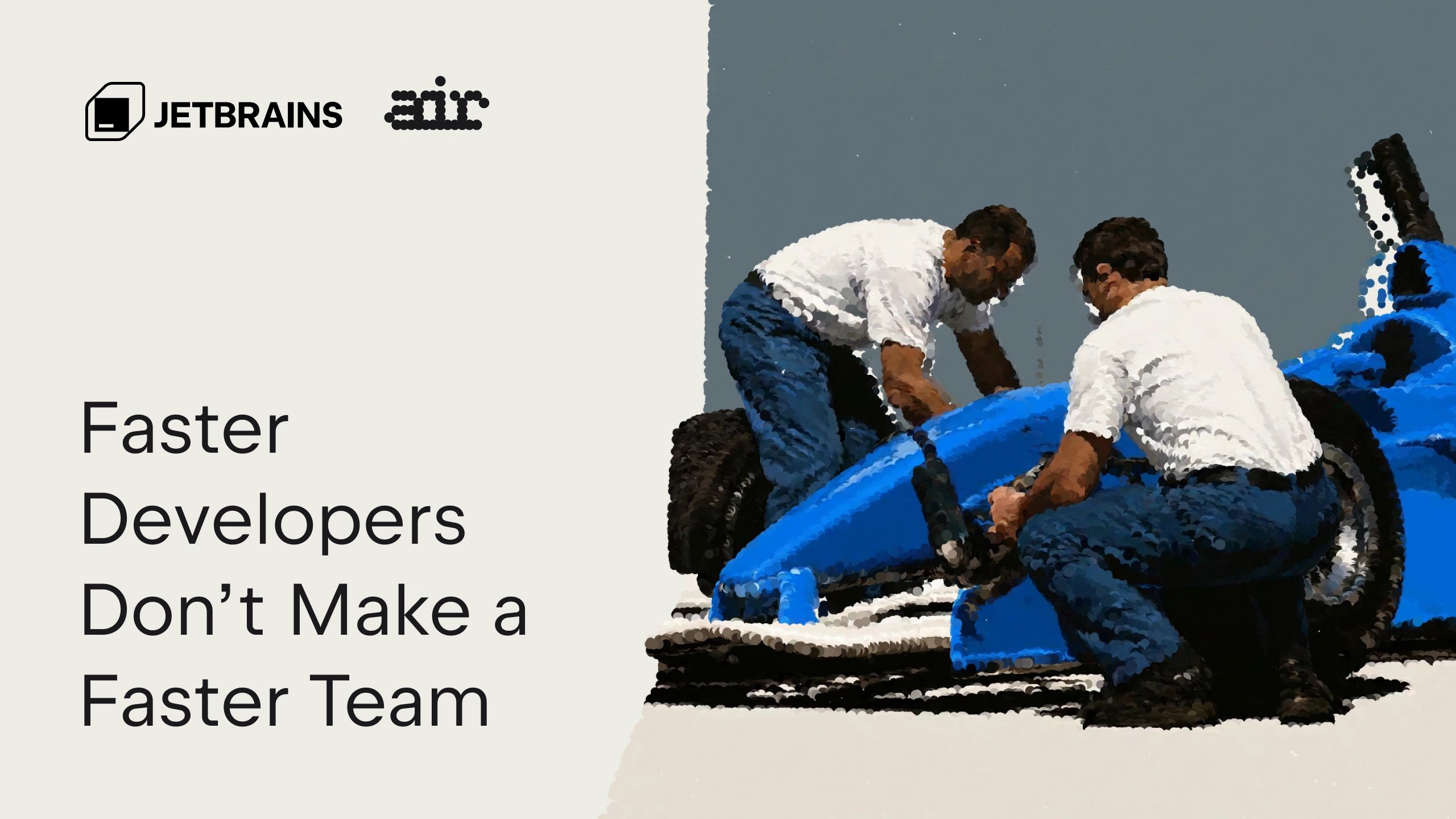
The article discusses the challenges engineering teams face when integrating AI agents into their workflows, highlighting the gap between individual developer efficiency and team-level collaboration.
What happened
The article presents findings from discussions with various engineering organizations about their experiences with AI agents. It outlines three main scenarios: lack of shared configurations, bottlenecks in code review processes, and operational burdens from automation. The author highlights the need for better team-level infrastructure and governance to fully leverage AI agents.
Why it matters
Understanding these challenges is crucial for AI developers and tech professionals to design more effective team collaboration tools and workflows. It emphasizes the importance of addressing team-level issues to maximize the benefits of AI agents in software development.
- AI agents can boost individual productivity but require team-level strategies for effective use.
- Standardized configurations and shared practices are essential for consistent AI agent performance across teams.
- Code review and planning processes must evolve to handle AI-assisted development efficiently.
- Automating repetitive tasks with AI introduces new maintenance and coordination challenges.
- Investing in team-wide infrastructure and governance is critical for scaling AI agent adoption.
The bigger picture
The article highlights the need for improved team collaboration tools and infrastructure to support AI agent usage. It suggests that without proper governance and shared practices, the benefits of AI agents may not be fully realized at the team level.
The article underscores the importance of addressing team-level challenges to fully leverage AI agents in software development, emphasizing the need for shared infrastructure, standardized practices, and evolved workflows.
Technical details
- AI agents for code generation and task automation
- Shared configuration management in repositories
- Code review processes adapted for AI-generated outputs
- Automated pipelines for documentation, library upgrades, and security checks
- Docker containers and CI/CD integration for AI workflows
FAQ
What are the main challenges of using AI agents in engineering teams?
The main challenges include uneven individual productivity gains, lack of shared configurations, bottlenecks in code review processes, and operational burdens from automation.
How do AI agents affect team collaboration?
AI agents can improve individual speed but often lead to fragmented practices and knowledge silos, making team collaboration and consistency difficult.
What are the implications of AI agent usage for code review processes?
Code review processes struggle to keep up with rapid AI-assisted implementation, leading to increased review times and potential quality issues.
This summary and analysis were generated with AI from the original article and may contain errors. Read the original for the full story.
Read the full story
Originally published by JetBrains AI Blog on Oct 7, 2026.
Comments
Sign in to join the discussion.