
FCC robot restrictions could accelerate shift to local AI
Companies deploying physical AI today need to decide which AI workloads belong on the robot, what can remain in the cloud, and whether the underlying technology stack can meet rising expectations for security, safety, and supply-chain transparency.
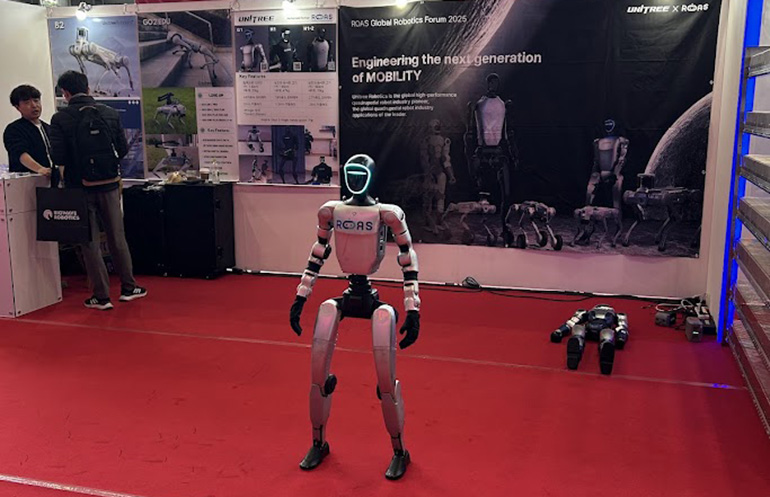
The article discusses how FCC restrictions on foreign-produced robots are prompting companies to shift towards on-premises AI architectures and smaller, specialized models to address security, safety, and supply-chain transparency concerns.
What happened
The FCC added foreign-produced advanced robotic devices to a list of technologies deemed to pose national security risks, leading to restrictions on their import and use in the U.S. This has prompted companies to consider local AI processing and specialized models to maintain control over data and operations.
Why it matters
The article highlights the growing importance of data security and control in robotics, especially as robots are deployed in critical environments. The shift towards on-premises AI and SLMs can enhance security, reduce reliance on external cloud services, and improve operational reliability.
- Companies must evaluate AI workloads for local vs. cloud processing to enhance security.
- Small language models offer a practical alternative to large cloud-dependent models in industrial settings.
- Supplier selection is critical for ensuring tested components and secure integration of robotic systems.
The bigger picture
The FCC restrictions are likely to accelerate the adoption of local AI processing and specialized models, influencing how companies design and deploy robotic systems. This shift may lead to more secure and reliable robotic operations, but also requires increased integration and supplier collaboration.
The FCC's restrictions on foreign robots are driving a significant shift towards on-premises AI and specialized models, emphasizing the need for greater control over data and security in robotic systems.
Technical details
- On-premises AI architectures
- Small language models (SLMs)
- Edge computing
- Local data processing
- Integration of controllers, sensors, and AI hardware
FAQ
What are the FCC's restrictions on foreign-produced robots?
The FCC has added foreign-produced advanced robotic devices to a list of technologies deemed to pose national security or safety risks, preventing them from receiving necessary authorization for import, marketing, or sale in the U.S.
Why are companies shifting towards on-premises AI architectures?
Companies are moving towards on-premises AI to enhance control over data, improve security, and meet rising expectations for safety and supply-chain transparency, especially with the FCC restrictions in place.
What are small language models (SLMs) and why are they gaining traction?
Small language models (SLMs) are specialized models designed for industrial environments. They offer flexibility, lower compute requirements, and can be fine-tuned on local data, making them suitable for tasks that don't require the full capabilities of large language models (LLMs).
This summary and analysis were generated with AI from the original article and may contain errors. Read the original for the full story.
Read the full story
Originally published by The Robot Report on Oct 5, 2026.
Comments
Sign in to join the discussion.