
How Artificial Intelligence Is Changing Education
Introduction Artificial Intelligence (AI) is changing the way students learn and teachers teach. From personalized learning to AI-powered educational tools, technology is becoming an important part of modern education.
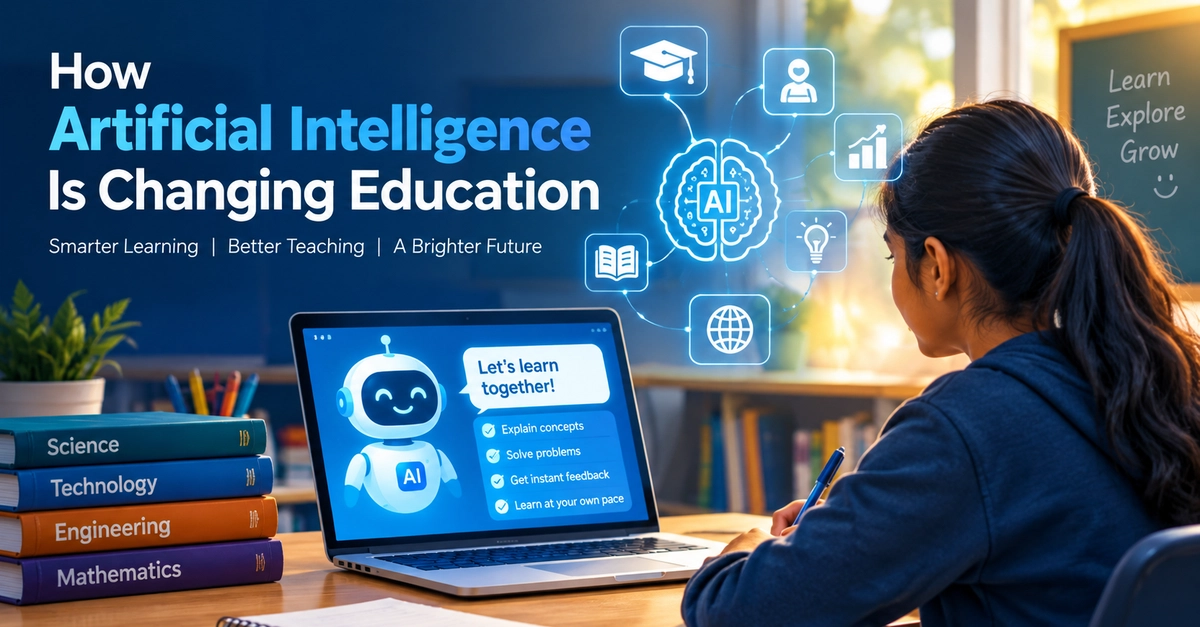
Artificial Intelligence (AI) is transforming education by enabling personalized learning, supporting teachers, providing faster feedback, and improving accessibility for students with diverse needs.
What happened
The article discusses how AI is changing education by offering personalized learning, AI-powered assistants, support for teachers, faster feedback, and improved accessibility. It also highlights challenges such as over-reliance on AI, inaccurate information, and privacy concerns.
Why it matters
AI is reshaping education by enhancing learning experiences, reducing teacher workload, and making education more inclusive. For AI developers and educators, understanding these applications and challenges is crucial for responsible integration.
- AI can personalize learning by adapting to individual student needs.
- AI tools can support teachers by automating routine tasks.
- AI provides instant feedback, helping students learn more efficiently.
- AI improves accessibility through various assistive technologies.
- Responsible use of AI is essential to avoid over-reliance and maintain academic integrity.
The bigger picture
AI is streamlining educational processes, improving student engagement, and making learning more inclusive. However, its integration requires careful management to avoid over-reliance and ensure ethical use.
AI is transforming education by enhancing learning, supporting teachers, and improving accessibility. While it is not replacing teachers, it is becoming a valuable tool in the educational landscape when used responsibly.
Technical details
- AI-powered learning platforms analyze student progress to tailor content.
- AI chatbots and virtual assistants provide explanations, examples, and practice questions.
- AI systems automate grading and provide instant feedback on assignments.
- Speech-to-text and translation tools enhance accessibility for students with diverse needs.
FAQ
How does AI help with personalized learning?
AI analyzes a student's progress and provides tailored content based on their individual needs, such as additional exercises for struggling students or advanced material for those who learn quickly.
What are AI-powered learning assistants used for?
AI-powered assistants help students understand difficult concepts, provide explanations, practice questions, and generate ideas for assignments, all while encouraging independent learning.
How does AI support teachers?
AI supports teachers by automating tasks like creating lesson plans, generating quiz questions, preparing materials, and providing feedback on student work, allowing more time for student interaction.
What challenges does AI present in education?
Challenges include over-reliance on AI, inaccurate information, privacy concerns, and issues with academic integrity, which require careful and responsible use of AI in educational settings.
How does AI improve accessibility in education?
AI improves accessibility through tools like speech-to-text, text-to-speech, and translation, enabling students with diverse learning needs to access educational content more effectively.
This summary and analysis were generated with AI from the original article and may contain errors. Read the original for the full story.
Read the full story
Originally published by Dev.to AI on Oct 3, 2026.
Comments
Sign in to join the discussion.