
Industrial Next wants factory robots to switch tasks in minutes, not weeks
Industrial Next helps manufacturers automate complex, delicate tasks that have traditionally required human labor.
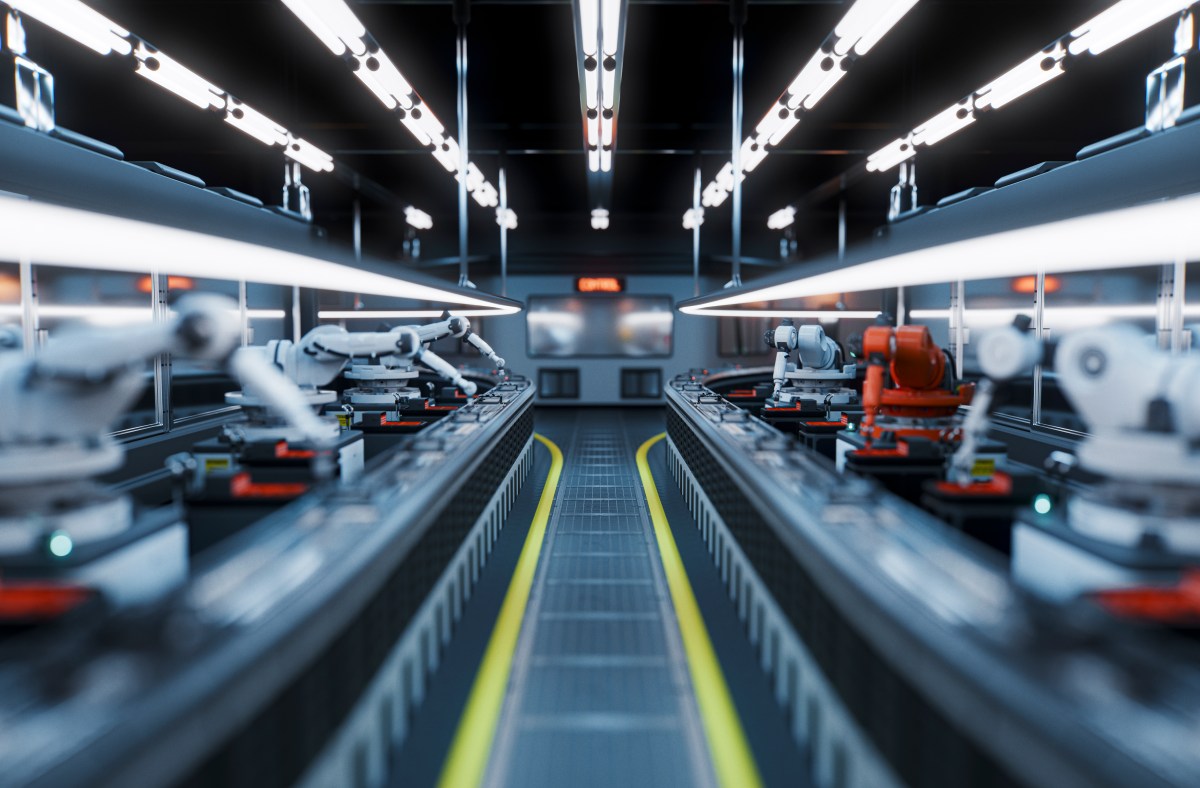
Industrial Next is revolutionizing factory automation by enabling robots to switch tasks in minutes, not weeks, using AI-driven robotic stations powered by proprietary foundation models.
What happened
Industrial Next, a San Francisco-based startup, is changing the way factories automate tasks by using AI-driven robotic stations that can be reconfigured in minutes. The company's technology allows for rapid retooling of production lines without traditional programming, enabling complex and delicate tasks that previously required human labor. The startup has partnered with BMW Group Technology Office to evaluate its AI-powered dexterous manipulation for manufacturing.
Why it matters
This innovation is significant for AI developers and manufacturing professionals because it addresses the long-standing challenge of making robots flexible and adaptable. Traditional industrial robots are limited by their need for specific programming, which makes reconfiguration time-consuming and costly. Industrial Next's approach could lead to more efficient and versatile automation in manufacturing, reducing downtime and enabling more complex tasks to be automated.
- Industrial Next's AI-powered robotic stations enable rapid reconfiguration of production lines.
- Robots are trained in high-fidelity simulated environments to perform complex tasks.
- The startup's technology is already being used in smartphone manufacturing for delicate tasks.
- The company's approach could revolutionize industrial automation by making robots more flexible and adaptable.
- Industrial Next's partnership with BMW Group Technology Office highlights the potential impact of its technology in manufacturing.
The bigger picture
Industrial Next's technology has the potential to significantly reduce the time and cost associated with retooling production lines, making automation more flexible and efficient. This could lead to increased productivity and the ability to handle more complex tasks in manufacturing.
Industrial Next is transforming factory automation by enabling robots to switch tasks in minutes, not weeks, using AI-driven robotic stations. This innovation has the potential to significantly reduce the time and cost associated with retooling production lines, making automation more flexible and efficient.
Technical details
- AI-driven robotic stations powered by proprietary foundation models.
- High-fidelity simulation engines that mimic real-world physics for training robots.
- Robots are trained through simulation and demonstration rather than hard-coded scripts.
- Robotic stations can be reconfigured, combined, and redeployed across product lines.
FAQ
What is Industrial Next's main innovation?
Industrial Next's main innovation is AI-driven robotic stations that can be reconfigured in minutes without traditional programming, enabling rapid retooling of production lines.
How does Industrial Next train its robots?
Industrial Next trains its robots in high-fidelity simulated environments that mimic real-world physics, allowing them to perform complex, high-precision tasks.
What industries is Industrial Next targeting?
Industrial Next is targeting manufacturing industries, with its technology already being used in smartphone manufacturing for delicate tasks like threading cables and snapping connectors.
What is the significance of Industrial Next's partnership with BMW Group Technology Office?
The partnership with BMW Group Technology Office highlights the potential impact of Industrial Next's technology in manufacturing, particularly in evaluating its AI-powered dexterous manipulation for industrial applications.
What are the benefits of Industrial Next's approach to automation?
Industrial Next's approach to automation reduces the time and cost associated with retooling production lines, making automation more flexible and efficient, and enabling more complex tasks to be automated.
This summary and analysis were generated with AI from the original article and may contain errors. Read the original for the full story.
Read the full story
Originally published by TechCrunch on Oct 13, 2026.
Comments
Sign in to join the discussion.