
Part 2: Evals as a deployment gate — and how to know when they drift
Founded in 2008, Stack Overflow’s public platform is used by nearly everyone who codes to learn, share their knowledge, collaborate, and build their careers.
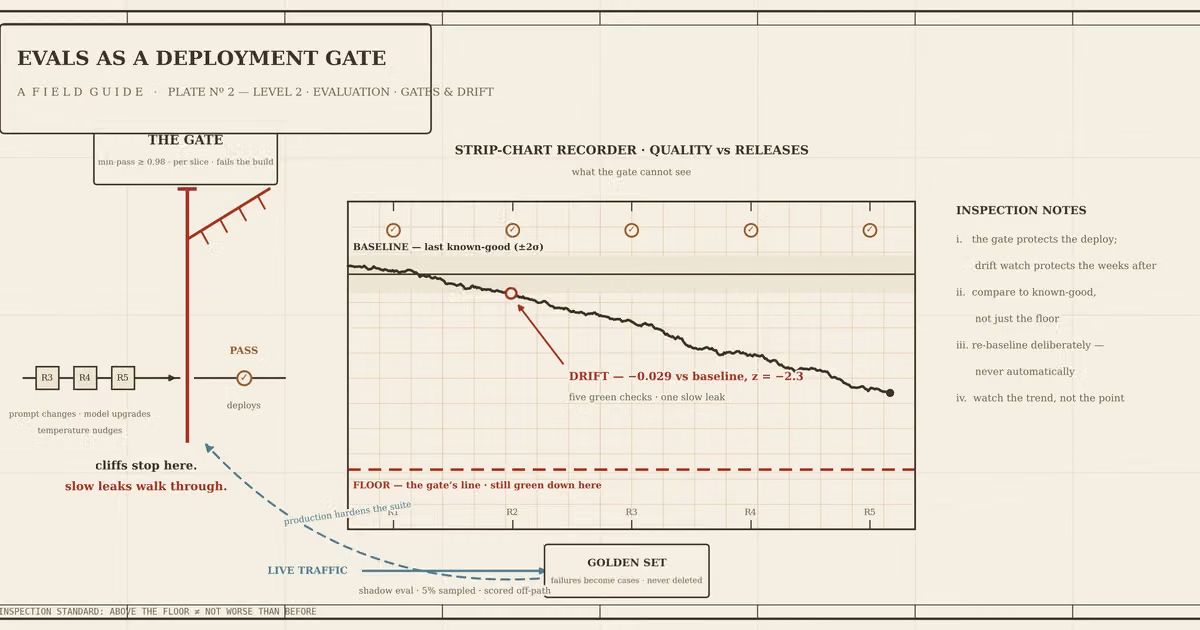
This article discusses the importance of evaluation systems in deploying and maintaining large language model (LLM) systems, focusing on the need for a robust evaluation gate and drift detection mechanisms to ensure consistent performance and quality.
What happened
The article outlines the process of implementing an evaluation system for LLMs, including the creation of a golden set of test cases, integration of evaluation gates into CI/CD, and the use of baseline comparisons and shadow evaluations to detect and address performance drift.
Why it matters
For AI developers and engineers, maintaining the quality and reliability of LLM systems is crucial. Effective evaluation mechanisms ensure that changes do not silently degrade performance, which is essential for deploying and maintaining robust AI systems in production environments.
- Implement evaluation gates in CI/CD to prevent regressions and ensure quality before deployment.
- Curate and version a golden set of test cases to cover all critical scenarios.
- Compare current performance against a known-good baseline to detect gradual drift.
- Use shadow evaluations to monitor live traffic and improve the evaluation suite with real-world data.
- Monitor trends in key metrics like human override rates and confidence distributions to detect early signs of quality issues.
The bigger picture
Implementing robust evaluation systems can prevent silent regressions and quality degradation in LLM systems, leading to more reliable and maintainable AI products. This approach helps teams catch issues early, ensuring that changes are validated before deployment and that long-term performance is monitored effectively.
The article emphasizes the necessity of comprehensive evaluation systems for LLMs, combining deployment gates, baseline comparisons, and shadow evaluations to ensure consistent performance and quality. These practices help prevent silent regressions and maintain the reliability of AI systems in production.
Technical details
- Golden set of test cases: Versioned, curated cases covering common, hard, and past failure scenarios.
- Evaluation gate: Integrated into CI/CD, it fails the build on regression, ensuring quality before deployment.
- Baseline comparison: Metrics from the last known-good release are used to detect gradual performance degradation.
- Shadow evaluations: Sample real (de-identified) inputs to score actual decisions and track pass rates over time.
- Drift detection: Uses statistical significance checks to identify meaningful changes in performance metrics.
FAQ
What is the purpose of an evaluation gate in LLM deployment?
An evaluation gate ensures that changes to an LLM system do not introduce regressions by failing the build if performance metrics drop below a defined threshold, thus maintaining quality before deployment.
How should test cases be curated for an evaluation system?
Test cases should be versioned and curated to cover common scenarios, known-hard cases, and past failures. They should be stored in version control alongside the code for review and tracking.
What is the role of baseline comparisons in drift detection?
Baseline comparisons involve measuring current performance against a known-good release to detect gradual quality degradation. This helps identify meaningful changes that might not be caught by a simple floor check.
How do shadow evaluations contribute to LLM system reliability?
Shadow evaluations sample real (de-identified) inputs to score actual decisions, helping to catch unexpected issues and improve the evaluation suite with real-world data, thus enhancing the system's reliability.
Why is it important to monitor trends in metrics like human override rates?
Monitoring trends in metrics like human override rates can indicate early signs of quality issues, such as the system making more errors that require human intervention, which may not be immediately apparent from point-in-time measurements.
This summary and analysis were generated with AI from the original article and may contain errors. Read the original for the full story.
Read the full story
Originally published by Stack Overflow Blog - AI on Oct 7, 2026.
Comments
Sign in to join the discussion.