
Part 3: Knowing when your agent doesn’t know: the confidence layer
Founded in 2008, Stack Overflow’s public platform is used by nearly everyone who codes to learn, share their knowledge, collaborate, and build their careers.
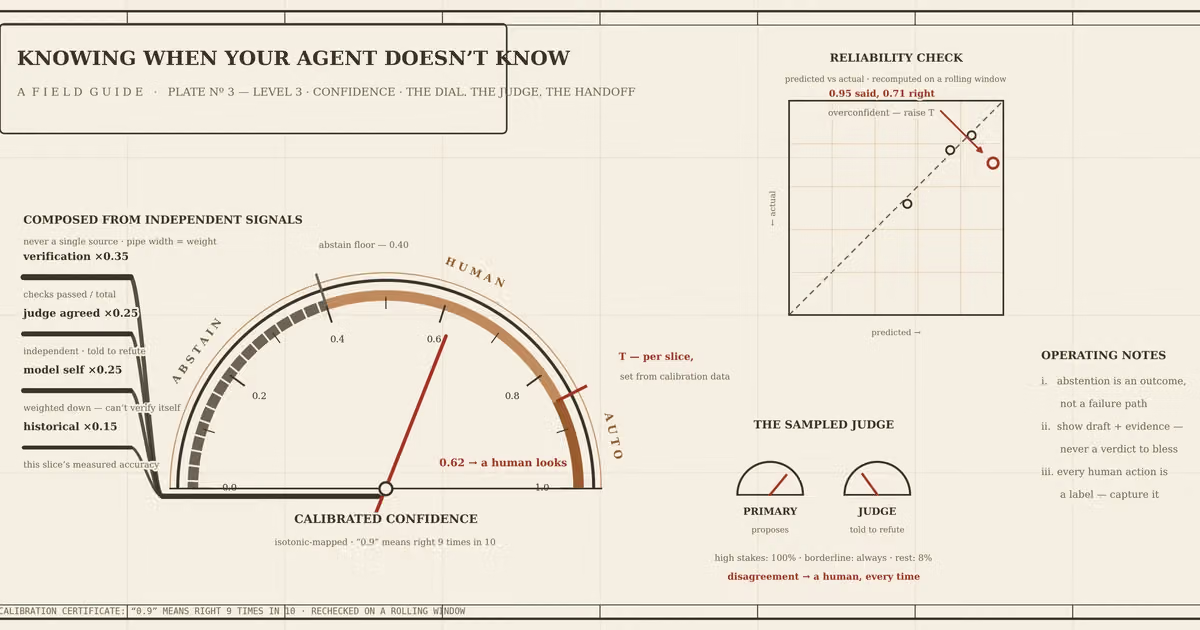
This article discusses the importance of confidence mechanisms in large language model (LLM) systems, focusing on the third level of a six-level maturity model for deploying LLMs in production. It outlines how to build a system that can determine when it's uncertain and route such cases to human oversight.
What happened
The article presents a detailed approach to implementing a confidence layer in LLM systems, which is part of a six-level maturity model. It explains how to compose confidence scores from multiple signals, calibrate them, and use a judge model to evaluate high-stakes decisions. The article also discusses the importance of human-in-the-loop processes for handling uncertain cases.
Why it matters
For AI developers and technology professionals, understanding how to build reliable LLM systems is crucial. The confidence layer ensures that systems can operate safely and effectively, reducing the risk of errors and improving trust in automated decisions. This is particularly important for applications where accuracy and reliability are critical.
- Confidence in LLM systems must be composed from multiple independent signals to avoid overreliance on the model's self-assessment.
- Calibration of confidence scores is essential to ensure they accurately reflect the system's performance.
- A judge model provides an independent check for high-stakes decisions, improving the reliability of automated systems.
- Effective human-in-the-loop processes are crucial for handling uncertain cases, with a focus on user experience and feedback.
- Continuous feedback and calibration are necessary to maintain the accuracy and reliability of the system over time.
The bigger picture
The implementation of a confidence layer with a judge model and human-in-the-loop processes can significantly enhance the reliability and safety of LLM systems. This approach helps in reducing errors, improving trust, and ensuring that critical decisions are reviewed by humans when necessary. It also provides a framework for continuous improvement through feedback and calibration.
The article emphasizes the importance of a confidence layer in LLM systems, detailing how to compose confidence scores, calibrate them, and use a judge model for high-stakes decisions. It highlights the role of human-in-the-loop processes in ensuring safety and reliability, providing a framework for building trustworthy AI systems.
Technical details
- Composed confidence score: A score derived from multiple independent signals (model self, verification, judge, historical accuracy) with specific weights.
- Calibration: Ensuring the confidence score reflects actual accuracy through methods like reliability diagrams and isotonic regression.
- Judge model: A second, independent model that evaluates the primary model's decisions, especially for high-stakes or uncertain cases.
- Human-in-the-loop (HITL) UX: Designing the handoff to humans with evidence, reasoning, and clear routing information to improve decision-making and feedback.
FAQ
What is the purpose of a confidence layer in LLM systems?
The confidence layer in LLM systems determines when the system is certain enough to act autonomously and when it needs to involve human oversight. This ensures safer and more reliable automation.
How is a confidence score composed in the article?
A confidence score is composed from multiple independent signals, including the model's self-assessment, verification checks, a judge model's agreement, and historical accuracy. These signals are weighted and combined to create a more reliable confidence score.
What is the role of a judge model in the system?
A judge model evaluates the primary model's decisions, especially for high-stakes or uncertain cases. It acts as an independent check, helping to catch errors and improve the reliability of automated decisions.
Why is calibration of confidence scores important?
Calibration ensures that the confidence score accurately reflects the system's actual performance. For example, a confidence score of 0.9 should mean the system is correct about 90% of the time, which is crucial for making reliable decisions.
How does the human-in-the-loop process work in this system?
When the system is uncertain, it routes the decision to a human. The human receives a draft with evidence and reasoning, allowing them to make an informed decision. This process captures feedback to improve the system over time.
This summary and analysis were generated with AI from the original article and may contain errors. Read the original for the full story.
Read the full story
Originally published by Stack Overflow Blog - AI on Oct 7, 2026.
Comments
Sign in to join the discussion.