
The Evolution of Fine-Tuning: From Retraining Everything to Rewarding Correctness
Last month I had a model, a dataset, and a GPU already warm. The old reflex said fine-tune. I didn’t. I sat there and asked whether…Continue reading on Towards AI »
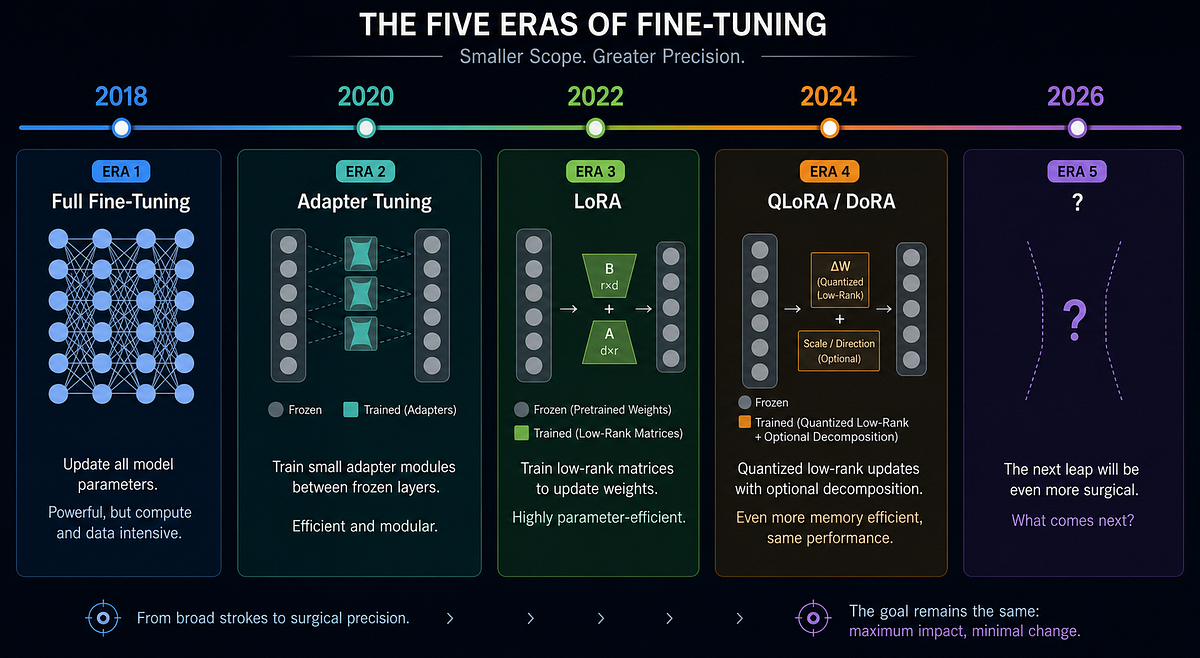
This article examines the evolving role of fine-tuning in AI model development, tracing its transformation from a default practice to a questioned approach as base models improve.
What happened
The article discusses how advancements in base model capabilities have changed the approach to model adaptation, with fine-tuning now requiring deliberate justification rather than default implementation.
Why it matters
For AI developers, understanding this shift helps optimize resource allocation and avoid unnecessary training costs. It highlights the importance of evaluating model capabilities before deciding on adaptation strategies.
- Assess model capabilities before deciding on fine-tuning
- Modern base models require less adaptation than previous versions
- The fine-tuning process has become more selective and deliberate
- Leverage built-in model features like retrieval and context handling
- Question the necessity of weight modifications in current AI workflows
The bigger picture
The article suggests reduced computational costs for model adaptation and encourages more strategic use of AI development resources by prioritizing model evaluation over automatic fine-tuning.
The article highlights a paradigm shift in AI model development, where improved base models have made fine-tuning a deliberate choice rather than an automatic process.
Technical details
- Retrieval-based knowledge handling
- Structured output modes for format control
- Long context window capabilities
- Weight modification techniques
- Five-era evolution of fine-tuning approaches
FAQ
Why is fine-tuning becoming less common?
Modern base models demonstrate capabilities that previously required fine-tuning, reducing the need for weight modifications.
What are the five eras of fine-tuning?
The article outlines a progression from full-weight modification (2018-2020) to more targeted approaches, culminating in current practices that question whether any modification is needed.
What factors influence the decision to fine-tune?
The article suggests evaluating whether base model capabilities (like retrieval and long context handling) can achieve desired outcomes without additional training.
This summary and analysis were generated with AI from the original article and may contain errors. Read the original for the full story.
Read the full story
Originally published by Towards AI on Oct 10, 2026.
Comments
Sign in to join the discussion.