

Pipecat
Open source framework for voice agents and real-time AI applications.
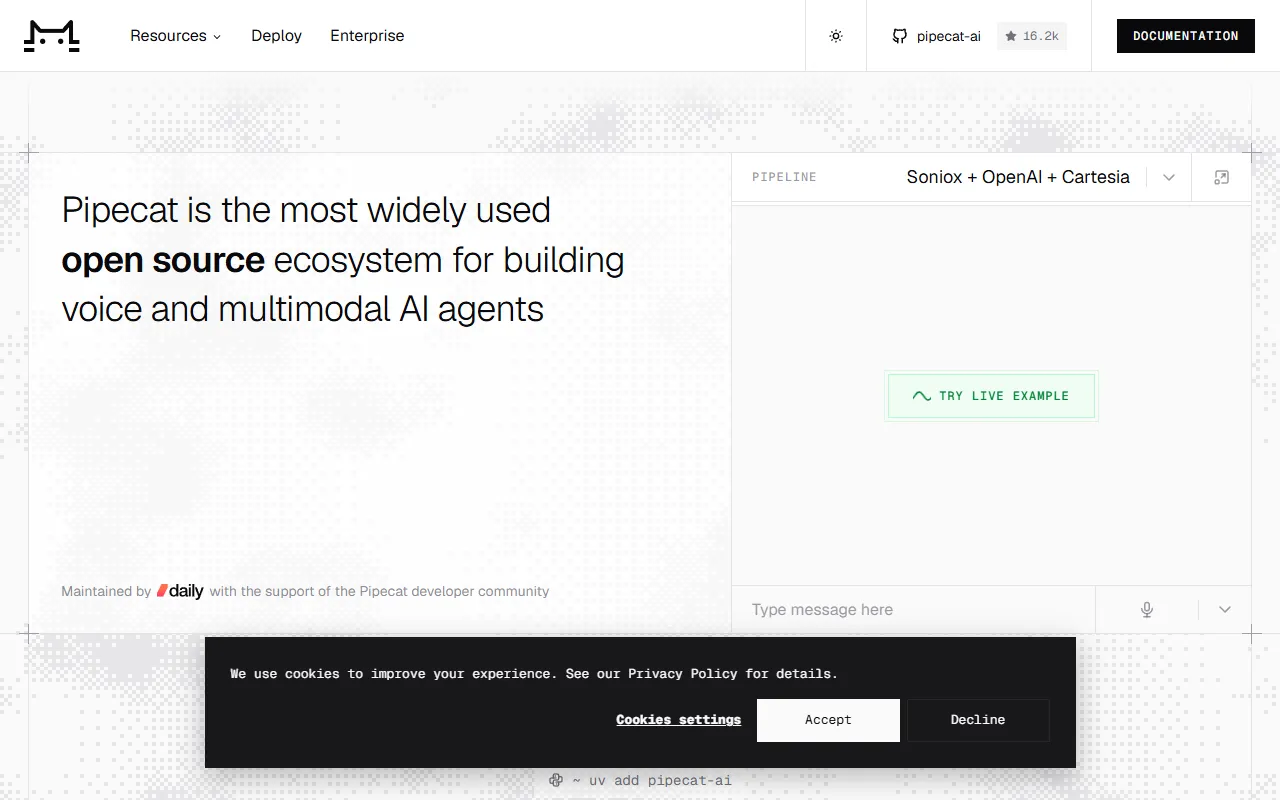
What is Pipecat?
Pipecat is a Voice Agents tool. Open source framework for voice agents and real-time AI applications. Pipecat is free to use. It is aimed at developers, ai researchers and open source contributors.
An open source framework designed for building voice agents, multimodal applications, and real-time AI systems. It supports structured conversations, client SDKs, and deployment tools. Maintained by Daily and the community.
Built for developers, ai researchers, open source contributors and voice agent builders.
Key capabilities
Features
Client SDKs
Structured Conversations
Create and Deploy Projects
Debugging
Terminal
Claude Code Skills
Community Integrations
Pipecat TV Channel
Available Services
Manual Installation
Use cases
- Build voice agents for customer service interactions
- Develop real-time AI applications with structured conversation flows
- Deploy projects using client SDKs and terminal commands
- Integrate with community-developed services for extended functionality
- Debug and resolve issues during application development
- Access available services to enhance application capabilities
Who it's for
- Developers
- AI Researchers
- Open Source Contributors
- Voice Agent Builders
Pros & cons
Pros
- Free (open source)
- Community and Daily maintained
Cons
No documented limitations yet.
Pricing
Free.
Developer & API
Open source· 16.1K stars· 2.8K forks
FAQ
What is Pipecat?
Pipecat is a Voice Agents tool. Open source framework for voice agents and real-time AI applications. An open source framework designed for building voice agents, multimodal applications, and real-time AI systems. It supports structured conversations, client SDKs, and deployment tools. Maintained by Daily and the community.
Is Pipecat free?
Yes, Pipecat is free to use.
How much does Pipecat cost?
Pipecat is free to use.
Who should use Pipecat?
Pipecat is built for developers, ai researchers, open source contributors and voice agent builders. Common uses: build voice agents for customer service interactions, develop real-time AI applications with structured conversation flows, deploy projects using client SDKs and terminal commands and integrate with community-developed services for extended functionality.
Is Pipecat open source?
Yes, Pipecat is open source.
What are the best alternatives to Pipecat?
Similar tools on AiByts include Vapi, Synthflow, SKI, WZRD and Famulor.
Details are compiled from Pipecat's website and public sources, last verified Oct 3, 2026. Features and pricing change — confirm on the official site before you buy.
Try Pipecat
Free
Tags
- Voice Agents
- Open Source
- Real-Time AI
- Multimodal Apps
Comments
Sign in to join the discussion.