v0.7.0
LLM inference in C/C++. Contribute to ggml-org/llama.cpp development by creating an account on GitHub.
llama.cpp11 min read
Stay updated with the latest developments in Artificial Intelligence
LLM inference in C/C++. Contribute to ggml-org/llama.cpp development by creating an account on GitHub.


We're reactivating the blog and moving it to blog.aml4td.org. New posts will show up there and we've reproduced the old posts too. The blog name will remain the same. We won't be shutting this site down for a long while but I would point your RSS feeds to the new location.
We are conducting another survey to see where users would like us to spend our development time. Here's a link to the survey!
While I'm still supporting caret, the majority of my development effort has gone into the tidyverse modeling packages (called tidymodels). If you've never heard of this, we have just made an excellent learning resources at tidymodels.org. You might consider focusing on the Get Started pages.
My slides from the R/Pharma conference on "Modeling in the Tidyverse" are in pdf format as well as the HTML version. (Joe Cheng just killed it in his shiny presentation - see this repo)
I'll be giving a talk at the R/Medicine conference on Sept 7th in New Haven CT. My talk is on modeling in the tidyverse but there are some excellent speakers. Rob Tibshirani, Mike Lawrence, Jennifer Thompson, and a bunch of others will be there. Take look at the conference website for more details.
Hugo Bowne-Anderson and I spoke about about data science in pharmaceuticals, the tidyverse, and more for the excellent DataFramed podcast from DataCamp. Listen to it here or through your favorite blogging app.
Kjell and I are writing another book on predictive modeling, this time focused on all the things that you can do with predictors. It's about 60% done and we'd love to get feedback. You cna take a look at http://feat.engineering and provide feedback at https://github.com/topepo/FES/issues.
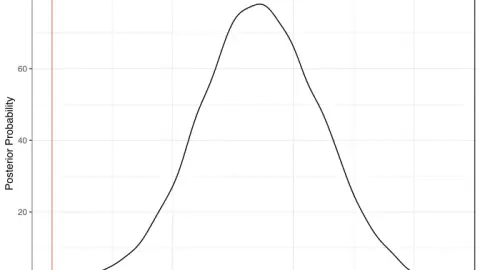
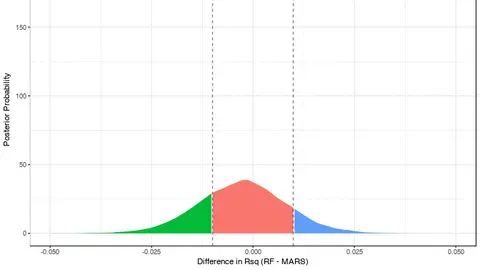
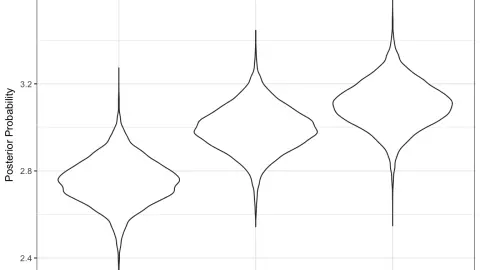
tidyposterior is an R package for comparing models based on their resampling statistics. There are a few case studies on the webpage to illustrate the process. I gave a talk at the Open Data Science Conference (ODSC) yesterday. A pdf of the slides are here and the animated gif above is here.
I'll be conducting a workshop called "Applied Machine Learning" in Washington DC on August 15 and 16. The last one, at the RStudio conference, sold out quickly.
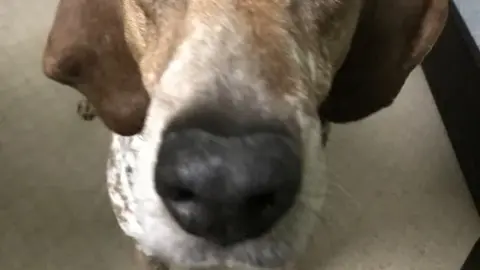
(No statistical graphs in this one. This is what my dog Artemis looks like when she wants my attention during work hours.) Mindy L. Mallory (@ace_prof) wrote a blog post on Machine Learning and Econometrics: Model Selection and Assessment Statistical Learning Style where she has a great description…
We've released our videos of the talks at the 2018 RStudio conference. My talk was Modeling in the Tidyverse (video) and I was also in the Tidyverse fireside chat (video). There are a lot of great talks on the conference website.
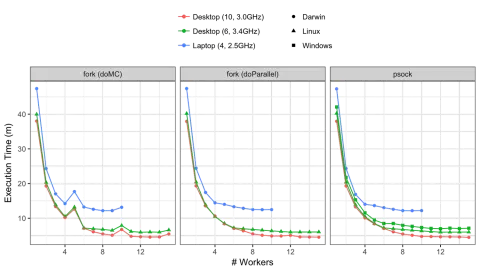
caret has been able to utilize parallel processing for some time (before it was on CRAN in October 2007) using slightly different versions of the package.
I've sent a slew of packages to CRAN recently (thanks to Swetlana and Uwe). There are updates to: caret was primarily updated to deal with an issue introduced in the last version. It is a good idea to avoid fully loading the underlying modeling packages to avoid name conflicts.
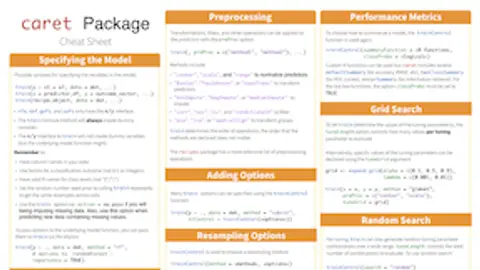
It can be found on the RStudio cheatsheet page. Suggestions and pull requests are always welcome.
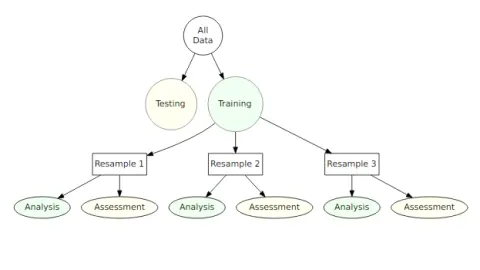
A typical scheme for splitting the data when developing a predictive model is to create an initial split of the data into a training and test set. If resampling is used, it is executed on the training set where a series of binary splits is created.
I try to limit postings about jobs here, there is an interesting position in pharma for a statistician in New England. I've had this particular position before as a nonclinical statistician and really loved the work and the scientific collaborations.
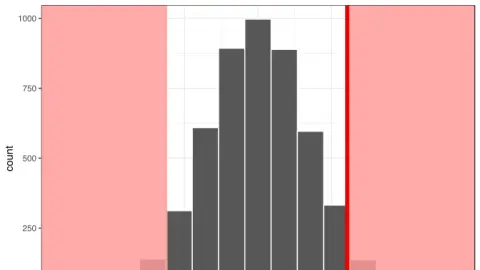
One criticism that is often leveled against using resampling methods (such as cross-validation) to measure model performance is that there is no correlation between the CV results and the true error rate. Let's look at this with some simulated data.
A few people have asked if anything is going to happen to caret now that I'm working at RStudio. The answer is "very little will be different". More specifically: caret will be around for a long time. I'm still using it for things too! There will still be hills and valleys for development/support.
Showing 18 of 20 stories
Load more storiesGet the top AI news and tools straight to your inbox every week.
Weekly · AI news from Applied Predictive Modeling by Max Kuhn and Kjell Johnson Blog
Join 15,000+ AI enthusiasts