

v0.7.0
LLM inference in C/C++. Contribute to ggml-org/llama.cpp development by creating an account on GitHub.
llama.cpp11 min read
Stay updated with the latest developments in Artificial Intelligence
LLM inference in C/C++. Contribute to ggml-org/llama.cpp development by creating an account on GitHub.


LFM2.5-24B-A2B is a 24B-parameter reasoning model with just 2B active parameters, built for fast, private agents on-device. It thinks before it answers, calls tools, and works through multi-step tasks inside popular agent harnesses.

Building a cluster scheduler to prioritize high-impact research while maintaining full occupancy
We’re on a journey to advance and democratize artificial intelligence through open source and open science.
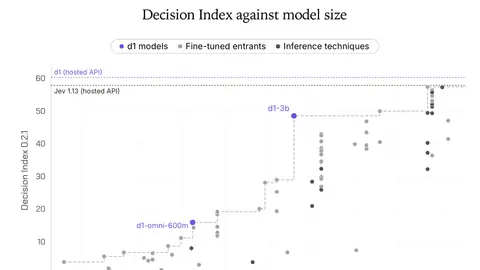
Today, we release two open decision models in our d1 decision model family: d1-3B and d1-omni-600M (experimental).

A Blog post by Technology Innovation Institute on Hugging Face
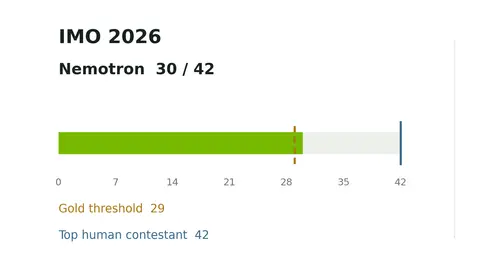
The International Olympiad in Informatics (IOI) and the International Mathematical Olympiad (IMO) test different skills. IOI requires algorithms and code that pass hidden tests under strict time and submission limits. IMO demands rigorous natural-language proofs.

A Blog post by Technology Innovation Institute on Hugging Face
Microsoft ThinkingBox grades AI agents on the records they leave behind, not the sentences they generate, and then asks whether they can do it twenty times in a row. It is now available through Hugging Face.
Language models can already help researchers search the literature, synthesize evidence, and work through complex questions. But scientific work places particular demands on these models—answers need to stay grounded in evidence, the models need to preserve what the evidence actually supports…
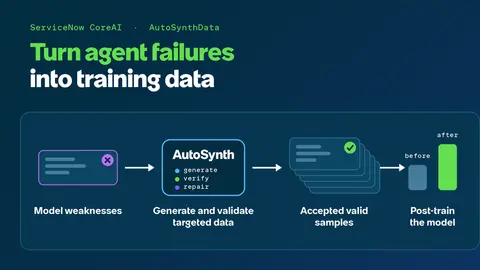
Enterprises need agents that work well in their own environments. The work they ask these agents to do is shaped by the systems they use, the rules they follow, and the state of their data.
Today we’re releasing Olmo-core 3, a significant upgrade to our framework for developing large language models featuring a redesigned open mixture-of-experts (MoE) training system.

We’re on a journey to advance and democratize artificial intelligence through open source and open science.
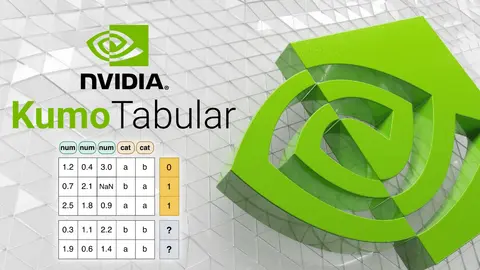
NVIDIA Kumo Tabular, part of the NVIDIA Kumo Structured model collection, is an open foundation model for tabular data now available on Hugging Face. Given a table of labeled rows, it predicts the labels of new rows in a single forward pass, with no training, no tuning, and no feature engineering,…
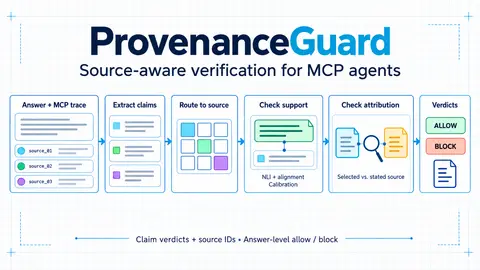
Our latest paper, ProvenanceGuard: Source-Aware Factuality Verification for MCP-Based LLM Agents (read it on Hugging Face, or on arXiv in the meantime), targets that gap.

Holo4 is our new series of agentic models. It comes in two sizes: 27B dense and 35B-A3B Mixture of Experts. Both are available on the H Models API. We are also releasing an updated version of Holotron 3: Holotron4 Nano.
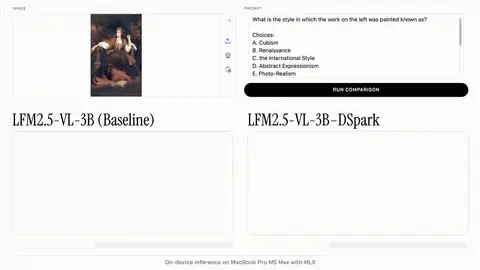
Faster inference: decode speedups up to 3.13x on device and 2.66x on an H100, with end-to-end gains up to 2.62x and 2.27x.
We’re on a journey to advance and democratize artificial intelligence through open source and open science.

We’re on a journey to advance and democratize artificial intelligence through open source and open science.
Showing 18 of 42 stories
Load more storiesGet the top AI news and tools straight to your inbox every week.
Weekly · AI news from Hugging Face Blog
Join 15,000+ AI enthusiasts