v0.7.0
LLM inference in C/C++. Contribute to ggml-org/llama.cpp development by creating an account on GitHub.
llama.cpp11 min read
Stay updated with the latest developments in Artificial Intelligence
LLM inference in C/C++. Contribute to ggml-org/llama.cpp development by creating an account on GitHub.


There's a pattern that anyone who's shipped an LLM-powered product has run into: you pick a model, you wire it up, and then you spend the next three months discovering that the thing around the model matters as much as the model itself. What you
What holds up, what doesn't, and why the framing matters more than the findings.Three years ago, a former SpaceX engineer ran an experiment. He pointed GPT-3, then one of the most advanced AI models available, at a collection of 129 files containing known security flaws, and
Picture this: It's 3 AM, your AI agent is behaving erratically in production, and users are complaining. You open your observability dashboard and you're greeted with thousands of traces, sessions, and log entries. You know the answer is somewhere in there: but where do you even
When LLMs need to compute something reliably, we've settled into a familiar pattern: the model writes code, an external interpreter runs it, the result gets injected back into the context, and the model carries on. It works well enough that we rarely stop to question the architecture. But
Residual connections are one of those ML ideas that feels obvious in hindsight. Instead of each layer completely overwriting the previous representation, you just add the transformation on top:h_l = h_{l-1} + f(h_{l-1}) This single + sign is what made training 100-layer networks possible. It
The Problem Nobody Talks About EnoughYou've probably noticed that ChatGPT, Claude, or any large language model streams text to you token by token, one word (or part of a word) at a time. This is a fundamental constraint of how these models work.Every time a transformer
IntroductionPost-training is where the real cost of LLM development lives. Taking a pretrained base model and turning it into something actually useful - an assistant that follows instructions, reasons carefully, and behaves safely - requires months of supervised fine-tuning, reward modeling, and…
Last month Anthropic published something unusual: a detailed accusation. Three Chinese AI labs, DeepSeek, Moonshot AI, and MiniMax, had collectively generated over 16 million exchanges with Claude through ~24,000 fraudulent accounts.
IntroductionEvery team building on top of LLMs has a version of the same mental model: pretraining teaches the model what it knows, and post-training teaches it how to behave. Don't want it to say harmful things? Train that out. Want it to be more helpful? Push
IntroductionIf you follow the LLM space, you've probably heard a lot about parameter counts, context windows, and benchmark scores. What gets discussed far less often is the mechanism that makes all of it possible: attention.
There's a quiet assumption baked into most of the recent excitement around reasoning models: that the impressive gains you see from systems like DeepSeek-R1 or similar RL-trained models come from something genuinely new: novel capabilities that the base model simply didn't have before training.
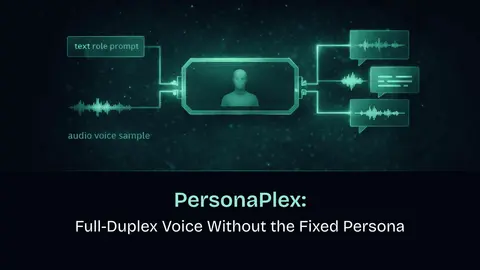
IntroductionVoice AI hit a genuine inflection point when full-duplex models arrived. Systems like Moshi finally cracked the core problem with conversational speech: the awkward cascade of listen, then transcribe, then think, then speak.
I recently came across a fascinating paper at ICLR’26 that tackles a question many of us AI developers have been wrestling with: can we trust LLMs to evaluate complex, interactive task? The authors focus on the domain of web development, and the short answer: we've got
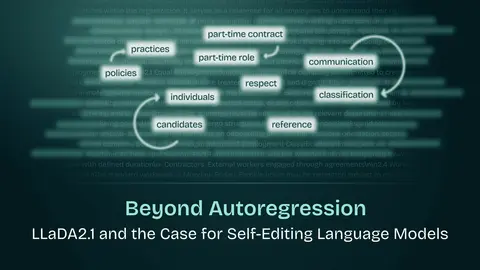
IntroductionEvery mainstream large language model today generates text the same way: one token at a time, left to right, no looking back. It works remarkably well, but it has a structural flaw that's easy to overlook until you care about speed at scale. The model can never
About YousicianYousician is the world's leading music education platform, helping over 20 million people learn to play instruments. The company has built one of the world’s largest interactive music learning ecosystems, combining structured lessons, real-time feedback, and practice-driven…
Showing 15 of 15 stories
You're all caught up.
Get the top AI news and tools straight to your inbox every week.
Weekly · AI news from Maxim AI Blog
Join 15,000+ AI enthusiasts