

v0.7.0
LLM inference in C/C++. Contribute to ggml-org/llama.cpp development by creating an account on GitHub.
llama.cpp11 min read
Stay updated with the latest developments in Artificial Intelligence
LLM inference in C/C++. Contribute to ggml-org/llama.cpp development by creating an account on GitHub.



The story is a collaboration between MIT Technology Review and Aventine, a non-profit research foundation that creates and supports content about how technology and science are changing the way we live.
Industrial AI is entering a new phase. After decades of predictive analytics and other specialized applications, advances in foundation models, physical AI, and agentic AI are making it possible to automate more complex tasks across industrial environments.
For all the data that AI systems continually amass and analyze, enterprise AI agents often suffer from a curious shortcoming: a lack of knowledge. More than data, knowledge is the understanding of what the data means in the context of individual organizations.
In 2026, the question for enterprise AI is no longer whether predictive models can outperform statistical forecasts—that argument is settled. The big question now is how to enable predictive systems to act on their own conclusions without drifting from business intent.

Over the summer I talked to the CEO of Springboards, a startup building an LLM that’s designed to come up with a wider variety of responses than its mainstream rivals do. At the start of the call, he said something that’s been stuck in my head since: “We often say that we’re a self-loathing AI…
Enterprise AI is no longer a future ambition. It is in full operational flight. Model capabilities are advancing faster than most organizations can absorb, while the cost of performance continues to fall. Globally, AI investment is set to reach $2.5 trillion in 2026, up 44% from the previous year.

When customers talk about AI costs, the conversation usually starts with token prices and ends with access to the latest, most capable model in the cloud. Do they always need that level of capability? Not necessarily. But that is often where the conversation goes.

Listen to the session or watch below The US has spent billions building a “virtual wall” of surveillance towers along its southern border over the past 25 years, promising they will help detect and apprehend border crossers and save lives.

This story originally appeared in The Algorithm, our weekly newsletter on AI. To get stories like this in your inbox first, sign up here. Last Wednesday, Anthropic announced that earlier this year it had launched a molecular biology lab, where Claude agents read and conjecture about hard biology…

MIT Technology Review Explains: Let our writers untangle the complex, messy world of technology to help you understand what’s coming next. You can read more from the series here. Over the past few months, a cascade of cyberattacks by AI agents has stunned the world.

The US government wants to spend $30.3 million over the next five years on an improved form of lie detector, according to a Department of Defense budget request.

Brace yourself: It turns out AI is being optimized for cheating. OpenAI’s agents hacked into Hugging Face to get the answers to a cybersecurity test. Next, they solved a prestigious math problem (or just stole from two top mathematicians’ answer sheets).

It’s been a busy few months for AI hype. At the end of April, Anthropic claimed that its model Claude Mythos is better at finding software vulnerabilities than most security experts.
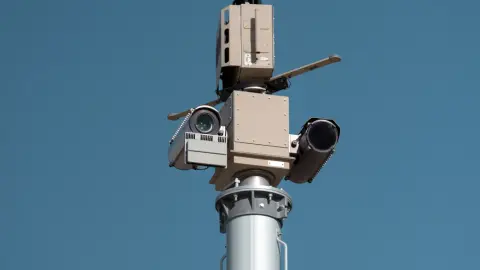
MIT Technology Review today published our investigation into how many people have died near the “virtual wall” of surveillance towers that the US government has installed along the US-Mexico border.
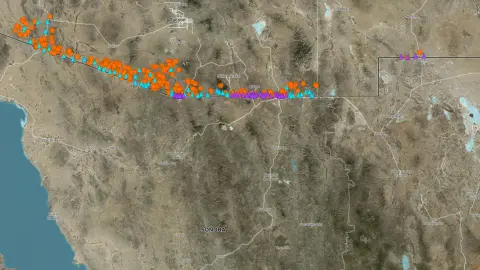
Our 15-month investigation into death and surveillance along the US-Mexico border began with a simple question: Why did so many people die near government surveillance towers meant to help track and apprehend them?

When José Morales Bernal crossed the border into the United States on April 8, 2024, the day before his 32nd birthday, it should have triggered a chain of technological alerts and human responses.
Showing 16 of 16 stories
You're all caught up.
Get the top AI news and tools straight to your inbox every week.
Weekly · AI news from MIT Tech Review - AI
Join 15,000+ AI enthusiasts