

v0.7.0
LLM inference in C/C++. Contribute to ggml-org/llama.cpp development by creating an account on GitHub.
llama.cpp11 min read
Stay updated with the latest developments in Artificial Intelligence
LLM inference in C/C++. Contribute to ggml-org/llama.cpp development by creating an account on GitHub.


I wanted to find where the recognizable assistant style (em dashes, "it's not X, it's Y", lists of three, buzzwords) lives in a model and which training stage installs it.
I was curious about OpenResearch by alphaXiv. "Turn your coding agents into research agents"? Sounds great! Just what I needed to save time on my experiments. So I copy pasted their repo into Claude and asked what it thought. Here were the first 4 lines:
I've been working on unsupervised tooling to discover what behaviors a model learns in post-training. The core idea is to use features from sparse autoencoders to identify differences in traces generated before and after training.
Inspired by TypeSafe's Jev (a non-generative model that only outputs bounded decisions — choices, probabilities, calibrated confidence), I built two small decision models end-to-end on identical budgets and tasks to answer one question: which substrate makes the better Jev?
Went down the rabbit hole to map the different Post-Transformer architectures. Various directions include Dragon Hatchling (BDH), Mamba, RWKV, xLSTM, Titans, and a bunch of hybrid models coming from different AI Labs.
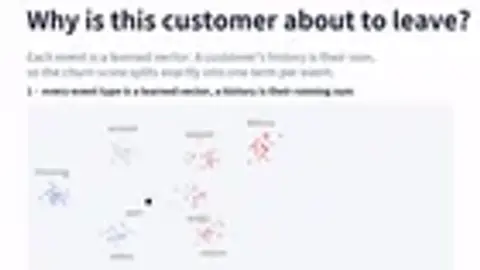
I've been working on Event2Vec, a small library for learning embeddings of discrete event sequences (purchases, logs, clinical codes, etc.) with a deliberately simple structure: a history is the running sum of its event vectors.
Hi all, so im making a binary noise classification model. I have training data with timestamps of noise and some with verified some with unverified. The performance parameters are F1 and Dice scores and their combined score.
I’ve recently started exploring machine learning by building neural networks from scratch and studying the underlying mathematics. I come from a physics and mathematics background, and as I’ve become more familiar with backpropagation, I’ve grown increasingly interested in alternative learning…
All seems a bit pointless now. Either pump out AI papers and neglect your own development, or take it slow and fall behind in the publishing race. I already have two papers made largely without LLMs (still seeking publication), but it's hard to resist just vibing the third from start to finish with…
I'm a first year ML PhD at a T5 ML program in the US. I managed to get a first author paper accepted to NeurIPS Main Track last month and thought I'd start applying for PhD research internships since I saw a lot of them required a "top" venue publication.
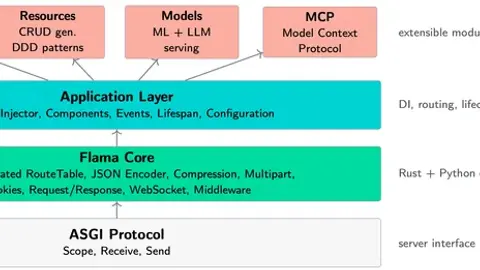
I started Flama in 2018 to take a trained model to a production API with as little ceremony as possible. With 2.0 LLMs became first-class alongside classic models, and together with Miguel Durán-Olivencia we've now written up the whole architecture in an 83-page paper on arXiv (2608.18733).
Came across this GitHub project called Paper Review Harness. Thought it might be useful for people preparing ML research papers.
https://preview.redd.it/m5e9anluo8vh1.png?width=1080&format=png&auto=webp&s=4c80687e6fe40036843a97ed8975ce46eaab0662 I am excited to share a project I have been working on during the past few years during my free time.
Hi r/MachineLearning, Stjepan from Manning here. The mods approved this post, and I appreciate being welcomed back to share another book with you. We’ve just launched AI Recommender Systems: Transformers, LLMs, agents, and RAG by Kim Falk in MEAP, our early-access program.
Split conformal prediction gives you a clean statement: with a calibration set exchangeable with future data, your prediction sets cover the true label at the rate you chose. The trouble is that production data rarely stays exchangeable.
This post is to let people know about a workshop/tutorial on Machine Learning that will run on the (blue) math discord server: discord.gg/maths. The place is nice, people are cool and helpful, and as you can see it is a mathematics server, so the learning environment is quite focused indeed.
I’m prioritizing my path and was wondering if an MS is a soft requirement for some of these Research Engineer, Applied Scientist, Post-Training roles. I only have a BS but I work full time as a Data Scientist and was wondering how I should go about this career transition.
learnc tunes named constants in unmodified C code against a score function you write in C, and writes the same file back with new values. Results, both on held-out data: JPEG, stb_image_write.h (128 quantization-table entries, tuned on 12 Kodak images, tested on the other 12): 9.1% BD-rate at equal…
Showing 18 of 155 stories
Load more storiesGet the top AI news and tools straight to your inbox every week.
Weekly · AI news from Reddit - r/ML
Join 15,000+ AI enthusiasts