Agents on live hardware: reason where you must, engineer everywhere else
Five million signals a day, down to five alerts. How we used agents two different ways on one anomaly detection problem, and where the line moves over time.
Stay updated with the latest developments in Artificial Intelligence

Five million signals a day, down to five alerts. How we used agents two different ways on one anomaly detection problem, and where the line moves over time.
In the daily surge of news and headlines about technology, it can be hard for any journalist to fully contextualize the individual events they are reporting on and trace the underlying patterns, structures, and ideas that are producing them.
It’s a cliché to say that technology is changing war. But today, the pace of change is severe, not only because of advances in fields such as artificial intelligence, but also because of a range of trends and phenomena at the intersection of tech and geopolitics that are changing what it means for…
How can you tell if an algorithm is any good? For University of Michigan assistant professor of information and public policy Ben Green, the answer lies less in accuracy scores, fairness metrics or any other technical measure than in what the system actually does once it’s out in the world.
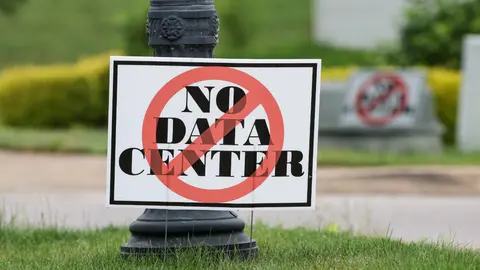
Pennsylvania offers a particular case study in which to consider the political battle over data centers that is playing out across the United States and beyond.
What should social media platforms do when the state itself becomes a threat to democracy? In a new paper published in the journal Information, Communication & Society, Daniel Kreiss and Lorcan Neill, both at the Hussman School of Journalism and Media and the Center for Information, Technology, and…
On September 23, Tech Policy Press hosted an event at Betaworks in New York City with Gil Durán, the author of The Nerd Reich: Silicon Valley Fascism and the War on Democracy, the New York Times bestselling book published by Simon & Schuster.
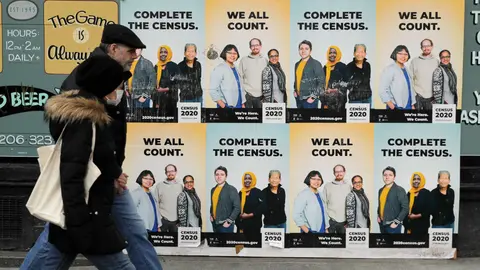
In the United States, the census touches tech policy at more points than you might realize. It's a massive data collection operation and a piece of democratic infrastructure all at once.
The study of how hate is expressed in digital media and its relationship to offline harassment and violence is a growing field that touches public policy, content moderation and platform policy, AI governance, and a variety of other topics at the intersection of technology and public discourse.
Amid a frenzy of headlines about AI safety and just two weeks out from a planned meeting of US President Donald Trump and China’s President Xi Jinping, Justin Hendrix moderated a discussion around the question, what does AI governance actually demand right now?
Just ahead of the start of the new school year, districts across the United States are issuing new policies on the use of artificial intelligence applications in classrooms.
Tech Policy Press fellow Jake Laperruque, who is also the Deputy Director of Center for Democracy and Technology’s Security and Surveillance Project, spoke to Rep. Zoe Lofgren (D-Calif.) about the the Foreign Intelligence Surveillance Act and ongoing efforts to reform it.
State legislatures across the United States are actively developing new laws on a range of issues related to artificial intelligence. In Virginia, that process is informed by an entity established by the Virginia General Assembly called the Joint Commission on Technology and Science.
How can human rights and social justice advocates and investigators protect their data and technology infrastructure in an age of rising authoritarianism in the United States and abroad?
Days into a bellwether trial brought by four states, Meta reached a settlement with a bipartisan coalition of state attorneys general to resolve their claims, agreeing to pay up to ~$17 billion and to make a series of teen-safety changes to Instagram and Facebook.
This month, in partnership with Type Investigations, MIT Technology Review published a feature titled “How ideas of a vast censorship network moved from the online fringe to Trump policy.” It considers the emergence and impact of the narrative that revolves around the idea of the “censorship…
Headed into the US midterm elections season, the information environment continues to evolve. Millions of people now use AI chatbots, both to retrieve information about elections and to create it.
The midterm election cycle is heating up in the United States, and there are important elections set to take place soon in Brazil, Israel, Sweden, and beyond. AI will be a factor in these elections, offering a new set of tools and techniques for campaigns to try to reach voters.
The rise of the tech oligarchy threatens democracy in the United States and abroad. In his new book, United States of Oligarchy, Casey Michel—author, journalist, and director of the Combating Kleptocracy Program with the Human Rights Foundation—tells the story of how a small set of extremely…
Showing 18 of 35 stories
Load more storiesGet the top AI news and tools straight to your inbox every week.
Weekly · AI news from Tech Policy Press
Join 15,000+ AI enthusiasts