
How We Fixed Our Own AEO in a Single Day by Leaving Webflow for Astro
How we moved our 800-page bilingual website from Webflow to Astro in 23 hours with AI agents, and took our Ahrefs health score from 48 to 99.
Omnia Blog9 min read
80 stories
How we moved our 800-page bilingual website from Webflow to Astro in 23 hours with AI agents, and took our Ahrefs health score from 48 to 99.
VisibAI is heading to Web Summit 2026 in Lisbon as an ALPHA startup. Here is why AI visibility now matters for every kind of business, what the NBA's new AI stats teach us about measuring the unmeasured, and two directories we built to prove it.

AEO, short for answer engine optimization, is not a replacement for SEO. It is a narrower practice that helps content surface as the answer itself. In 2026, that matters because search visibility can happen inside AI summaries, chat results, and spoken responses.

Search visibility now has two related goals: earning the click and shaping the answer before it. In AEO vs SEO, that makes ranking less simple than a single blue-link position. Answer engines change what counts as success, but they do not make classic SEO obsolete.

AEO optimization can improve the odds of being cited by AI search, but it does not create control over when or where a page appears. The real goal is making information clear enough for systems to extract, summarize, and attribute inside an answer, not simply rank and wait for clicks.
Digital PR has always been about earning coverage that influences the audience you can’t reach through paid channels. While the value proposition of digital PR hasn’t changed, the definition of “showing up” has.
Clients are asking about AEO. Some have seen competitors show up in AI results and want to know what it means. Others have read that AI is changing how buyers find vendors and want to know what their agency is doing about it.

Enterprise brand teams face a complex version of AEO that most tools weren’t built for. A single brand might span a dozen product lines, operate in multiple languages, and compete in markets where local answer engines have their own citation patterns.
Buyer behavior has changed since the advent of artificial intelligence. Now, before ever filling out a form or clicking an ad, prospects are likely asking AI for recommendations, comparing vendors, and gathering answers.
Demand generation has been built around the assumption that buyers will come to a brand when they are ready to learn about its category, whether through search, ads, content, or other channels. The funnel starts when a prospect arrives somewhere the business can see, measure, and influence it.

Product marketing’s core job is positioning: Deciding how a product should be described, what category it competes in, and which differentiators matter most to buyers. The results are deployed through sales, content, and campaigns.
Marketing leadership decisions used to be about where to allocate resources between known channels like paid, content, events, and email. Each of these channels has established performance benchmarks and predictable customer acquisition cost (CAC) ranges.

Growth marketing is all about finding the next channel opportunity before the current one gets crowded and expensive. Paid search got crowded. Content took time. Email got filtered.
Digital marketing teams have spent years building integrated measurement, connecting paid, organic, social, and email into a single picture of how buyers move through the funnel. That picture now has a gap.
Content strategists already know how to build for search. They understand how to map topics, connect related pages, and create enough depth to establish authority.
We’re experimenting with exactly this in an AI SEO project we’ve been building over the last few months.
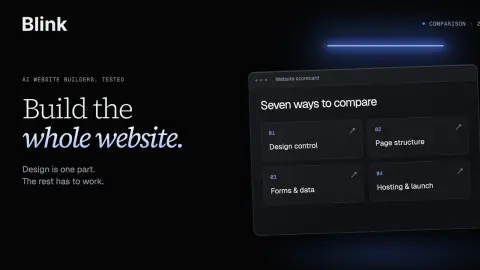
Nine AI website builders scored across 7 criteria worth 70 points total. Every score checked against the vendor's own pricing pages, docs, and product pages, and manually tested.
Today, when a buyer asks ChatGPT, Perplexity, or Google’s AI Mode a question, they rarely see a list of suggested links. They see one synthesized answer that cites a handful of sources. If your brand is one of those citations, you win attention, traffic, and trust.
Showing 18 of 80 stories
Load more storiesGet the top AI news and tools straight to your inbox every week.
Weekly · AI news
Join 15,000+ AI enthusiasts