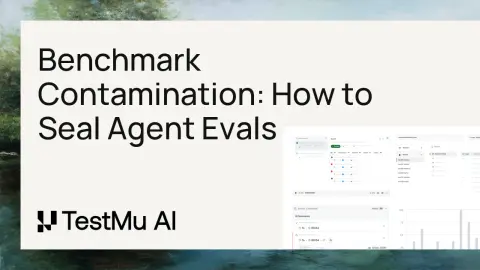
Benchmark Contamination: How to Seal Your Agent Evals
Benchmark contamination turns AI eval scores into recall tests. Learn how leaks happen, how to detect them, and the Sealed Suite framework for agent evals.
TestMu AI Blog18 min read
47 stories
Benchmark contamination turns AI eval scores into recall tests. Learn how leaks happen, how to detect them, and the Sealed Suite framework for agent evals.
At Block Builderlab Launch Event 2026, AI agents moved out of single-player chat windows and into shared workspaces. There they work beside people as named, auditable members of the team. Block Inc.
Backup and recovery has evolved into data protection, security and cyber recovery. Today, the focus is on business resilience. The scope continues to expand, with growing attention to how attackers use artificial intelligence and how defenders can use it to better protect their assets.
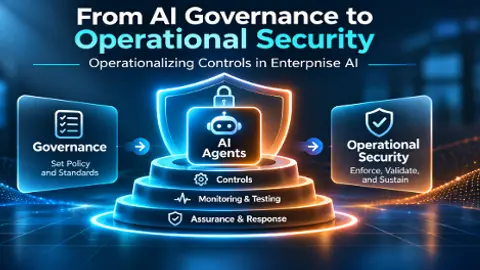
From AI Governance to Operational Security Operationalizing Controls in Enterprise AI An engineer asks an AI coding agent to investigate a support ticket. Hidden in the ticket is an instruction the …
The push for sovereign AI is reaching university research labs, where control over data, models and compute now shapes what science gets done. Universities sit at an unusual crossroads in the current technological shift, as their work spans open education and tightly controlled federal research.
Software development security startup BlueFlag Security Inc. today expanded the artificial intelligence agent governance tools in its developer risk platform to cover unapproved coding agents, including those running on engineers’ laptops outside the code repository.
As AI agents spread across enterprise workflows, permission management is becoming one of the most practical levers for keeping them safe. Agents act with the access people give them, so the old problem of sprawling privileges now plays out at machine speed.
Enterprises have embraced AI for everyday tasks, but turning autonomous agents into measurable business returns is proving far harder. The bottleneck is no longer the technology but the organizational change needed to rewire processes around it.
Enterprises are learning that no-code apps deliver the most value when the people closest to the work build them. As AI agents arrive inside work management platforms, the harder task is getting employees comfortable enough to use them without letting adoption spin out of control.
Legal operations teams are finding that software built for sales pipelines can just as easily run investigations and member communications. As AI agents take on triage work, even nontechnical teams are building those workflows themselves.
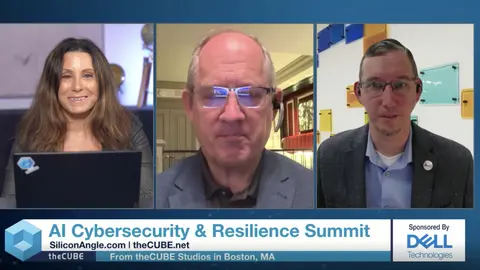
Enterprises racing to deploy AI at scale are discovering that models depend on the infrastructure beneath them. As cyber resiliency becomes central to AI deployment, organizations must address foundational issues such as data quality, access controls and recovery.
AI cybersecurity requires governing what trusted software does as well as keeping attackers out. As AI agents act across enterprise systems on behalf of users, identity must establish who or what is acting, how much authority it carries and where that authority ends.
Cyber recovery planning depends on the ability to restore critical data after an attack. As enterprises adopt agentic AI, the systems and information they need to protect are expanding. That expansion is reshaping how enterprises approach AI trust and cyber resilience.
Data discovery and classification are becoming important considerations as enterprises bring AI into their operations. Security teams need to understand what information is available to AI systems and how access is governed.
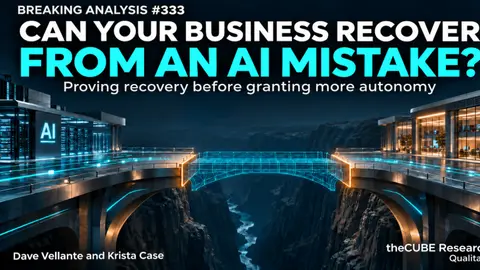
AI trust is becoming as much a recovery problem as a security one. As agents touch more enterprise data and attackers use frontier models to find weak spots faster, simply holding a copy of the data no longer proves a business can bounce back.
The cybersecurity industry is discovering that powerful frontier AI models are a double-edged sword. Companies can use models to identify vulnerabilities in source code and system configurations faster than ever before. As it turns out, malicious actors can do this as well.
A separation of powers for control of autonomous agents The post Who Watches the AI? appeared first on Towards Data Science.
Agentic AI security is testing where enterprises place their trust as software gains the ability to access sensitive data and act on users’ behalf. The challenge extends from controlling individual requests to governing actions that can span multiple systems and business processes.
Showing 18 of 47 stories
Load more storiesGet the top AI news and tools straight to your inbox every week.
Weekly · AI news
Join 15,000+ AI enthusiasts