

Measuring Synthetic Data Quality Before You Train on It
Bad synthetic data trains bad models. Before you feed it into your pipeline, you need objective quality signals. Here’s how to measure them.
Coasty Blog3 min read
11 stories
Bad synthetic data trains bad models. Before you feed it into your pipeline, you need objective quality signals. Here’s how to measure them.
Training AI agents on realistic workflows is hard when real data is scarce or risky. Computer use agents can generate synthetic data that mirrors real user actions, solving the data problem without compromising privacy or quality.
Bad synthetic data trains bad models. Learn how to validate synthetic datasets with real metrics and benchmarks before you commit to them.
Building synthetic data in-house is expensive and slow. Learn the actual expenses, hidden risks, and when a custom service makes more sense for your AI projects.
Real workflow data is hard to get but essential. Computer use agents run on actual desktops and browsers, collecting realistic interaction traces. This process generates high-quality synthetic datasets that are safer and faster to use for training and evaluation.
Good labeled data is the bottleneck for AI. Synthetic data solves the supply problem without the hiring boom. Here's what actually works and how it fits into your workflow.
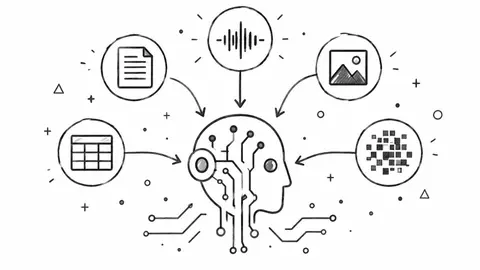
A plain-English guide to AI training data — what it is, where it comes from, how it is cleaned and labeled, and how makers and small teams can build better
Training AI on real health or personal data is risky and expensive. Synthetic datasets that respect privacy laws can solve both problems without sacrificing realism.
Real datasets miss the rare stuff that breaks your model. Synthetic data fills the gaps, lets you test safely, and cuts labeling cost. Here is how.
Real desktop interaction data is hard to get. Computer use agents can capture it at scale and turn it into synthetic datasets for training and evaluating AI. Learn the tradeoffs and how to start.
Few technology companies can help users to protect and monetize their personal data for artificial intelligence as well as SignSplit PBC, it seems. That explains why it has already secured a massive $1 billion valuation today after launching with a bumper $400 million in funding from W Group, a…
Showing 11 of 11 stories
You're all caught up.
Get the top AI news and tools straight to your inbox every week.
Weekly · AI news
Join 15,000+ AI enthusiasts