How CodeRabbit Security performed on a real-world vulnerability benchmark
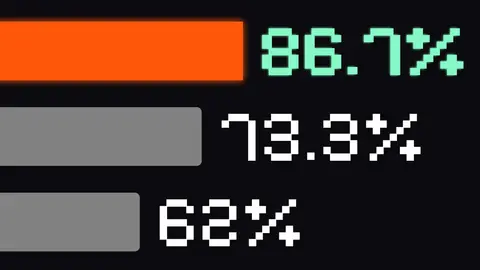
CodeRabbit Security led three other systems in our vulnerability-detection benchmark. Here’s what we tested and how we scored it.
CodeRabbit Blog6 min read
62 stories
CodeRabbit Security led three other systems in our vulnerability-detection benchmark. Here’s what we tested and how we scored it.
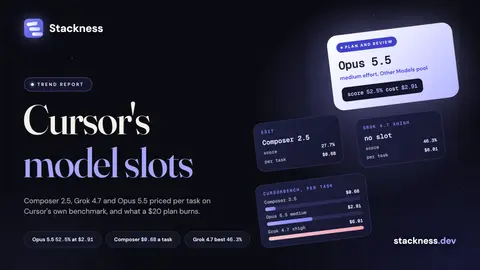
On Cursor's own benchmark, Opus 5.5 beats every Grok 4.7 setting for less, and Composer 2.5 is the cheap editor. Prices, plan burn and the break-even.
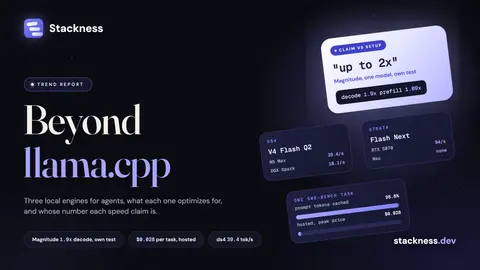
ds4 runs big MoE models on 96 GB Macs, Magnitude tunes kernels to your device, Strata puts one model on a gaming PC. Every speed claim is self-reported.
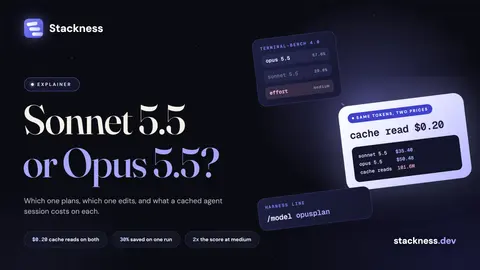
Sonnet 5.5 costs half of Opus 5.5 per token, but cache reads cost $0.20 on both. Which model plans, which one edits, and what one metered run saves.
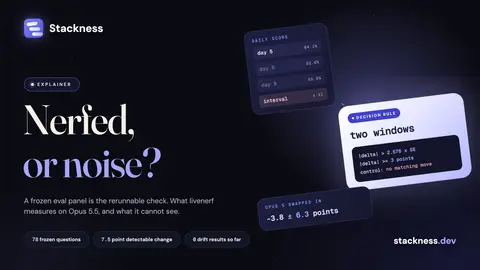
A frozen eval panel is the only rerunnable way to tell whether a hosted model got worse. What livenerf measures on Opus 5.5, and how to size your own.
Google LLC today began rolling out Gemini 4 Argon, a frontier artificial intelligence model that beats rival models from Anthropic PBC and OpenAI Group PBC on most of Google’s benchmarks, to vetted cybersecurity defenders.
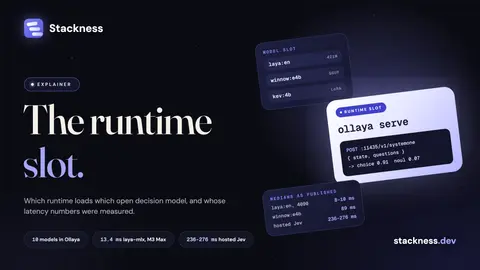
To run a System One model locally, pick a runtime too: Ollaya serves ten open model families, laya-mlx runs Laya on Apple silicon, and llama.cpp needs a shim.
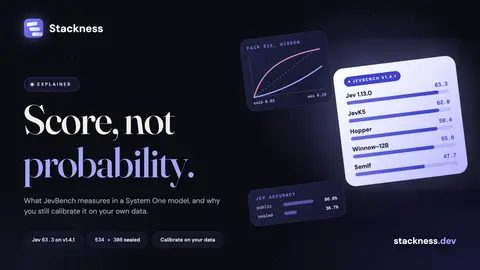
JevBench scores System One models on accuracy, calibration, speed and cost, and puts Jev first at 63.3. Why calibration still needs your own data.
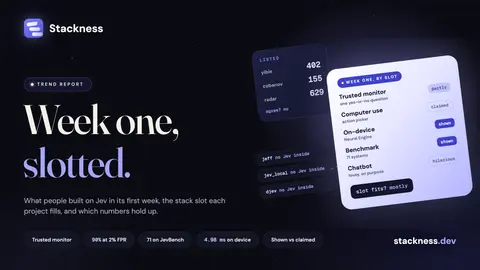
Jev's first week brought a trusted monitor, computer-use agents, self-hosted clones, a benchmark and a joke chatbot: the slot each fills and which numbers hold.
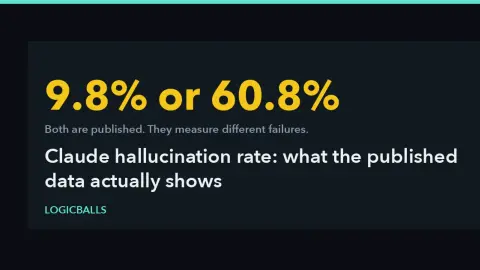
Three published measurements put Claude's hallucination rate at 9.8%, at 60.8%, and at 6% higher than the previous model. All three are correct, and none of them is the number.
There is no single accuracy number. Published measurements for GPT-class models run from 7.6% to 62.5% on short-form facts and 3.1% to 23.3% on summary faithfulness, and each measures a different task.
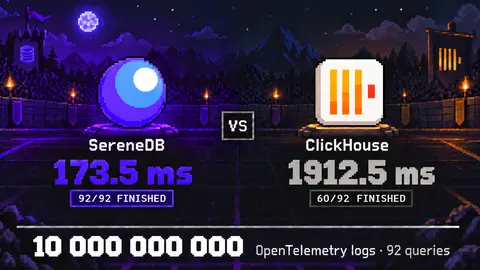
We ran 92 search and analytics queries over 100M, 1B and 10B OpenTelemetry logs against ClickHouse 26.8 with its new text index and SereneDB, all on a single instance.
The same scraping tasks written as PandaScripts and as Puppeteer and Playwright scripts. Nearly identical code, 4x to 17x less memory, and one binary instead of two processes and a protocol.
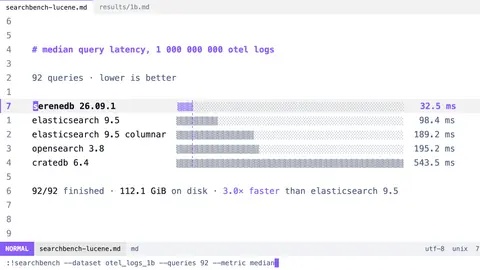
We ran 92 search and analytics queries over 100M and 1B OpenTelemetry logs against Elasticsearch 9.5, its new columnar index mode, OpenSearch, CrateDB and SereneDB.
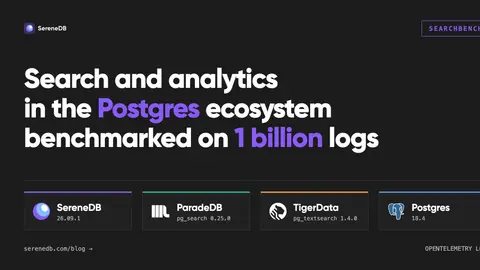
We ran 92 search and analytics queries over 100M and 1B OpenTelemetry logs against vanilla Postgres, ParadeDB with pg_search, TigerData with pg_textsearch and SereneDB.
TL;DR Claude Opus 5 tops independent SWE-bench Verified tracking at 96% - though Anthropic's own launch materials skip that benchmark entirely for custom evals Qwen3.
Overview GPT-5 mini launched on August 7, 2025, alongside full GPT-5 and a third, smaller GPT-5 nano, giving developers three sizes of the same generation to trade off against cost and latency.
Three papers landed this week that, read together, sketch out what happens once you stop treating an AI agent as a single system and start treating it as a node in a network.
Showing 54 of 62 stories
Load more storiesGet the top AI news and tools straight to your inbox every week.
Weekly · AI news
Join 15,000+ AI enthusiasts