Know a great AI tool or AI news source? Submit it to AiByts

Computer Sciences

24 stories

Stories

  • AI helps digital humans move more naturally as they speak

    People communicate with more than words. A raised hand, a change in posture or a facial expression can help convey meaning and emotion. Now, researchers have developed an artificial intelligence (AI) system that can translate speech into coordinated movements of the body, hands and face,…

    TechXplore AI3 min read
  • AI models can answer differently when told they are being watched

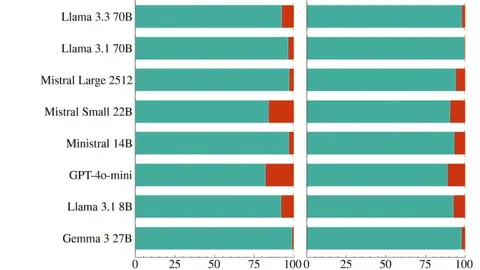
    Large language models (LLMs), the AI systems underpinning the functioning of ChatGPT, Gemini and other similar platforms, are now widely used worldwide. While the responses provided by these models can be useful in many situations, they can also change under specific conditions.

    TechXplore AI5 min read
  • New communication and memory tools reduce AI data traffic and response delays

    Researchers have developed technologies that reduce communication overhead by transmitting only the data needed for artificial intelligence (AI) analysis and shorten the time users must wait for a response when returning to an AI application after using other apps on a smartphone.

    TechXplore AI1 min read
  • AI learns to predict the world without ever seeing it

    Almost every artificial intelligence system we know begins in the same way: it is exposed to vast amounts of information from the real world—books, websites, images and recordings—and trained to identify patterns within it.

    TechXplore AI1 min read
  • Some AI bots work harder to defy stereotypes, study finds

    Large language models (LLMs), the technology that powers tools like Gemini and ChatGPT, are more nuanced than ever. But that doesn't mean they aren't biased. Some models are more prejudiced than others, a Rutgers University researcher has found.

    TechXplore AI1 min read
  • Q&A: How AI came to model the 'messy' human mind

    Generative artificial intelligence models are rooted in ideas of mid-20th-century engineers who thought some amount of irrationality was essential for a machine that could think like a human, contends Benjamin Lindquist, an assistant professor in the MIT History Section, who holds an MIT Schwarzman…

    TechXplore AI1 min read
  • New communications toolkit to help care providers prepare for cyber incidents

    Digital Care Hub has launched a series of new resources to help adult social care providers plan how they will communicate with key stakeholders in the event of a cyber incident. These include people receiving care, families, staff, partner organizations and relevant public bodies.

    TechXplore AI4 min read
  • Who is Elias the lighthouse keeper? AI fiction tells the same old story

    Like a hack writer or a friend rehashing their glory days over and over, artificial intelligence tends to tell the same old story. For AI agents instructed to write fiction, that tale usually involves lighthouses and a keeper named Elias, according to new Cornell research.

    TechXplore AI4 min read
  • LLMs show a human-like double standard when judging others' reasoning

    Large language models (LLMs), the artificial intelligence (AI) systems underpinning the functioning of ChatGPT and other conversational agents, are now widely used to source information, summarize texts and generate content for specific purposes.

    TechXplore AI1 min read
  • Can AI understand space, time and pain?

    Artificial intelligence can do remarkable things, but how much does it actually understand about the world? Researchers have found that surprisingly specific information can be extracted from the inner workings of large language models (LLMs) like ChatGPT.

    TechXplore AI5 min read
  • New detector spots AI-generated work by examining ideas, not words

    It's no secret that an ever-increasing number of scientists use AI to help with their papers. While tasks such as polishing text are generally permissible if declared, using the technology to write papers, or parts of papers, from scratch and passing them off as original work is not.

    TechXplore AI1 min read
  • Tiny droplets form soft networks for brain-inspired computing

    Inside the human brain, billions of individual neurons connect to form a vast network capable of rapidly processing information and electrical signals. A team of researchers and engineers at Penn State is taking inspiration from these natural computers to build soft networks of water-based…

    TechXplore AI5 min read
  • Neural network study sheds light on how AI chatbots 'reason' like humans

    When humans write sentences or solve math problems, they are thinking symbolically—each number, variable or word is expressed by a symbol. While AI chatbots do not "think" that way, if prompted, they can offer cogent advice about writing, math and many other topics as if a person were offering it.

    TechXplore AI1 min read
  • Spelling backward gets easier for AI models upgraded to see every letter

    Before large language models (LLMs) can process text, they split it into chunks such as words or word fragments. The LLM behind ChatGPT, for example, splits "LMU München" into the three chunks "LM," "U" and "München," so it never directly sees the individual letters in "München." This step, which…

    TechXplore AI3 min read

Showing 18 of 24 stories

Load more stories
AiByts Weekly Brief

Get the top AI news and tools straight to your inbox every week.

Weekly · AI news

Join 15,000+ AI enthusiasts