
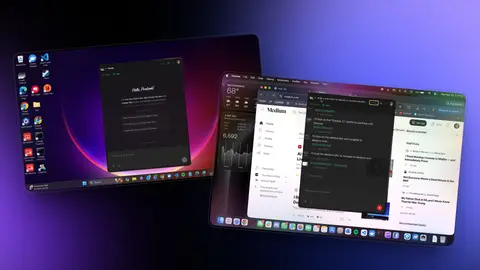
The enterprise automation maturity curve: from macros to AI agents
RPA bots break on every app update, and SOPs stay on paper. Computer use agents see and adapt, not break. Here is the realistic path from legacy automation to durable AI agents.
40 stories
RPA bots break on every app update, and SOPs stay on paper. Computer use agents see and adapt, not break. Here is the realistic path from legacy automation to durable AI agents.
Traditional RPA hits a wall when UIs shift or processes get messy. Computer use agents see the screen, follow SOPs, and adapt instead of breaking. See how.
Most enterprise bots stop at the first unexpected screen. AI computer use agents keep going by seeing the screen and following SOPs. Here’s why that matters for your automation roadmap.
Staying on legacy RPA costs more each time UIs change. Computer use agents survive those changes and follow your SOPs without rebuilding bots.
Manufacturing teams that stick to traditional RPA know the cost of UI changes and broken bots. Computer use agents see the screen and adapt, turning SOPs into working automation without a rebuild cycle.
Telecom order management is a perfect storm of changing UIs, complex workflows, and manual approvals. Learn why traditional RPA struggles here and how computer use agents deliver durable automation.
RPA bots break when UIs change and halt when things go sideways. Computer use agents see the screen and follow SOPs. Here is how modern order to cash teams move past brittle automation.
Finance teams are stuck on brittle bots and manual SOPs. A new approach that sees the screen and follows plain-language instructions can finally close the books faster and more reliably.
Moving from Blue Prism means escaping brittle selectors and endless rebuilds. Computer use agents adapt to changing UIs and recover from errors, giving you a more durable automation path.
The maintenance treadmill of legacy RPA is expensive and brittle. Computer use agents let you extend automation to the long tail of changing UIs and SOPs with far less hand-holding. Here is how to move without the risk.
Every UI update forces a rebuild with traditional RPA. AI agents see the screen and keep going. Here’s why the cost of manual maintenance is the real bottleneck and how computer use agents change the equation.
Every year, teams face the same decision: pay to patch brittle bots or switch to computer use agents that adapt to change. Here is what changes and why agents are now the durable option.
Your RPA bots are breaking more often as UIs change, and your maintenance backlog is growing. Computer use agents survive those changes, follow SOPs directly, and scale where RPA stalls.
RPA bots break when UIs change, and manual SOPs only humans can follow. Computer use agents see the screen, recover from errors, and work on any app. Here’s how to automate the long tail of IT support without the maintenance treadmill.
Traditional RPA breaks every time a UI changes. Computer use agents see the screen and follow your SOPs directly. Here is a realistic path to migrate from Automation Anywhere bots without the rebuild treadmill.
Traditional RPA breaks with every UI change, forcing constant rebuilds and a growing maintenance backlog. Computer use agents survive those changes, follow SOPs as written, and work across any app. Here is how an enterprise can move to this durable automation model.
Legacy mainframes and aging apps break traditional RPA. Computer use agents see the screen and adapt, not just bind to brittle selectors. Here’s what changes and how to move.
Attended RPA bots that break with every UI change and SOPs no one can follow are costly. Here is a roadmap to move to computer use agents that see the screen and adapt.
Showing 36 of 40 stories
Load more storiesGet the top AI news and tools straight to your inbox every week.
Weekly · AI news
Join 15,000+ AI enthusiasts