
GANs Explained: How AI Learns to Create New Data
A forger, a detective, and a game that never ends: the full, friendly guide to how two neural networks compete to produce data that never existed before.
Towards AI16 min read
116 stories
A forger, a detective, and a game that never ends: the full, friendly guide to how two neural networks compete to produce data that never existed before.
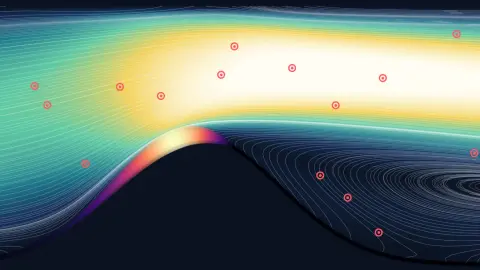
A from-scratch PyTorch build that recovers blood flow, viscosity, and wall shear stress in a narrowed artery from 40 noisy velocity readings The post How to Use a PINN for a Navier-Stokes Inverse Problem appeared first on Towards Data Science.
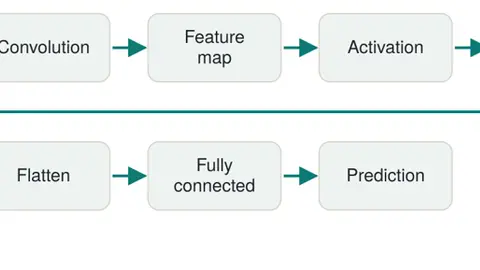
Convolutional Neural Networks Explained: How AI Understands Images How a network goes from a grid of raw numbers to “that’s a cat”. Introduction So far in this series we’ve worked with …
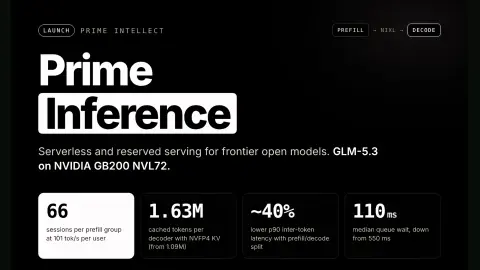
Prime Intellect has launched Prime Inference, an OpenAI-compatible platform for serving frontier open models on NVIDIA Blackwell. Its GLM-5.3 deployment uses Dynamo, vLLM and NVFP4 KV compression to serve 66 sessions per prefill group at 101 tok/s per user.
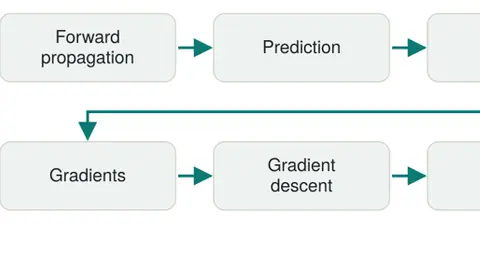
Why Neural Networks Overfit: Regularization, Dropout, and Early Stopping Explained Why does a model ace its training data and then stumble on anything new? Introduction Neural networks learn patterns …
In the last article, CNNs showed us how a network can understand where things are in an image. But some data isn’t about space at all. It’s about order. Read this sentence backwards and it stops making sense. Shuffle a week of stock prices and the trend disappears.
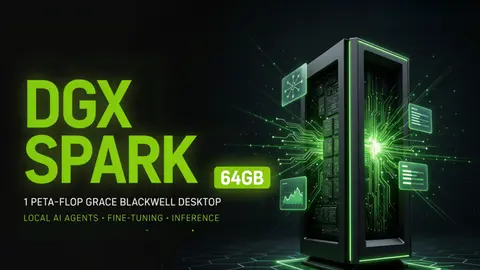
NVIDIA announced a new 64GB configuration of DGX Spark — from Acer, ASUS, Dell, Gigabyte, HP and MSI — its GB10-powered desktop AI system. It gives developers a way to start with one system for local models and agents, then cluster two 64GB units for 128GB of memory across the cluster and more…
AWS's Strands Agents team released Strands Decider 2B, an Apache-2.0 decision model built on Qwen3.5-2B-Base. It returns choices, yes/no probabilities and scores with calibrated confidence in one forward pass, never text.
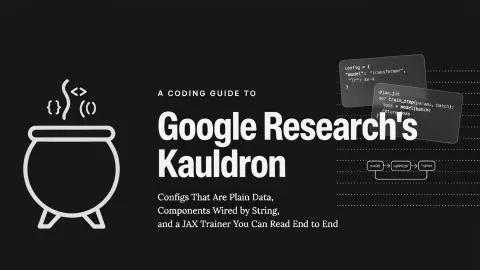
In this comprehensive coding guide, we explore Google Research's Kauldron—a JAX training library optimized for research velocity and modularity. Learn how konfig turns experiments into plain dictionaries, kontext wires components via string paths, and ktyping enforces runtime shape checks.
What fractals, loss landscapes, and dynamical stability reveal about adaptation under constraint
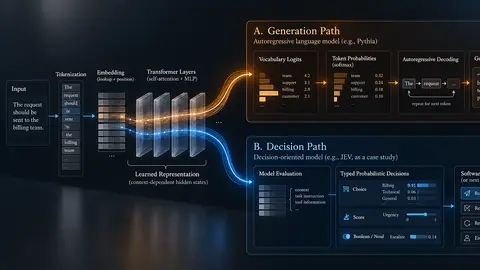
From Token to Trajectory How Context Reshapes Representations — and What AI Systems Do with Them The suitcase felt surprisingly light. The color looked surprisingly light. The same token can begin …
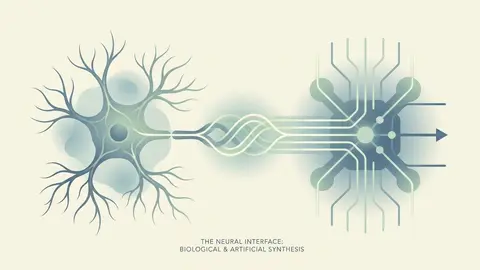
The activation function was never a fixed biological commitment but a working hypothesis revised under empirical pressure. The post What the ReLU Revolution Revealed About Biological Plausibility appeared first on Towards Data Science.
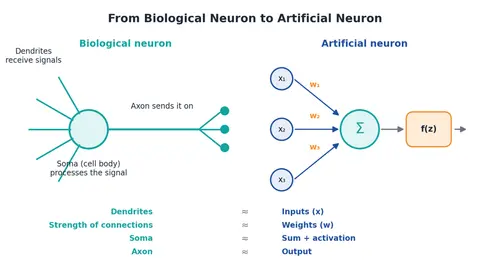
How Does a Neural Network Learn? Neurons, Activation Functions and Loss A neural network starts from a surprisingly simple idea: Take some numbers, multiply them by weights, add a bias, and transform …
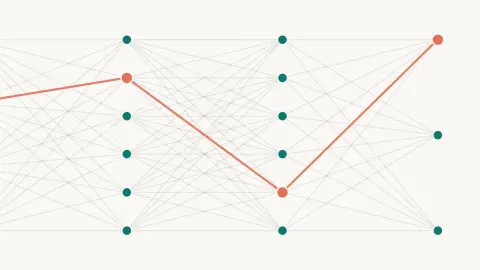
A small, strange discovery in machine learning called grokking The post The AI That Learned to Understand Long After It Stopped Trying appeared first on Towards Data Science.
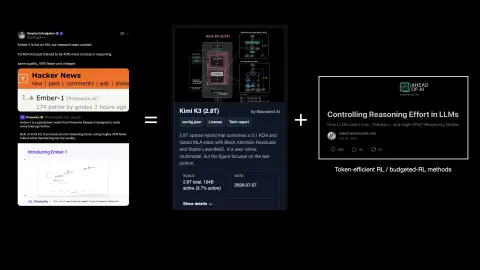
Why I'd invest in post-training existing open-weight LLMs, with Fireworks' Ember-1 as an example of more token-efficient reasoning.
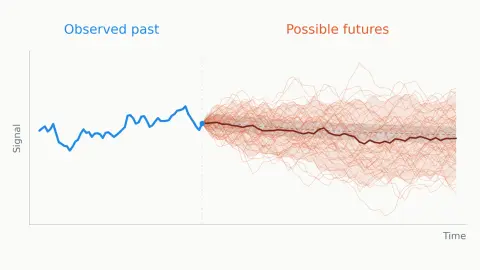
Autoregressive rollout and uncertainty propagation. Second in a series on probabilistic forecasting for physical signals. The post Your Model's MSE Is Lying to You: Part II appeared first on Towards Data Science.
See how an equipment maker scoped a computer vision pilot, ruled out an enterprise platform, and used no-code computer vision to study operator behavior.The post 7 Steps to a Working Agentic Vision Pilot appeared first on viso.ai.
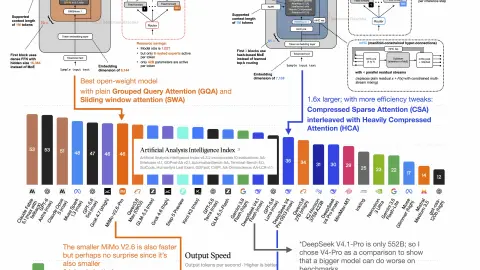
Notes on MiMo-V2.6 Pro's GQA and sliding-window attention, agent training tasks, reward signals, and large RL batches.
Showing 54 of 116 stories
Load more storiesGet the top AI news and tools straight to your inbox every week.
Weekly · AI news
Join 15,000+ AI enthusiasts