Framing the Shift to 48V
From lighter wiring to automated assembly, 48V architectures are reshaping vehicle connectivity and laying the groundwork for next generation mobility. The post Framing the Shift to 48V appeared first on EE Times.
108 stories
From lighter wiring to automated assembly, 48V architectures are reshaping vehicle connectivity and laying the groundwork for next generation mobility. The post Framing the Shift to 48V appeared first on EE Times.
See how BIWIN’s SSD, embedded storage, and memory portfolio supports faster, efficient AI from cloud data centers to edge wearables. The post From Cloud AI to Edge AI: How BIWIN Enables the Next Generation of Storage and Memory Solutions appeared first on EE Times.
Deepx is combining low-power AI accelerators and portable software with industry partnerships to bring physical AI into production. The post Deepx Building Open Software Ecosystem to Scale Physical AI Beyond the Data Center appeared first on EE Times.
Explore Goodram’s European approach to DRAM and SSD testing, from burn-in to platform validation, for reliable industrial and embedded systems. The post How Goodram Validates DRAM and SSD Reliability in Europe appeared first on EE Times.
NI said Kaynes Semicon has selected its semiconductor test systems, while other Indian OSATs continue to evaluate equipment as manufacturers prepare for production. The post India’s OSAT Buildout Puts Semiconductor Testing in Focus appeared first on EE Times.
Demand for custom silicon is rising as physical AI, data centers, automotive systems, and edge devices require architectures optimized for specific workloads, memory bandwidth, latency, and energy efficiency.
HO CHI MINH CITY -- Vietnam's public security ministry has asked Samsung Electronics to cooperate with it on chips for security equipment, artificial
AI can generate low-level code, but code generation is also making it harder to build and maintain the software ecosystems we need. The post Chris Lattner: AI Code Generation Doesn’t Solve Software Engineering appeared first on EE Times.
From SiC power devices to silicon photonics, Singapore is building the infrastructure and industrial partnerships needed to bring deep-tech research to market. The post How Singapore Connects Chip Research, Startups, and Manufacturing appeared first on EE Times.
Build scalable physical AI by balancing compute, power, safety, and cost—see why system architecture outperforms raw model size. The post Building Physical AI Systems That Can Work in the Real World appeared first on EE Times.
A hobbyist converted a SK hynix 2x 16GB DDR5-5600 SODIMM kit they got off Facebook Marketplace for $120 into a DDR5-7800 desktop kit.
Choose timing with confidence: compare crystals, oscillators, RTCs, MEMS, and atomic references for reliable designs—download the guide. The post Precision Timing Special Report appeared first on EE Times.
This year’s Nobel prizes explained large systems through their smallest parts. What can chip design learn from them, and can AI help us design in the other direction too? The post From Macro to Micro, and Back appeared first on EE Times.
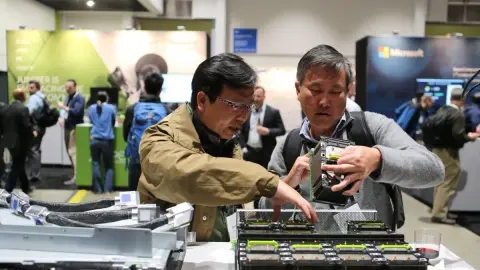
The OCP Summit showcased power delivery boards, PSU designs, hot-swap controllers, and event-based telemetry. The post Data Center Power a Prominent Highlight of OCP 2026 appeared first on EE Times.
AMD’s David Wang told EE Times that while Taiwan has huge opportunities in rack-scale AI, physical AI, and AI PC markets, the sticking point may well be talent. The post Taiwan’s AI Ambitions Run into Talent Gap appeared first on EE Times.
Join this 30-Minute BitCast as our expert demonstrates how information flow tracking follows security-sensitive assets during existing simulation or emulation runs. The post Your Chip Works. Prove It Is Secure. appeared first on EE Times.
During a panel session at iTechCon 2026, discussions explored how Taiwan can build on its strengths in semiconductors, advanced packaging, and system design to support AI development. The post AI Moves to System-Level Co-Design: How Can Taiwan Capture More Value appeared first on EE Times.
Japan’s $21B offer to GlobalFoundries would add two New York fabs and lift U.S. chip capacity 10%; see why analysts warn on state support. The post Japan Offers GlobalFoundries $21B for U.S. Fab Expansion appeared first on EE Times.
Showing 54 of 108 stories
Load more storiesGet the top AI news and tools straight to your inbox every week.
Weekly · AI news
Join 15,000+ AI enthusiasts