
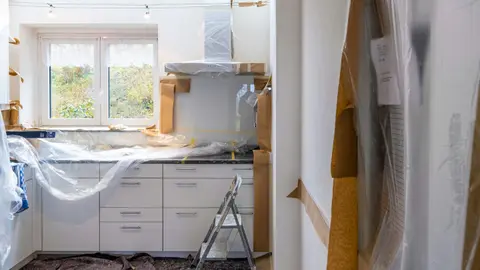
We love TV reno shows. Could they help us build more sustainable homes?
Whether they revolve around a modest fixer-upper or a mansion makeover, renovation shows are among the most widely watched TV genres in Australia.
TechXplore AI5 min read
118 stories
Whether they revolve around a modest fixer-upper or a mansion makeover, renovation shows are among the most widely watched TV genres in Australia.
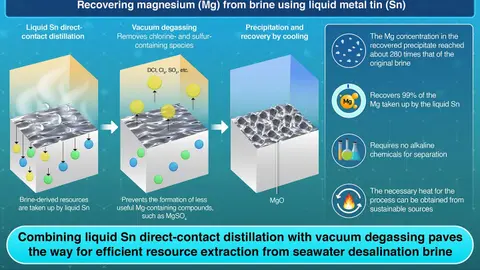
Water scarcity is becoming increasingly serious worldwide as population growth and climate change increase demand for freshwater. Seawater desalination is therefore attracting growing attention, especially in arid regions.
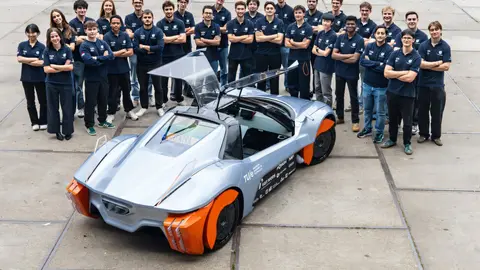
VENTRA is a new sustainable concept car developed by the student team TU/ecomotive. The electric vehicle captures particulate matter generated by tires and brakes while driving, encourages a more sustainable driving style and produces less particulate matter itself.
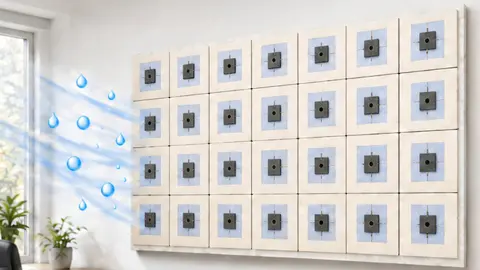
More than 6 million U.S. homes have solar panels on their roofs—but what if you could generate power inside your house, too? Researchers at Binghamton University have developed a new type of wallpaper that turns moisture in a room into small amounts of electric current.
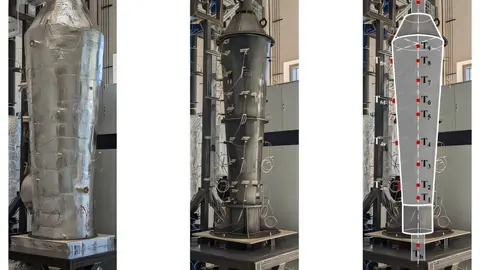
Industrial processes generate large amounts of heat that often cannot be used immediately. One reason is that the supply of heat and demand for it often occur at different times. Thermal energy storage systems can bridge this gap by absorbing surplus heat and making it available later.
What if the blue pigment in your ink or dye could help power the future of clean energy? A recent study suggests it could. A research team led by professor Hiroshi Yabu at Tohoku University's Advanced Institute for Materials Research and professor Dario R.
In 2023, the International Energy Agency predicted that by 2028 the world's oil companies would produce more oil than people wanted to buy. Prices responded to that and similar projections of slowing oil demand, dropping too low to attract investment in new wells and refineries.

When a nuclear power plant shuts down, the heat from the reactor doesn't disappear right away. Even after the chain reaction stops, the fuel continues to give off what scientists call decay heat. In the event of an unplanned shutdown or accident, that heat must be removed safely and reliably.
The Manhattan Project was not just a quest to build a nuclear bomb; it was a quest to build one before Nazi Germany completed its own. One route to a bomb is to build a nuclear reactor to produce fissile material. But it has remained unclear how close Germany was to creating its own reactor.
A cross-functional team comprised of researchers, supply chain management, and facilities leadership, at the University of California, San Francisco (UCSF), has developed and tested a practical approach to help research institutions identify energy-intensive ultra-low temperature (ULT) freezers,…
Showing 118 of 118 stories
You're all caught up.
Get the top AI news and tools straight to your inbox every week.
Weekly · AI news
Join 15,000+ AI enthusiasts