
AI Data Analyst: How It Works and Best Tools (2026)
An AI data analyst answers questions against governed definitions instead of raw schema. How it works, what it automates, and what it cannot.
Supaboard AI Blog16 min read
1,108 stories
An AI data analyst answers questions against governed definitions instead of raw schema. How it works, what it automates, and what it cannot.

Wealthfolio lets you point it at any URL that returns a price and describe how to read it, so the mutual funds and regional listings the big providers ignore still get tracked. No code, no waiting for an integration.
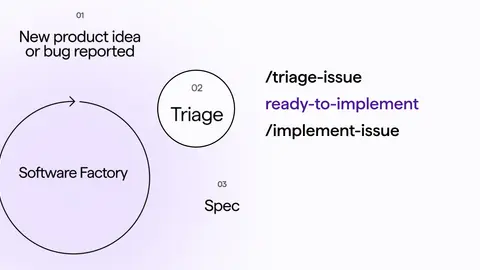
This post is the first in a series I’m doing on how to set up your own cloud software factory using skills and loops. It’s easier than it sounds to get something simple and effective running so you can start to automate significant parts of your team’s development flow.
This release brings the HFresh disk-based vector index and the built-in MCP Server to general availability, rebuilds cluster-wide async replication to run from a single scheduler (on by default), and adds two previews: the Boost API and Nested Object Filtering.
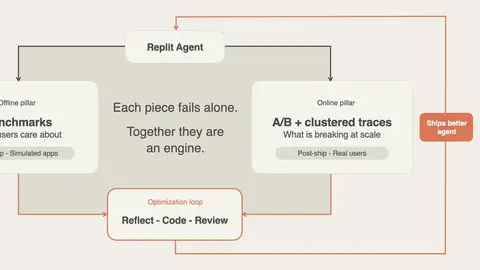
Most Replit Agent users start with an idea. They describe the goal in natural language — without a repo, test suite, or chosen framework — and expect the agent to turn it into a functioning app.
Self-reported Llama-3.1-8B results for three LLM inference engines. Published unique-prompt throughput and latency rows cover H100 bf16. FP8 and L40S appear only in derived cost results. The harness and raw data are not publicly available.
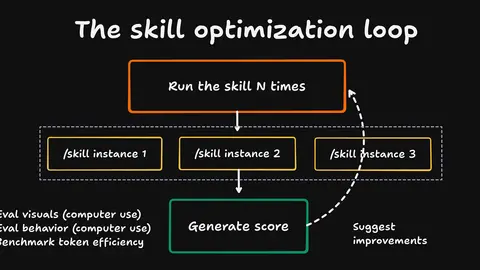
This post shows how to create a loop with automated feedback that an agent can run to optimize its own Skills. It uses an automated grader with computer use to assess how well a Skill is performing, and then iteratively improves the Skill.
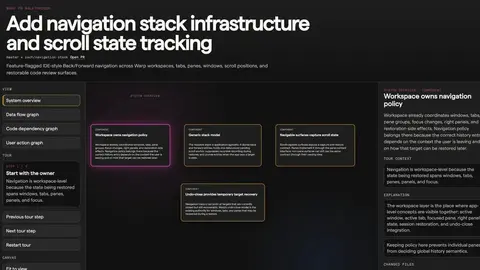
While we’re waiting for someone to re-invent Github I put together a useful skill that can help folks better understand agent (or human) generated PRs.
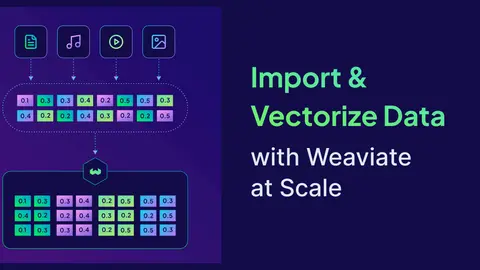
Server-side batching, retries, the blobHash data type, and multimodal ingestion — what to use when, with code.
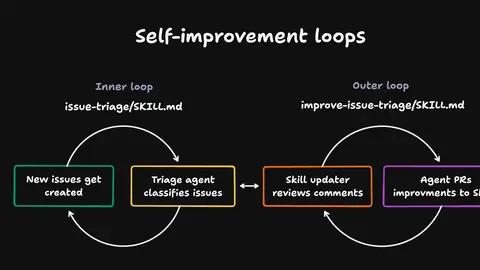
There’s been a lot of chatter about using “loops” lately to drive agents, and I think this has been accompanied by a bit of “what actually is a loop”?

A founder's field guide to the semantic layer in 2026: what it is, why AI agents fail without one, and how dbt, Cube, AtScale, Looker, and Malloy compare.

Agents can stare at code all day long, but they will not find all the issues because they are probabilistic unit tests. You need to actually run your application to get runtime evidence and proof that things behave as your organization expects them to for full integration and end-to-end tests.
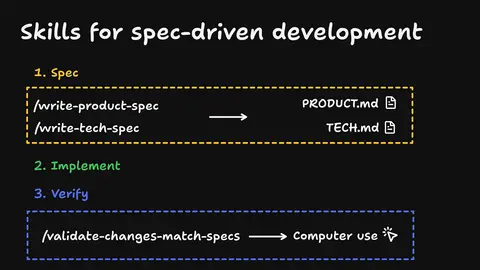
Use Skills to guide agents through product specs, technical specs, implementation, and validation so spec-driven development is repeatable and reviewable.
Reducing WebAssembly bundle size: how Arcjet shrank its Rust bot detector 27% with Aho-Corasick, keeping per-request memory isolation and using Wizer snapshots.

Helping millions of developers easily build, test, manage, and scale applications of any size - faster than ever before.
If your standup is still a tour of what everyone — or everyone's coding agent — did yesterday, you're doing it wrong. Ari already knows what happened. Standup isn't the memory layer anymore; it's the steering layer. Here's how we run it at Ariso.

Most multi-cluster dashboards copy your cluster state into a backend cache. Radar Cloud doesn't. Here's why the reverse-proxy model is the right call.
Description coverage, schema completeness, auth clarity, and the weights behind the grade.
Showing 1,062 of 1,108 stories
Load more storiesGet the top AI news and tools straight to your inbox every week.
Weekly · AI news
Join 15,000+ AI enthusiasts