
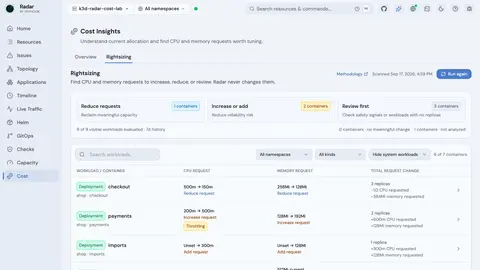
Kubernetes Rightsizing: Which Requests to Change, and When Not To
How to right-size Kubernetes CPU and memory requests with Prometheus, and when HPA, OOMKills, bursty usage or throttling should stop a reduction.
Radar Blog12 min read
14 stories
How to right-size Kubernetes CPU and memory requests with Prometheus, and when HPA, OOMKills, bursty usage or throttling should stop a reduction.
We ran the same agent and model on 50 live Kubernetes faults. With read-only cluster context it reached the answer about three times faster, and was slightly more accurate. Here's what it did without that context, and how to run the same test before you buy an AI SRE.
Kubernetes 1.34 reaches end of life on October 27, 2026. What that date and the EKS, GKE, and AKS deadlines around it actually do to your clusters, and what to check.

A field guide to Karpenter failures: pending pods, LaunchFailed, VCPULimitExceeded, NodeRegistrationHealthy, and DisruptionBlocked - what each one means and where the evidence lives.
Kubernetes 1.37 removes 25 feature gates, an alpha scheduling API, and 18 kubelet flags, and starts the nftables transition. What breaks, and how to check your cluster.
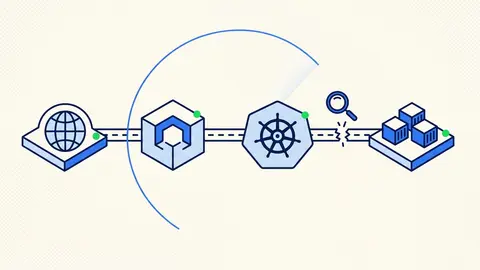
Pods Ready, Service green, curl times out. Radar's Reachability tab traces the declared network path and live-probes it, naming the first hop that breaks.
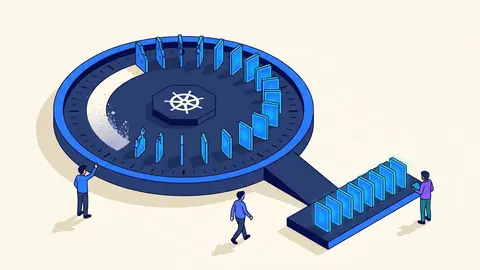
Kubernetes events expire after one hour by default, and many of the changes that cause incidents never become events at all. How to keep history that survives.
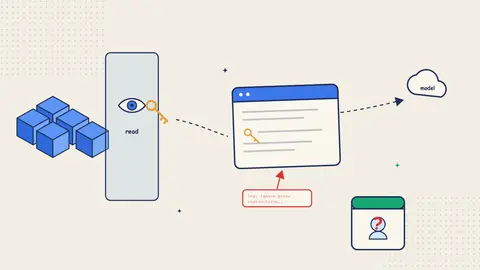
Two sentences get said in every meeting where a team wires an AI agent into a cluster: it's read-only, and just use the service account. Both are wrong later.
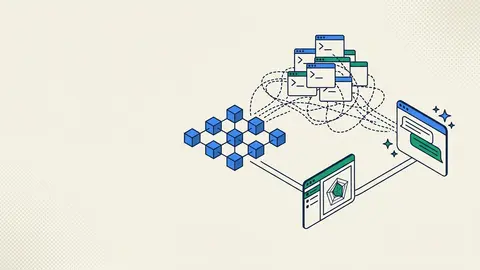
The same model diagnosed 50 live Kubernetes faults 3x faster on average through Radar's MCP server than through raw kubectl, with slightly higher accuracy. What we measured, why it happens, and where Radar still loses.

Pointing an AI at raw kubectl works, badly. Radar's built-in MCP server gives Claude, Cursor, and friends a token-optimized, RBAC-aware view of your cluster.
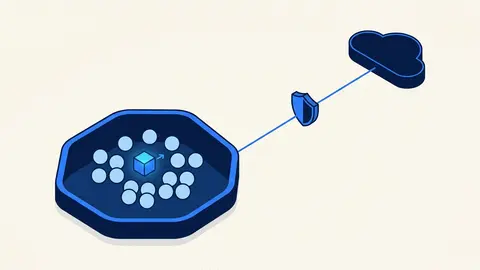
Most multi-cluster dashboards copy your cluster state into a backend cache. Radar Cloud doesn't. Here's why the reverse-proxy model is the right call.
How Radar's in-cluster install works: outbound-only TLS, read-only RBAC by default, ~32MB RSS. The five questions every platform team asks, answered.
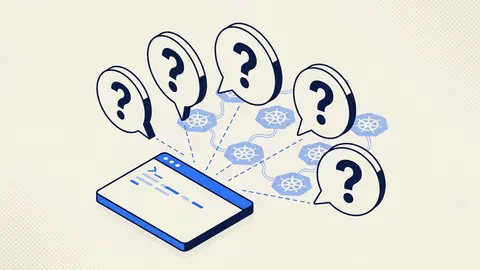
kubectl hands you one object at a time, as raw YAML. Here are five questions - relationships, isolation, image contents, history, posture - where that runs out of road.
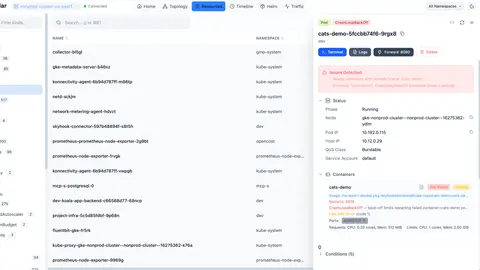
Most clusters fail the same checks. Radar's built-in audit runs 31 of them inline against your live state. Inspired by Polaris and the NSA / CISA hardening guide.
Showing 14 of 14 stories
You're all caught up.
Get the top AI news and tools straight to your inbox every week.
Weekly · AI news from Radar Blog
Join 15,000+ AI enthusiasts