
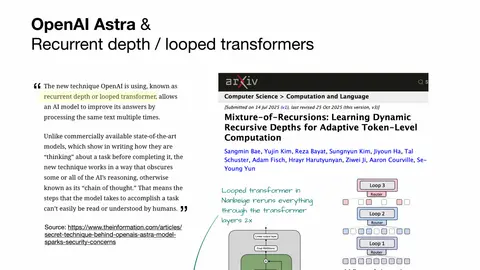
OpenAI Astra and Looped Transformers
A short note on OpenAI Astra, recurrent depth, looped transformers, Nanbeige 4.2, and the Mixture-of-Recursions paper.
Sebastian Raschka3 min read
37 stories
A short note on OpenAI Astra, recurrent depth, looped transformers, Nanbeige 4.2, and the Mixture-of-Recursions paper.

We’re on a journey to advance and democratize artificial intelligence through open source and open science.
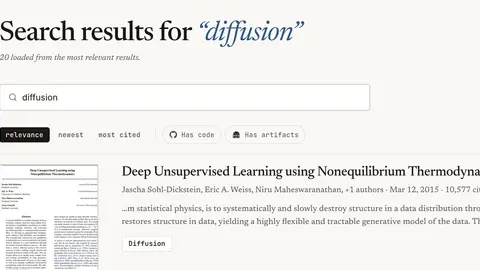
We’re on a journey to advance and democratize artificial intelligence through open source and open science.
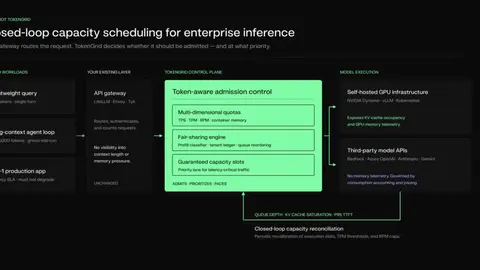
Authors: Sudeeptha Jothiprakash, Venkat Bala, Tushar Pandey, Romi Datta The real bottleneck in the modern AI stack Enterprise IT has a strange problem: token spend and third-party model subscription costs keep climbing, while the GPU clusters running these workloads sit at just 20% utilization.
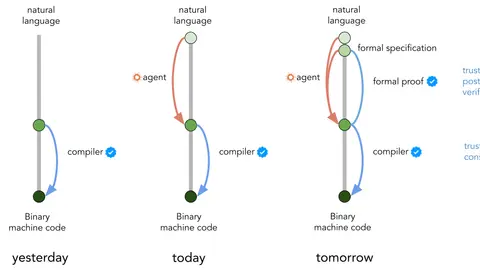
The world of software is undergoing a shift not seen since the advent of compilers in the 1970s. Compilers were the original vibe coding: they automatically generate complex machine code that human programmers had to manually write before.
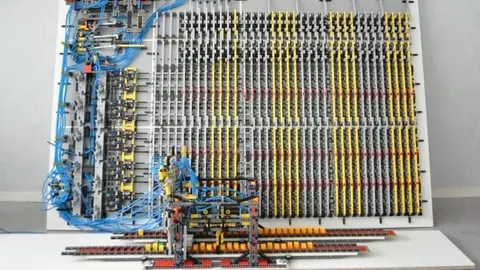
Ten years ago this week, I wrote a post called "Deep Learning is Easy - Learn Something Harder". The post blew up, top spot on HackerNews. Needless to say, it didn't age well.
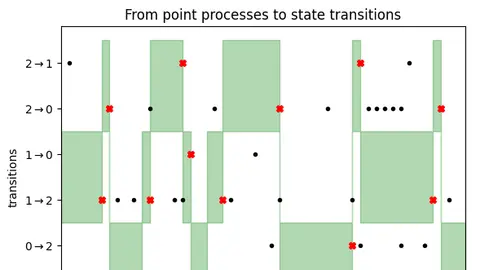
A tutorial explaining some key intuitions behind continuous time Markov chains for machine learners interested in discrete diffusion models: alternative representations, connections to point processes, and the memoryless property.
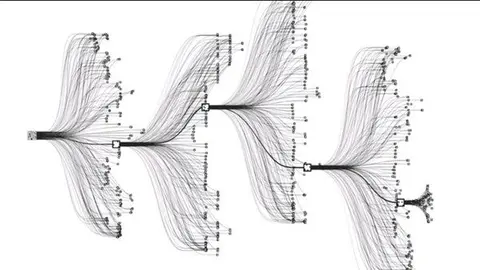
Automating mathematical theorem proving has been a long standing goal of artificial intelligence and indeed computer science. It's one of the areas I became very interested in recently.
Last week in Cambridge was Hinton bonanza. He visited the university town where he was once an undergraduate in experimental psychology, and gave a series of back-to-back talks, Q&A sessions, interviews, dinners, etc. He was stopped on the street by random passers-by who recognised him
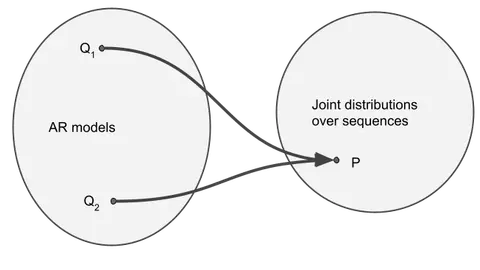
A few years ago I was very much into maximum likelihood-based generative modeling and autoregressive models (see this, this or this). More recently, my focus shifted to characterising inductive biases of gradient-based optimization focussing mostly on supervised learning.

"Deep Learning is Easy, Learn something Harder" - I proclaimed in one of my early and provocative blog posts from 2016. While some observations were fair, that post is now evidence that I clearly underestimated the impact simple techniques will have, and probably gave counterproductive advice.I…
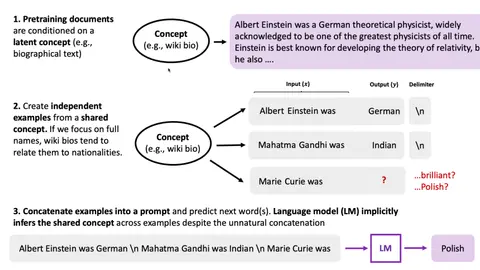
This intriguing paper kept me thinking long enough for me to I decide it's time to resurrect my blogging (I started writing this during ICLR review period, and realised it might be a good idea to wait until that's concluded)Sang Michael Xie, Aditi Raghunathan, Percy
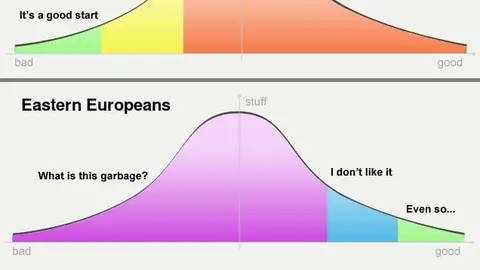
Excruciating. One phrase I often use to describe what it's like to read reference letters for Eastern European applicants to PhD and Master's programs in Cambridge. Even objectively outstanding students often receive dull, short, factual, almost negative-sounding reference letters.
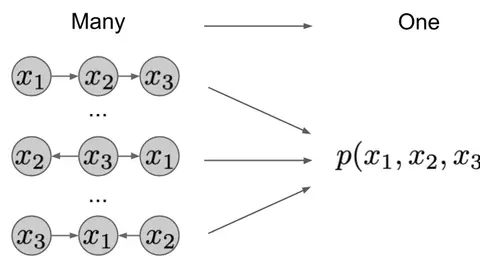
This post is written with my PhD student and now guest author Patrik Reizinger and is part 4 of a series of posts on causal inference:Part 1: Intro to causal inference and do-calculusPart 2: Illustrating Interventions with a Toy ExamplePart 3: Counterfactuals➡️️ Part
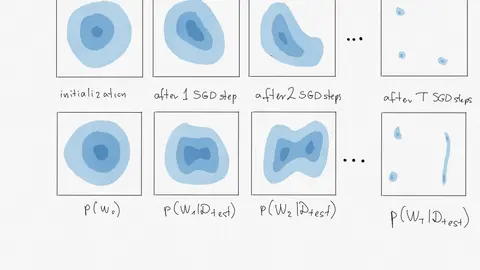
Few days ago we had a talk by Gergely Neu, who presented his recent work:Gergely Neu Information-Theoretic Generalization Bounds for Stochastic Gradient DescentI'm writing this post mostly to annoy him, by presenting this work using super hand-wavy intuitions and cartoon figures. If this isn&
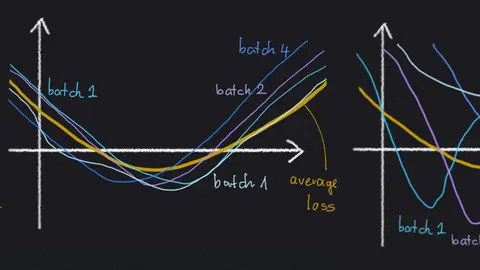
I wanted to highlight an intriguing paper I presented at a journal club recently:Samuel L Smith, Benoit Dherin, David Barrett, Soham De (2021) On the Origin of Implicit Regularization in Stochastic Gradient DescentThere's actually a related paper that came out simultaneously, studying full-batch…
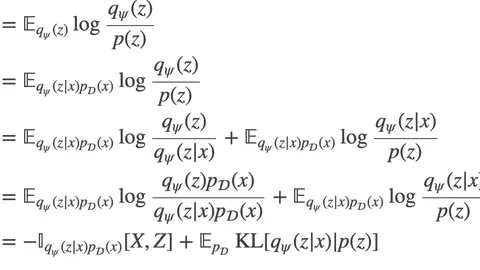
guest post with Dóra JámborThis is a half-guest-post written jointly with Dóra, a fellow participant in a reading group where we recently discussed the original paper on $\beta$-VAEs:Irina Higgins et al (ICLR 2017): $\beta$-VAE:
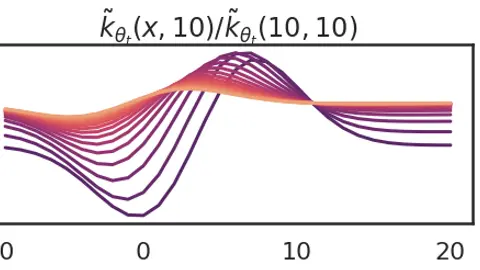
Neural tangent kernels are a useful tool for understanding neural network training and implicit regularization in gradient descent. But it's not the easiest concept to wrap your head around. The paper that I found to have been most useful for me to develop an understanding is this one:
Showing 36 of 37 stories
Load more storiesGet the top AI news and tools straight to your inbox every week.
Weekly · AI news
Join 15,000+ AI enthusiasts