Know a great AI tool or AI news source? Submit it to AiByts

KodeKloud

68 stories

Stories

← Back to the latest stories
  • Linux Directory Structure Explained for Beginners🐧

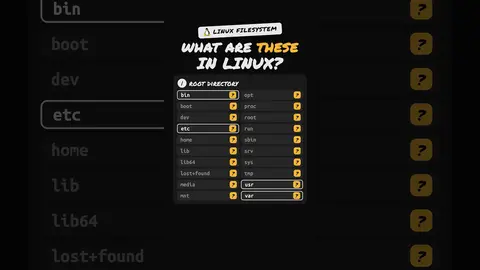
    Coming From Windows to Linux? Start Here 🐧 Linux has no C drive and no Program Files. Everything lives under one root directory, /, and even extra drives join that same tree. /home holds personal files and /root is the admin’s home.

    KodeKloud
  • What Are AI Guardrails and How Do They Work!🤖

    Normal software follows a rule exactly, every time. An AI model doesn’t. It’s probabilistic, so a rule written in a system prompt is closer to advice than a lock, and a cleverly worded message can get the model to ignore it.

    KodeKloud
  • KodeKloud Cohorts Check-in #6 with Nourhan Mohamed | CKNE Certification Prep

    Hey KodeKloud Community! 🌟 Join us for KodeKloud Cohorts Check-in #6 on November 5, 2026, at 10 PM SGT / 7:30 PM IST / 9 AM ET! This session brings back Nourhan Mohamed, Golden Kubestronaut and DevOps Lead, to talk about CKNE (Certified Kubernetes Network Engineer), the upcoming CNCF certification…

    KodeKloud
  • The 4 Key Terms in Apache Kafka

    Kafka producer, broker, topic and consumer explained on one whiteboard, using a single orders event to show how all four connect. These four terms come up in every Kafka conversation, and they make far more sense drawn together than defined one at a time.

    KodeKloud
  • MCP vs UTCP 🔀

    MCP vs UTCP: How AI Agents Reach Real Tools! AI models can’t call APIs on their own, so a protocol has to turn their tool requests into real calls. MCP wraps a tool inside a server. Every request goes agent → MCP server → tool and back, and the server handles discovery and authentication.

    KodeKloud
  • Interview: B-Tree vs B+ Tree

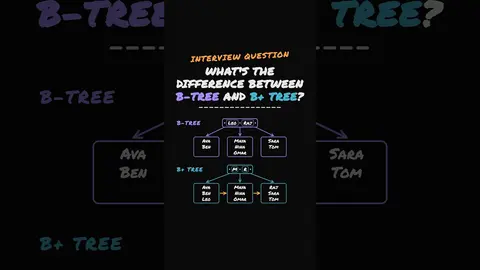
    In a standard B-tree, keys and row pointers are stored at every level, including the root and middle boxes. While this occasionally allows a lookup to stop early at the top, almost all records in massive databases sit at the bottom anyway.

    KodeKloud
  • Interview: How Database Indexing Works🌳

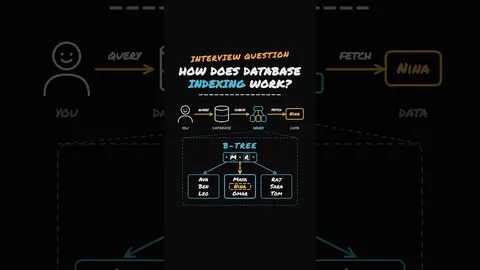
    Database Indexing Explained With a B-Tree! Without an index, finding one user means a full table scan, where the database checks every row until it hits a match. An index avoids that by keeping a separate, alphabetically sorted copy of one column with the row number written next to each value.

    KodeKloud
  • Interview: How OTPs Expire Exactly on Time?

    How OTPs Actually Expire: TOTP vs SMS Codes! Authenticator app codes and SMS or email codes expire in completely different ways. An authenticator app shares a secret key with the server at setup.

    KodeKloud
  • Why Rust Is Gaining Ground in AI!🦀

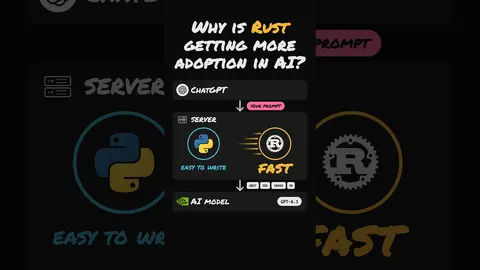
    Most AI code is written in Python, but companies building AI tools keep moving their performance-critical code to Rust. Before a model can answer a chat message, the server has to split the text into tokens and turn each token into a number. OpenAI’s tokenizer, tiktoken, does this step in Rust.

    KodeKloud
  • How Google Maps Knows There’s a Traffic Jam?

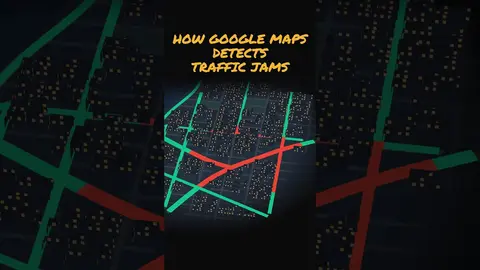
    When you see a dark red road on Google Maps, that live traffic update comes directly from millions of smartphones traveling inside vehicles. Every few seconds, navigating phones send their GPS coordinates and timestamps, allowing Google to calculate how fast each car is moving.

    KodeKloud
  • What Is the New HTTP QUERY Method?🌐

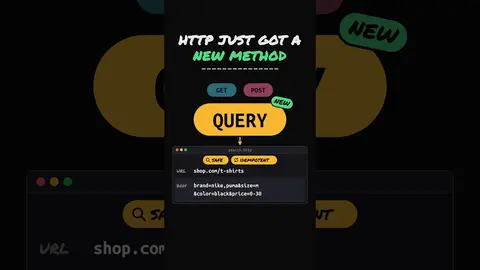
    HTTP Has a New Method: QUERY 🌐 Too many search filters can make a GET URL so long that your CDN rejects it before it reaches the server. Moving the filters into the body doesn’t fix it either, because GET was never meant to carry a body and many servers and CDNs ignore or reject it.

    KodeKloud
  • Non-Functional Requirements in System Design Explained

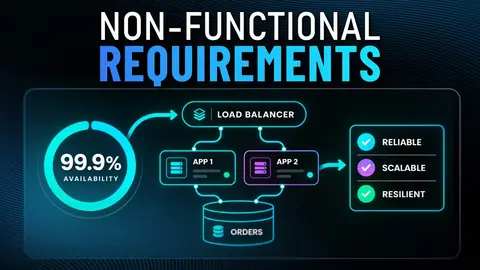
    🧪 Try it yourself in the free lab: https://kode.wiki/4zm61vp Non-functional requirements in system design, worked through on one online shop that keeps breaking in new ways. A timeout turns one purchase into two orders. A second server fixes a slowdown but can make a customer's basket vanish.

    KodeKloud
  • Why Is Python Slow Compared to C and C++?

    Why Python Is So Slow Compared to C! A loop that adds every number from 0 to 100 million takes about 4 seconds in Python on an M4 MacBook. The same loop in C finishes in a fraction of a second, more than 100 times faster.

    KodeKloud
  • How Do Routers Know Where to Send Your Packet?🌐

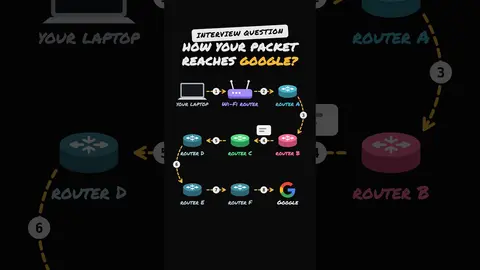
    How Routers Know Where to Send Your Packet! A packet from your laptop to Google passes through many routers. Each router reads the destination IP address, matches it against its routing table, and forwards the packet to the next hop listed there.

    KodeKloud
  • Interview: How Do Websites Store Passwords?

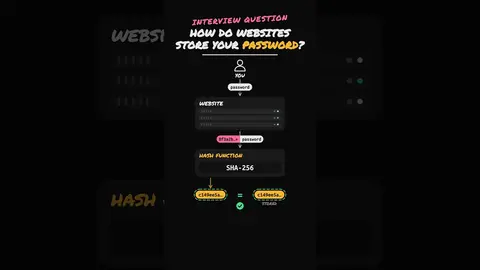
    How Websites Check Passwords Without Ever Storing Them! Secure websites never actually know or store your real password in a database. Instead, they pass your password through a one-way hash function, which behaves like a digital blender: once scrambled into a unique string of characters, it can…

    KodeKloud
  • How Do Robots Actually Work?

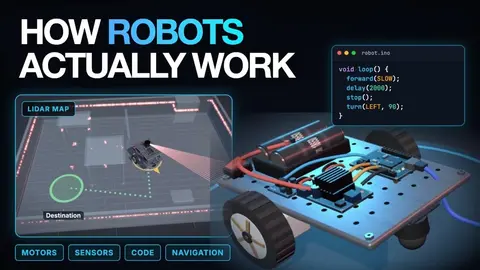
    How do robots work when nobody is steering them? Strip one down to its parts and the answer gets surprisingly concrete. A robot vacuum meets a chair that wasn't there when it started, backs away, and finds another way around. Nobody programmed it for that chair. So what's happening inside?

    KodeKloud
  • Why This PHP Bug Is So Dangerous?

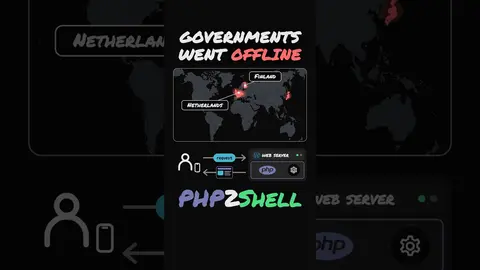
    Governments and major organizations recently took public websites offline after researchers uncovered critical vulnerabilities in PHP, the language powering over 70 percent of the web. To handle heavy traffic, servers rely on persistent PHP workers that process user requests one after another.

    KodeKloud

Showing 36 of 68 stories

Load more stories
AiByts Weekly Brief

Get the top AI news and tools straight to your inbox every week.

Weekly · AI news

Join 15,000+ AI enthusiasts