Know a great AI tool or AI news source? Submit it to AiByts

KodeKloud

68 stories

Stories

← Back to the latest stories
  • How does load balancer work?⚖️

    Load Balancer Basics Every Backend Engineer Should Know! ⚖️ 🖥️ Load balancer A machine running software like NGINX or HAProxy. Every request hits it first, and it forwards the request to one of the application servers behind it. 🔁 Round robin Requests go to servers in a fixed order.

    KodeKloud

  • What is Lethal Trifecta in AI Agents?

    The Lethal Trifecta That Makes AI Agents Leak Data! The lethal trifecta is Simon Willison's name for an AI agent that has three things at once: access to private data, exposure to untrusted content, and a way to send data out.

    KodeKloud
  • Claude Can Now Edit Google Docs, Sheets & Slides

    Claude Is Now Inside Google Docs, Sheets and Slides! Claude runs as a Google Workspace add-on. Install it from Extensions, then Add-ons, then Get add-ons, sign in with your Claude account, and it opens as a sidebar next to your file. By default it reads only the file that's open.

    KodeKloud
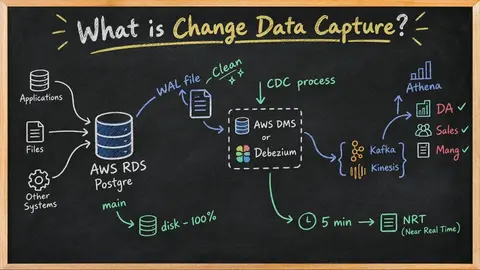
  • Change Data Capture (CDC) Explained for Beginners

    Change data capture (CDC) streams every change in your Postgres database to Kafka or Kinesis, so your analysts never have to touch production. Pointing your analytics team at the main RDS Postgres database means their reports compete with your order traffic.

    KodeKloud
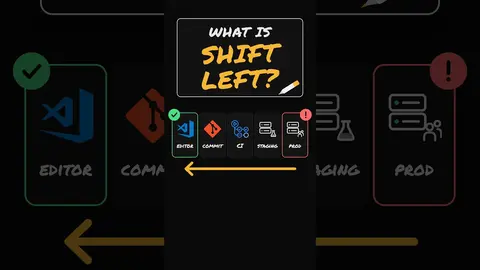
  • Shift Left Explained with SQL Injection Bug🐛

    Shift Left Security, Explained! Shift left is the practice of moving security checks earlier in the software delivery line so issues get caught before code reaches production. SAST (static application security testing) scans code without running it, like CodeQL in a CI pipeline.

    KodeKloud
  • What Is an API? 💻

    APIs Are How Apps Talk to Each Other! People exchange information through a shared language. Software needs the same thing. An API gives two applications a common set of rules for asking and answering, so they understand each other no matter who built them or what language they're written in.

    KodeKloud
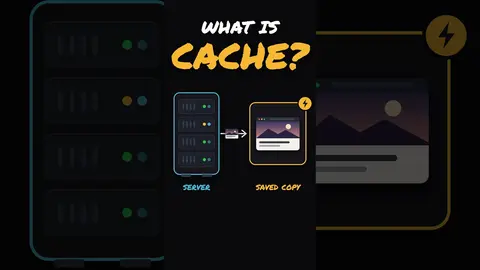
  • What is Caching?

    Ever swipe away phone apps thinking it saves battery? You’re actually breaking the single greatest cheat code in computing: caching. Caching simply means saving completed work so you don't have to redo it later.

    KodeKloud
  • What is Prompt Caching?

    What does “Prompt Cache Warm” actually mean in Claude Code? In this short, we break down how prompt caching works, why Claude doesn’t need to reprocess your entire conversation every time, what the 60-minute timer really means, and why cached prompts can make later requests much cheaper and faster.

    KodeKloud
  • System Design: Designing Load Balancer⚖️

    How a Load Balancer Actually Splits Traffic! Round robin sends requests to servers A, B, C and D in a fixed loop, so it has no idea when one server is stuck on slow 2-second payment requests.

    KodeKloud
  • AWS FINALLY FIXED IT!

    Amazon Web Services just overhauled its setup process to make building in the cloud much simpler. New users can now sign up using Google, GitHub, Apple, or Amazon accounts without needing a credit card to start.

    KodeKloud
  • How Google Search Actually Works 🔍

    Google Search Architecture: Offline vs Online! Google can't scan billions of web pages every time someone searches, so search runs as two separate systems. The offline half runs nonstop.

    KodeKloud
  • OpenAI Just Launched Dots!

    OpenAI just dropped Dots, an always-on AI agents inside ChatGPT that can work for you 24/7, even when you’re offline! In this breakdown we see: 1. What OpenAI Dots are & how they differ from normal ChatGPT 2. How they use their own cloud browser to monitor Slack, Email & GitHub 3.

    KodeKloud
  • What is Jev and How to Use It with an LLM? (Free Lab)

    Jev is a new AI that is making news and it doesn't chat. You can use it do small classification tasks. In this video, we take one real support ticket from a customer named Alan and follow it all the way through: what we send Jev, what comes back, and how the program decides what to do with the…

    KodeKloud
  • Stop Storing Kubernetes Secrets Like This! ⚠️

    Is your Kubernetes application leaking production API keys? 🚨 Standard Kubernetes Secrets are only Base64-encoded and sit unencrypted in etcd by default. If developers dump environment variables to debug an issue, sensitive Stripe keys end up readable by anyone in logging tools like Datadog!

    KodeKloud

Showing 68 of 68 stories

You're all caught up.

AiByts Weekly Brief

Get the top AI news and tools straight to your inbox every week.

Weekly · AI news

Join 15,000+ AI enthusiasts