The Enterprise AI Stack in 2026: 7 Layers, Who Sells Each, and What to Buy
Coworker AI maps the enterprise AI stack: seven layers from systems of record to context, models, agents and governance, with vendors and what to buy.
159 stories
Coworker AI maps the enterprise AI stack: seven layers from systems of record to context, models, agents and governance, with vendors and what to buy.
An in-path cost-governance layer that sits between your AI agents and the models they pay for, acting before a run rather than reporting after it — thoughtfully built and strikingly honest, but with no traction or pricing yet on show.
LangSmith vs Braintrust, checked against each vendor's own docs: tracing, scorers, CI gates, pricing meters and self-hosting, plus a scorer test on 20 inputs.
Six months ago almost nobody said “agent harness” out loud. Now the term shows up in LangChain’s docs, Microsoft’s Agent Framework, OpenAI’s engineering blog, and a steady stream of Reddit …
AI tools have made it easy to vibe code agents. Building and maintaining an enterprise...
An AI agent is an autonomous software system powered by large language models that pursues complex goals without continuous human prompting. Unlike static chatbots that only generate text, agents break goals into subtasks, call external APIs, maintain long-term...
How Numan built Nu, an AI health coach, on LangGraph and LangSmith with per-category evals, simulated conversations, and safety gates on a regulatory line.
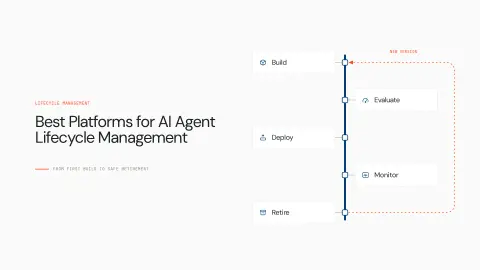
Managing AI agents in production involves more than keeping them running. Teams need to track versions, evaluate performance, manage permissions, investigate failures, and oversee changes...
Building an AI agent is relatively straightforward. Getting multiple agents to work together reliably in production is harder. Once agents start calling tools, accessing business...
Your research agent asks a pricing agent for a quote. The pricing agent asks a supplier agent for stock levels. The supplier agent times out,...
Multi-agent LLM systems fail from design flaws, misalignment between agents and weak verification. Here are all 14 MAST failure modes, how often each happens, and the production signal that catches it.
Evaluating LangSmith? It shows what your agent did. Vivgrid runs enterprise agents — cloud-hosted tools, server-side prompts, and release-gating evals.
8 open source AI agents you can run today, from OpenClaw and Hermes Agent to OpenHands and goose, ranked by job and scored on license, setup, model freedom and safety.
LLMOps for AI agents is a five-stage loop: version, release, supervise, budget, respond. Learn how to keep agents reliable in production, with a risk tiering table, an incident runbook and a checklist.
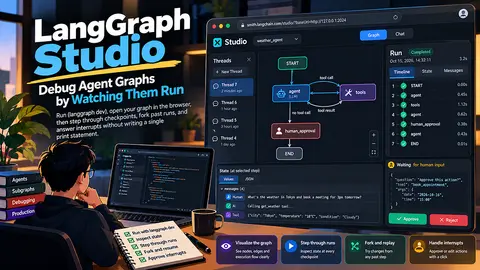
Run (langgraph dev), open your graph in the browser, then step through checkpoints, fork past runs, and answer interrupts without writing…Continue reading on Towards AI »
What we shipped at Interrupt NYC and London: LangSmith AI Search, Engine v2, Trajectories, Custom Apps, Fine-Tuning, and Managed Deep Agents v0.9.
Where to start with agent evals, offline vs online evals, evaluator types, LLM judges, benchmarks with Harbor, multi-turn evals, and keeping costs down.
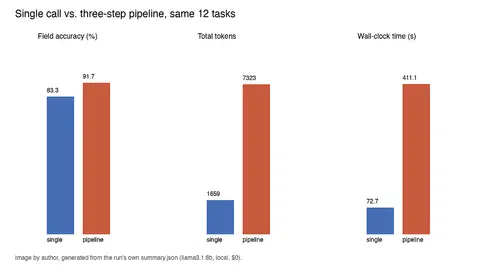
A LangGraph subgraph boundary dropped the plan, and the gain came from re-reading the source, not the plan.Continue reading on Towards AI »
Showing 54 of 159 stories
Load more storiesGet the top AI news and tools straight to your inbox every week.
Weekly · AI news
Join 15,000+ AI enthusiasts