Know a great AI tool or AI news source? Submit it to AiByts

language-model

55 stories

Stories

← Back to the latest stories
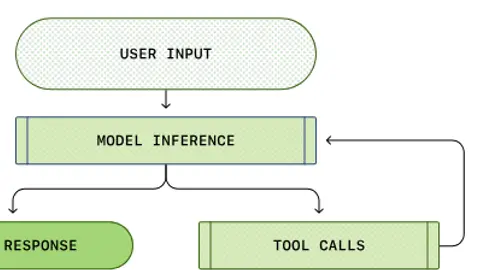
  • Harness Engineering for Self-Improvement

    The concept of recursive self-improvement (RSI) dates back to I. J. Good (1965), where he defined an “ultraintelligent machine” as a system that can surpass humans in all intellectual activities and design better machines to improve itself.

    Lil'Log (Lilian Weng)29 min read
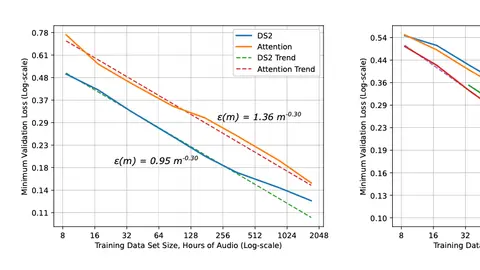
  • Scaling Laws, Carefully

    Scaling laws are one of the most critical empirical findings in deep learning. The observation is simple in form: the training loss $L$ decreases predictably as we scale up model size $N$, dataset size $D$, and compute $C$, following a power-law curve, which appears as a straight line on a log-log…

    Lil'Log (Lilian Weng)22 min read
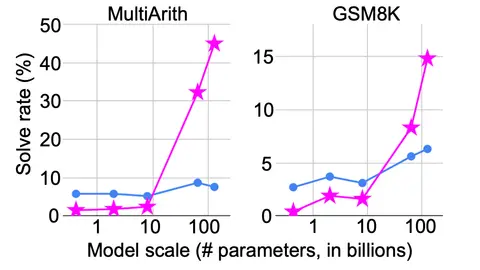
  • Why We Think

    Special thanks to John Schulman for a lot of super valuable feedback and direct edits on this post. Test time compute (Graves et al. 2016, Ling, et al. 2017, Cobbe et al. 2021) and Chain-of-thought (CoT) (Wei et al. 2022, Nye et al.

    Lil'Log (Lilian Weng)35 min read
  • Reward Hacking in Reinforcement Learning

    Reward hacking occurs when a reinforcement learning (RL) agent exploits flaws or ambiguities in the reward function to achieve high rewards, without genuinely learning or completing the intended task.

    Lil'Log (Lilian Weng)31 min read
  • Extrinsic Hallucinations in LLMs

    Hallucination in large language models usually refers to the model generating unfaithful, fabricated, inconsistent, or nonsensical content. As a term, hallucination has been somewhat generalized to cases when the model makes mistakes.

    Lil'Log (Lilian Weng)25 min read
  • Adversarial Attacks on LLMs

    The use of large language models in the real world has strongly accelerated by the launch of ChatGPT. We (including my team at OpenAI, shoutout to them) have invested a lot of effort to build default safe behavior into the model during the alignment process (e.g. via RLHF).

    Lil'Log (Lilian Weng)31 min read
  • LLM Powered Autonomous Agents

    Building agents with LLM (large language model) as its core controller is a cool concept. Several proof-of-concepts demos, such as AutoGPT, GPT-Engineer and BabyAGI, serve as inspiring examples.

    Lil'Log (Lilian Weng)28 min read
  • Prompt Engineering

    Prompt Engineering, also known as In-Context Prompting, refers to methods for how to communicate with LLM to steer its behavior for desired outcomes without updating the model weights.

    Lil'Log (Lilian Weng)20 min read
  • Large Transformer Model Inference Optimization

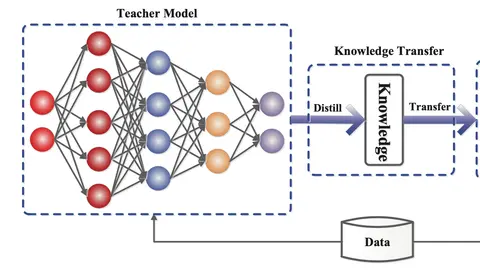
    [Updated on 2023-01-24: add a small section on Distillation.] Large transformer models are mainstream nowadays, creating SoTA results for a variety of tasks. They are powerful but very expensive to train and use.

    Lil'Log (Lilian Weng)27 min read
  • Generalized Visual Language Models

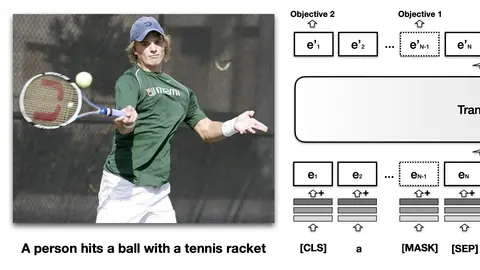
    Processing images to generate text, such as image captioning and visual question-answering, has been studied for years. Traditionally such systems rely on an object detection network as a vision encoder to capture visual features and then produce text via a text decoder.

    Lil'Log (Lilian Weng)21 min read
  • Contrastive Representation Learning

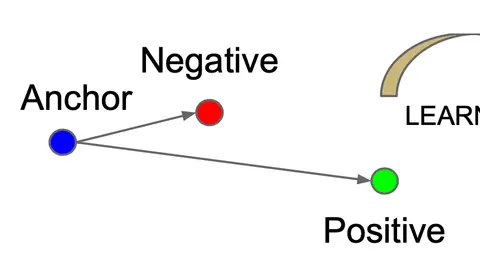
    The goal of contrastive representation learning is to learn such an embedding space in which similar sample pairs stay close to each other while dissimilar ones are far apart. Contrastive learning can be applied to both supervised and unsupervised settings.

    Lil'Log (Lilian Weng)41 min read
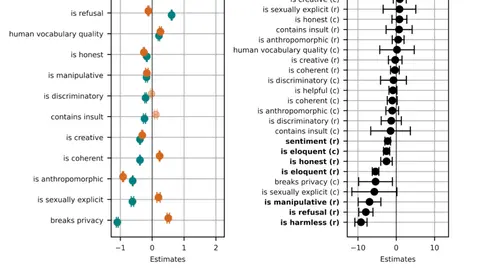
  • Reducing Toxicity in Language Models

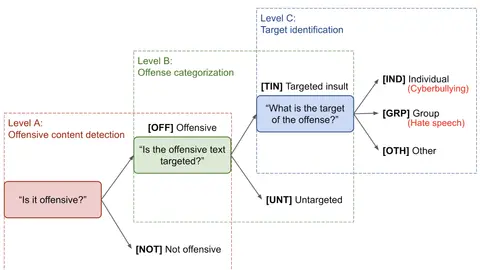
    Large pretrained language models are trained over a sizable collection of online data. They unavoidably acquire certain toxic behavior and biases from the Internet. Pretrained language models are very powerful and have shown great success in many NLP tasks.

    Lil'Log (Lilian Weng)21 min read
  • Controllable Neural Text Generation

    [Updated on 2021-02-01: Updated to version 2.0 with several work added and many typos fixed.] [Updated on 2021-05-26: Add P-tuning and Prompt Tuning in the “prompt design” section.] [Updated on 2021-09-19: Add “unlikelihood training”.]

    Lil'Log (Lilian Weng)42 min read

Showing 54 of 55 stories

Load more stories
AiByts Weekly Brief

Get the top AI news and tools straight to your inbox every week.

Weekly · AI news

Join 15,000+ AI enthusiasts