Know a great AI tool or AI news source? Submit it to AiByts

LessWrong

193 stories

Stories

← Back to the latest stories
  • An examination of a 'Poincaré causal diamond model of hyperbolic static spacetime'

    The following is an investigation into an interesting mathematical object I stumbled upon when reading a General Relativity textbook.Defining the spacetime:A static universe in which space is hyperbolic can be described by the metric: mjx-container[jax="CHTML"] { line-height: 0; } mjx-container…

    LessWrong4 min read
  • What we can (and can't) learn from Waymo's safety strategy - 2026 update

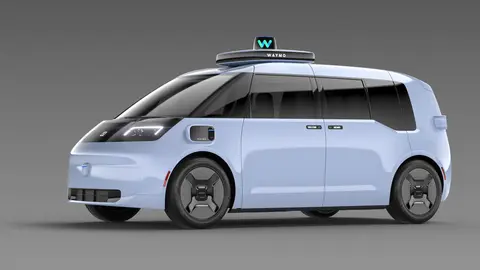
    (this is a lightly edited linkpost for the LessWrong audience - full piece is here and goes into implications for AVs and humanoid robots.)Last year, I wrote “Safety Without Understanding,” a piece exploring how Waymo safely rolled out autonomous driving systems without a deep mechanistic…

    LessWrong5 min read
  • Stop telling people to pivot to AI safety, I beg you

    Epistemic status: Feeling frustrated, and therefore somewhat uncharitable.I’m very frustrated with calls for people to “drop everything and pivot into AI safety” like this one.

    LessWrong6 min read
  • Mitigating the AI Lab Insider Threat Risk

    AI researchers hate this one weird modest proposal.One of the known security risks for the AI labs is that they are chock full of high-risk insider threats.

    LessWrong3 min read
  • A Primer on Collective Action, I

    An introduction and reading list on how incentives, expectations, and political conditions shape participation in collective action.Mancur Olson (1965). The Logic of Collective Action: Public Goods and the Theory of Groups.Pamela E. Oliver and Gerald Marwell (1988).

    LessWrong9 min read
  • Research Priorities for Multi-Agent Swarms

    Multi-Agent swarms are important for two reasons:They are probably much faster and somewhat more capable than single agents (Capability)Multi-agent alignment is a different beast than single-agent alignment (Propensity)The fact that recent incidents (and some achievements) are predominantly swarms…

    LessWrong8 min read
  • Countervailing Technologies

    Thanks to Davide Crapis, Angelo Huang, and Philip Torr for their feedback.ES: I'm attempting to name a design space precisely enough to argue with. I'm confident that the class exists and is under-invested, but my personal beliefs might also make me too focused on some theories of change (i.e.,…

    LessWrong31 min read
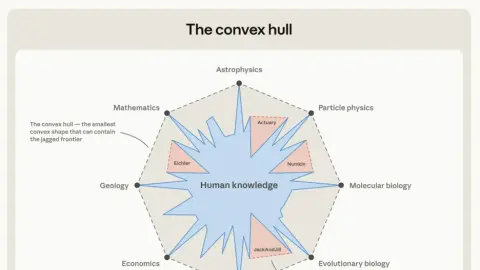
  • The Convex Hull Armada

    Epistemic status: I am not a subject-matter expert in any of the fields in this article. The following is speculation, albeit I think reasonable speculation.

    LessWrong9 min read
  • SemiAnalysis: "Beijing Will Not Pace the Frontier"

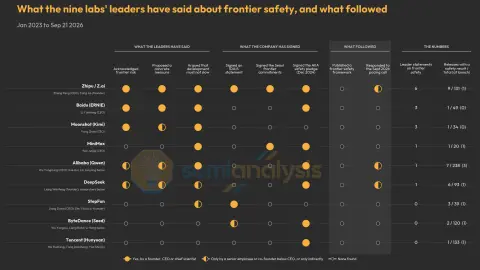
    Link to original article: https://newsletter.semianalysis.com/p/beijing-will-not-pace-the-frontierInflammatory & clickbaity title aside, it serves as a good attempt at systematically investigating the status quo of Chinese attitudes towards AI safety and development.Some key diagrams that I find…

    LessWrong1 min read
  • Social Theory and Agent Foundations

    Lately I’ve been writing a lot about the sociopolitical considerations that economic-style reasoning misses. I view this work as continuous with my agent foundations research; in this post, I lay out some of the connections I see between sociology and agent foundations.

    LessWrong15 min read
  • The salad market mystery

    It often happens that I desire kale, but I want it to be clean and cut up, and while shops do sell this product by the bucketload, they are actually only willing to sell it by the bucketload.

    LessWrong3 min read
  • When will AI surpass us at being limited?

    It’s not always better to be more capable. As I mentioned yesterday, it can (famously) be helpful in negotiations to have your hands tied. That is, to be disempowered from giving up everything the other party wants.I had previously thought of this as a somewhat rare corner case of human behavior—I…

    LessWrong4 min read
  • Towards embedded evaluations for scheming propensities

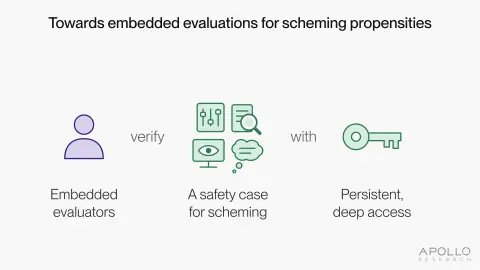
    TL;DR: A safety case for scheming must be able to substantiate these four key claims: scheming was not incentivized during training, strong evaluations and red teaming suggest that the model does not have a propensity to scheme, scheming was never attempted during internal deployment, and scheming…

    LessWrong20 min read
  • Reviewing failure modes in science as we prepare for AI researchers

    Summary: Science has a long list of documented failure modes, such as p-hacking, the File Drawer Problem, shallow peer review, and ignored retractions. This post catalogs about 50 of them with the evidence for each, then predicts how each will change once we have full AI researchers.

    LessWrong31 min read
  • SS27 Color Stats

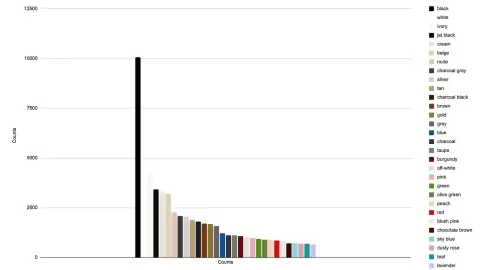
    It’s October, so it’s time for color frequency statistics on the spring/summer fashion ready-to-wear collections!Previous entries: FW26, SS26, FW25, SS25, FW24, SS24.My methodology hasn’t changed — it’s still automatic color scoring using the same script, using a call to GPT-4o.

    LessWrong5 min read

Showing 72 of 193 stories

Load more stories
AiByts Weekly Brief

Get the top AI news and tools straight to your inbox every week.

Weekly · AI news

Join 15,000+ AI enthusiasts