
Blended ROAS: A Practical Guide for Ecommerce Brands
Understand blended ROAS, how to calculate it from total revenue and ad spend, what it can and cannot tell an ecommerce team, and how to use it in budget reviews.
Mindra Blog8 min read
31 stories
Understand blended ROAS, how to calculate it from total revenue and ad spend, what it can and cannot tell an ecommerce team, and how to use it in budget reviews.
Learn why ecommerce attribution differs across ad platforms, what store revenue can confirm, and how to use attribution data when making budget decisions.
Compare Meta Ads and Google Ads for ecommerce using customer intent, recorded store revenue, attribution reports, and a consistent budget review process.
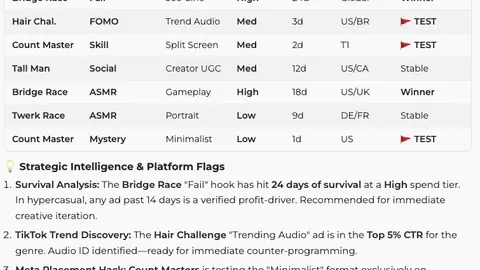
A 50-person mobile game studio replaced a part-time, hit-or-miss research habit with an AI agent that watches 20+ competitors across four ad networks and delivers a tagged digest every morning.
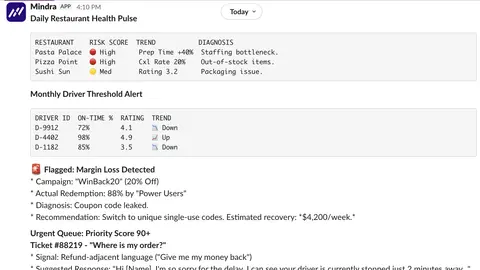
A national food delivery platform used AI agents to flag failing restaurant partners two weeks early, catch a leaked coupon code in week one, and triage urgent support tickets in minutes.
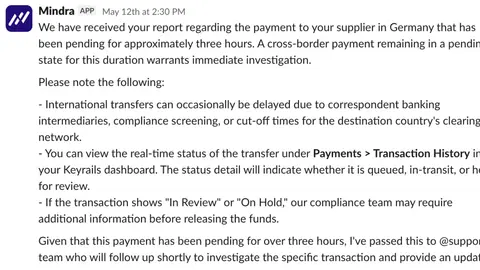
A five-person support team was buried in tickets mixing routine questions with sensitive ones. By building an AI support agent around guardrails first, this fintech hit 4-minute first responses and zero compliance violations.
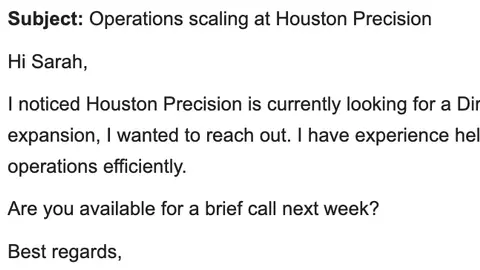
An independent B2B operations consultant replaced his messy spreadsheet and willpower-driven follow-ups with a CRM made of AI agents — sourcing, scoring, and nurturing 340+ leads into 6 new client engagements in 5 weeks.
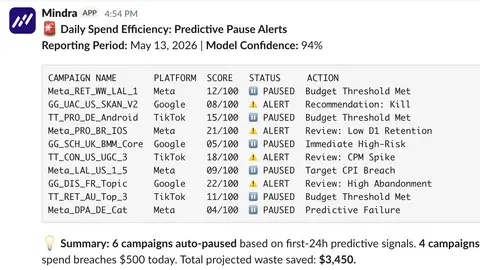
A mobile subscription app used Mindra to predict which ad campaigns would miss CPI in the first 24 hours, auto-pausing waste and cutting losing ad spend 22%.
A two-person HR team supporting 150 employees stopped answering the same PTO and policy questions all day. Here is how they put AI agents to work on the routine and kept judgment human.
A B2B SaaS team fused Amplitude, Zendesk, and Stripe data with AI agents to score 940 accounts daily, surface real churn signals 3 weeks early, and save 41% of flagged accounts.
An AI agent team can fully automate customer onboarding - from intake and CRM setup to Slack welcome and follow-up - without a single developer.
Point tools handle one step. A Mindra agent team handles all of it - research, personalization, sequencing, approval, and CRM sync.
How marketing agencies use AI agent teams to pull data, write insights, and deliver client reports without touching a spreadsheet.
AI agents can take real actions across your business tools. Here is how to decide which actions run automatically and which need a human sign-off first.
Most outbound prospecting is still done by hand. An AI agent team running on Mindra changes that: three coordinated agents handle sourcing, scoring, and outreach while your reps focus on conversations.
Comparing Zapier, Make, LangGraph, and the new "AI department" category? They solve different problems for different people. Here is a plain-language decision guide to pick the right one.
Automation tools move data. Code frameworks let engineers build agents. An AI department is the new category in between, and above, both: a governed team of AI coworkers for business teams.
Most real work has many steps, tools, and skills. Multi-agent orchestration is just having a coordinated team of AI handle it instead of one. Here it is explained in plain language for business teams.
Showing 18 of 31 stories
Load more storiesGet the top AI news and tools straight to your inbox every week.
Weekly · AI news
Join 15,000+ AI enthusiasts