
Transform Any LLM into a Decision Model
Stop generating labels; read decisions from the model.Continue reading on Towards AI »
Towards AI1 min read
359 stories
Stop generating labels; read decisions from the model.Continue reading on Towards AI »
Julia is faster than Python and almost nobody uses it for AI. I wanted to understand why, and whether you should learn it anyway.Continue reading on Towards AI »
Agentic systems make decisions all the time: which tool to call, which category a request falls into, where to route a message. Each of these is a choice from a fixed list that is known in advance. LLMs, however, are text generators.
If you build on open-weight reasoning models, you have probably wanted a "how sure is the model about this answer?" signal that does not cost 5x sampling, a judge model, or a labeled dataset. Hence, we built the U-Lens. In one line:
A language interface made new questions expressible. Answering them was a separate learning problem.

Explore 10 Hugging Face models used across text, vision, audio, and retrieval in 2026.

Three vision AI models ignored the pretty image, yet GPT-4o invented answers and Claude kept answering B. The post I Built a Trap for AI Image Judges. They Walked Into a Different One. appeared first on Towards Data Science.
I’m building a question bank feature for a school platform (high school, mixed Cambridge + in-house curriculum). The idea: new questions are generated from the school’s own past papers.
CL4SM session at ELLIs UnConference, a NeurIPS Paris pre-event: https://badulion.github.io/cl4sm\_2026/
I wanted an AI text and image detector that doesn't need you to upload anything, so I took two existing open detectors and got them running fully client-side with ONNX Runtime Web.
If you use a local model for classification, you know the wait: seconds per message, for questions it has answered hundreds of times. shad0w sits in front of any OpenAI-compatible server (Ollama works out of the box: llm="ollama/llama3.1" or `shad0w proxy --upstream http://localhost:11434/v1`),…
I know it's early but I've been browsing through ICLR OpenReview and I see a lot of good papers!
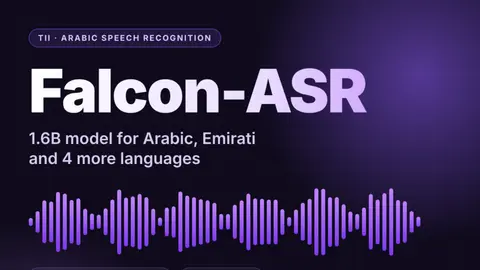
TII has released Falcon-ASR, a 1.6B speech recognition model for Arabic with an Emirati focus. It reports 20.92% average WER on 6 Arabic test sets, but weights and an API are not yet available. The post TII Releases Falcon-ASR: 1.6B Arabic Speech Model Hits 20.92% WER appeared first on MarkTechPost.
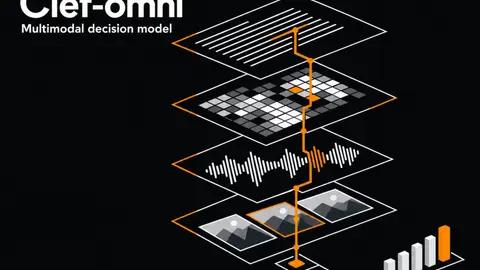
Cloudflare released Clef-omni, an Apache-2.0 multimodal decision model built on Qwen3-Omni-30B-A3B. It scores text, images, audio and video in one call for $0.15 per million input tokens, while Clef-flash drops to $0.038.
I made a little thing that visualizes attention. It runs SmolLM2-135M fully in the browser (onnxruntime-web, int8, no server, works on my phone).
I was browsing through arXiv for accepted NeurIPS papers, and I saw multiple papers citing my work. These papers have been there for months, but Google Scholar still has not updated its citations, and it has occurred before, but I ignored it and thought it was a one-time error.
I’m an AI research engineer based in Africa with about 3 YoEs in RL, LLMs, post-training, and systems efficiency (CUDA/vLLM). However, on a smaller scale because of compute limits. My undergrad and Master’s are both in communications engineering.
Palette Atlas (https://itzik123.github.io/PaletteAtlas/) searches public-domain paintings by color scheme. Each image is reduced to 128 colors of equal weight, so the natural distance is the Earth Mover's Distance, which is too slow for nearest-neighbor search over 48,695 items (about 6 ms per…
Showing 54 of 359 stories
Load more storiesGet the top AI news and tools straight to your inbox every week.
Weekly · AI news
Join 15,000+ AI enthusiasts