
TAI #226: The AI Model Race Needs Better Tests
Also, Meta’s Muse Wonder, Claude Haiku 5.5, OpenAI’s Ultrafast tier, Mistral Large 4, Reflection Beam, and new rivals to Jev.
Towards AI17 min read
21 stories
Also, Meta’s Muse Wonder, Claude Haiku 5.5, OpenAI’s Ultrafast tier, Mistral Large 4, Reflection Beam, and new rivals to Jev.
We present BEACON-SP, an ontology-grounded Graph Retrieval-Augmented Generation (GraphRAG) framework for clinician-facing decision support in behavioral health settings such as suicide prevention, where effective assessment requires integrating heterogeneous clinical, behavioral, social, and…
An AI system can give a confident answer its source data doesn’t support. It can retrieve the wrong document and summarize it fluently, pick the...
Coworker AI explains the context graph: a knowledge graph plus decision traces and time, how it differs from a knowledge graph, and how to build one.
Vector Search Is Not Enough: The Blueprint of GraphRAG Vector search tells you what is similar; GraphRAG tells you how it is connected. Retrieval-Augmented Generation (RAG) has emerged as an …
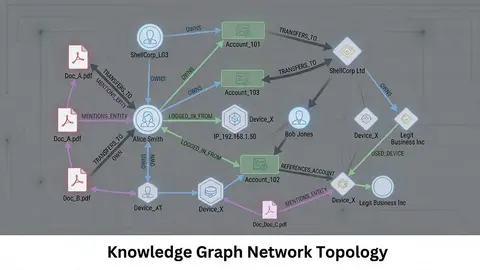
Learn why vector RAG fails at multi-hop reasoning and how combining Neo4j Knowledge Graphs with Gemini creates auditable enterprise AI.
Everyone's building agents right now. But a better question than "can an agent do this?" is "when does an agent actually beat something simpler?" For the TigerGraph Agentic GraphRAG Hackathon, I built three question-answering pipelines side by side to find out.
Built for the TigerGraph Agentic GraphRAG Hackathon. Repo and dashboard linked at the end. RAG retrieves text. GraphRAG adds structure. Agentic GraphRAG lets a model plan its own investigation. Everyone assumes the third one is better — but by how much, and on which questions?

I’ve been thinking about a gap in the way we discuss graphs in AI. Most of the conversation starts after the graph already exists. We talk about graph neural networks, GraphRAG, graph agents, and graph foundation models.
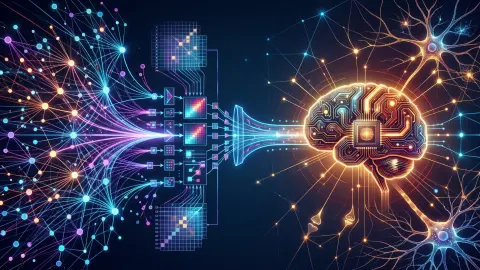
How calibrated decision models can handle high-frequency graph decisions while LLMs remain focused on reasoning, synthesis, and open-ended generation. The post GraphRAG with TypeSafe Jev: A System One Approach to Scalable Knowledge Graphs appeared first on Towards Data Science.
For agent memory, neither wins on its own: vector search finds past statements that mean something close to the current question, and a knowledge graph connects facts through the same person or company and tells which of two conflicting facts is current.
A graph database stores data as nodes and relationships and answers questions by following those relationships instead of joining tables; use one when your main questions are about paths across connected data, and keep a relational database for records and reporting.
RAG, short for retrieval-augmented generation, is a technique that lets a large language model answer from information it was never trained on: when a question arrives, the application searches a knowledge source for the most relevant passages, places them in the prompt next to the question, and…
Somewhere in your company's ServiceNow instance is the answer to the question an engineer asks at two in the morning: if this is broken, what else is about to break? Every fact needed to answer it has
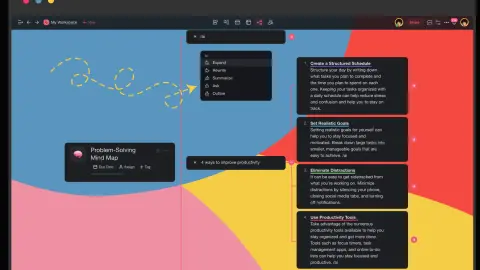
The real history of mind mapping, with sources. Porphyry never drew a tree, Leonardo's map has never been produced, and the best-controlled study found no benefit. Here is what actually happened, from 270 AD to GraphRAG.
Ryan is joined by Praveen Bodigutla, Principal AI Researcher at LinkedIn, to chat about the four-layer memory system his team built to give LinkedIn's hiring assistant a persistent, personalized state.
Graph engineering stops at the diagram. The harder half is the context graph underneath: whether relations, vectors and memory share one consistency boundary.
AI agents can now answer questions about your company's data in plain English — but on real enterprise schemas, even frontier models got roughly one answer in five right at launch.
Showing 18 of 21 stories
Load more storiesGet the top AI news and tools straight to your inbox every week.
Weekly · AI news
Join 15,000+ AI enthusiasts