Hydrogels and MRI: meet three biomedical engineers reshaping health care
Researchers are making great advances across medical disciplines, using a wide range of tools and processes.
Nature AI9 min read
6 stories
Researchers are making great advances across medical disciplines, using a wide range of tools and processes.
Generative inpainting of brain MRI volumes is essential for synthesizing healthy tissue in pathological regions, improving the accuracy and reliability of automated downstream brain analysis applications such as image registration, brain extraction, and segmentation.
Cine cardiovascular magnetic resonance (CMR) captures the cardiac cycle as a four-dimensional (4D) sequence, but standard acquisition requires electrocardiogram (ECG) gating and repeated breath holds.
Clinical MRI routinely acquires multiple contrast-weighted images of the same anatomy for complementary tissue characterization. However, current accelerated MRI methods typically reconstruct each contrast independently, without fully exploiting shared anatomical information.
Automated classification of brain tumors from MRI is a heavily published application of deep learning in medical imaging, with reported accuracies on public benchmarks routinely exceeding 98%.
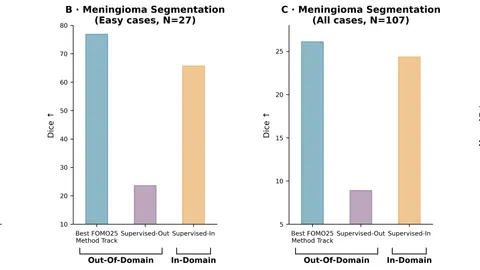
Task-specific supervised models dominate neuroimaging ML, but they degrade on real clinical data and on scans from new sites, vendors, or populations. The root issue is a structural mismatch: clinical workflows generate huge volumes of MRI, yet only a tiny, mostly research-grade fraction is ever…
Showing 6 of 6 stories
You're all caught up.
Get the top AI news and tools straight to your inbox every week.
Weekly · AI news
Join 15,000+ AI enthusiasts