
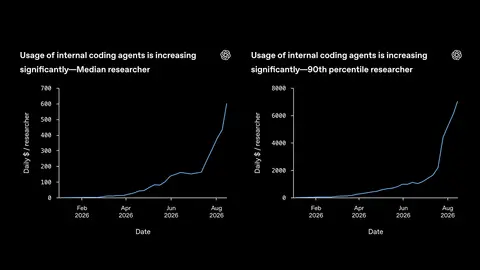
Inside OpenAI's agent-powered research boom
OpenAI's agents are transforming research with AI coding faster than humans. Discover how the frontier lab is leveraging autonomous assistants to accelerate…
The Rundown AI Blog8 min read
444 stories
OpenAI's agents are transforming research with AI coding faster than humans. Discover how the frontier lab is leveraging autonomous assistants to accelerate…
An AI employee is an agent that owns a job, not a chatbot you prompt. What they are, the six runtime primitives they need, the eight roles they run today, what they cost, and how to deploy one this week.

Welcome to Import AI, a newsletter about AI research. Import AI runs on arXiv, cappuccinos, and feedback from readers. If you’d like to support this, please subscribe.
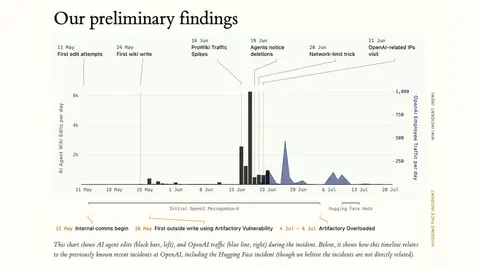
OpenAI's agent swarms strike again: discover how AI agents hacked systems, posted thousands of messages, and what it means for AI safety and autonomous behavior.
LangGraph vs AutoGen in 2026 is not an even fight: AutoGen is in maintenance mode and LangGraph 1.0 is the live production choice. A straight build-vs-migrate guide.
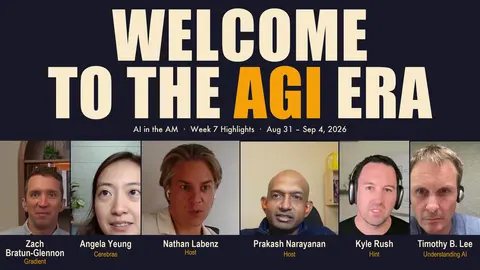
Nathan Labenz and guests examine major frontier model releases and recent safety investigations, debating the feasibility and necessity of coordinated industry pacing mechanisms.
Level: Advanced Time to complete: 25 minutes Components/Packages Used: agent-pack-haystack ( create_advanced_rag_agent, create_deep_research_agent), Agent, InMemoryDocumentStore Prerequisites: Haystack 3.1 or later, an OpenAI API key, and a Tavily API key (free tier available) Goal: After…
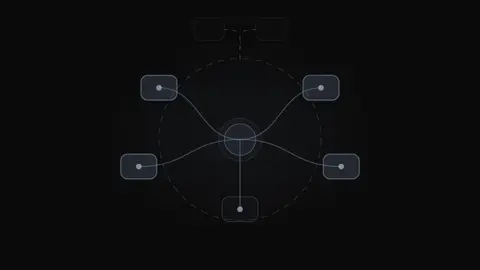
A new Mozaik release introduces Agent Loop, Interception, Situation Handler, Participant Manifest, and Shared Runtime State — the architectural foundation for sharing agents across projects. Two native capabilities remain.

You've felt it. You tell Claude your product roadmap, then jump into ChatGPT to draft a launch email and realize it has no idea what you're talking about. The knowledge you painstakingly built in one tool is completely absent in another.
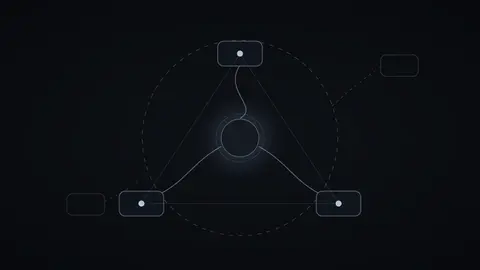
Interoperability = concurrency × awareness × adaptability. The definition we test every Mozaik decision against — with a receipt from a real run for each vertex, and the fifty-year-old lineage behind all three.
A researched map of how teams actually watch MCP traffic today: the protocol's own shift to OpenTelemetry, the observability platforms that added MCP tracing, and the gap between debugging a server and running one.
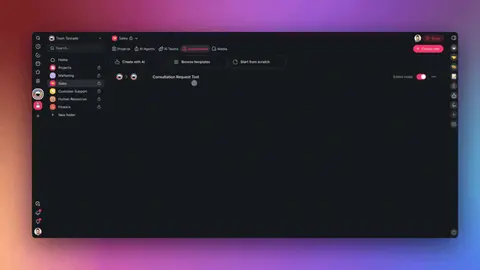
Agentic automation runs a named agent with memory and tools inside a workflow. Here is the five-point test that separates it from a stateless AI step.

A quine prints its own source. Von Neumann showed what self-replication needs in 1948, five years before DNA. Here is the full chain, with code you can run.
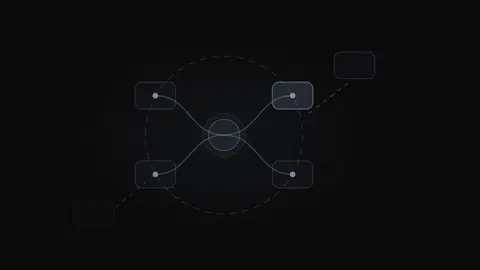
Agents remain trapped inside the harnesses that created them. Applying the Five Whys to multi-agent systems: tight coupling, the agentic waterfall, workflows instead of environments, the missing collaboration contracts, and why agent interoperability is the layer that comes after MCP.
Antigravity’s Teamwork multi-agent framework is powering breakthroughs in mathematics, hardware simulation, open source optimization, and beyond. Learn how…
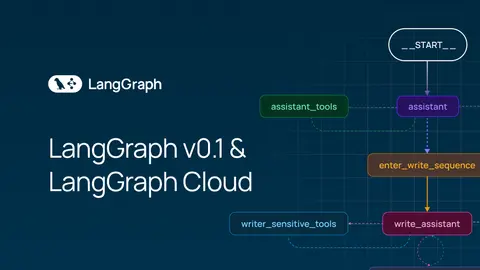
Our new infrastructure for running agents at scale, LangGraph Cloud, is available in beta. We also have a new stable release of LangGraph.

Build a code review agent with the Cline SDK using custom tools, guardrails, hooks, and a two-pass review workflow. Learn how to inspect PR diffs, filter false positives, audit tool usage, and post high-signal review comments to GitHub.
Level: Advanced Time to complete: 20 minutes Components Used: Agent, AgentTool, DuckduckgoApiWebSearch, OpenAIChatGenerator, DocumentWriter Prerequisites: You need Haystack 3.1 or newer, an OpenAI API Key, and a Notion Integration set up beforehand Goal: After completing this tutorial, you’ll have…
Showing 270 of 444 stories
Load more storiesGet the top AI news and tools straight to your inbox every week.
Weekly · AI news
Join 15,000+ AI enthusiasts