Video Friday: NASA PROMISEs a New Moon Rover
Video Friday is your weekly selection of awesome robotics videos, collected by your friends at IEEE Spectrum robotics. We also post a weekly calendar of upcoming robotics events for the next few months.
75 stories
Video Friday is your weekly selection of awesome robotics videos, collected by your friends at IEEE Spectrum robotics. We also post a weekly calendar of upcoming robotics events for the next few months.
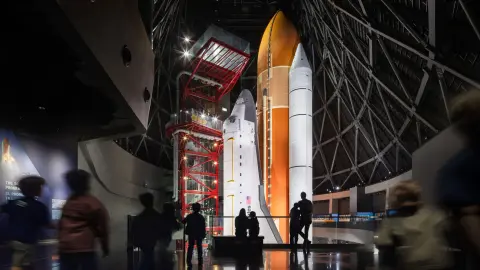
A film about the space shuttle ends with a majestic launch and rocket exhaust filling the screen. Suddenly, real-life fog envelops the theater, before the walls part and the haze dissipates to reveal a gasp-inducing 200-foot Space Shuttle Endeavour, nose up, facing skyward.
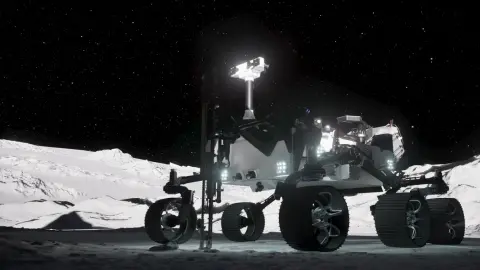
Cut-and-shut trundlebot with spiffy new paint job meant to be headed to the Moon in 2028
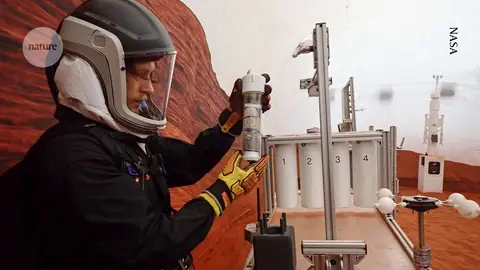
Engineer Matthew Montgomery, who just finished a 378-day simulated Mars mission, talks about what it was like to be out of contact with the rest of humanity for a two-week blackout.
The U.S. space agency put out the call on Saturday while opening bidding for new lunar base transportation contracts.
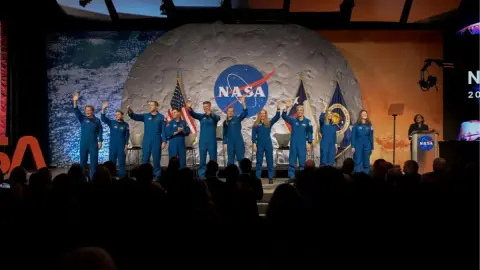
Saturday NASA officials announced it's accepting applications for a new astronaut class, reports the Associated Press: With only 32 active astronauts, the space agency needs more recruits as it looks to expand humanity's presence beyond low-Earth orbit as quickly as possible...
Musk wants you to know he is not worried about a Democrat-led Congress.
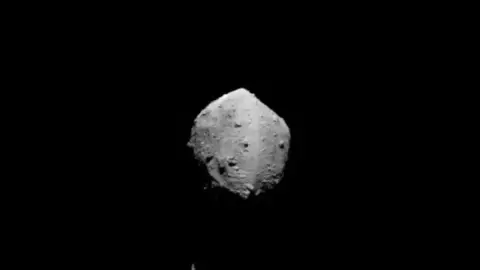
Strange grooves on asteroid Didymos may be fallout from NASA's historic asteroid smash.
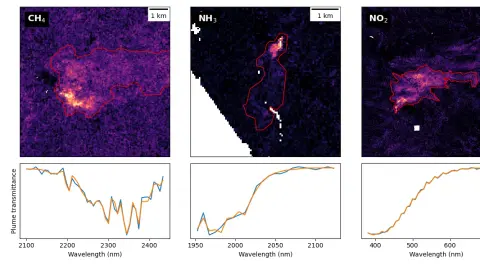
We trained one model on methane. Without retraining, it also maps carbon monoxide, ammonia and nitrogen dioxide plumes, including the first automated CO detections from NASA’s EMIT. The post How We Built NASA's Zero-Shot Detector for Gas Leaks from Space appeared first on Towards Data Science.
A24 says NASA requested permission to screen the film aboard the International Space Station.
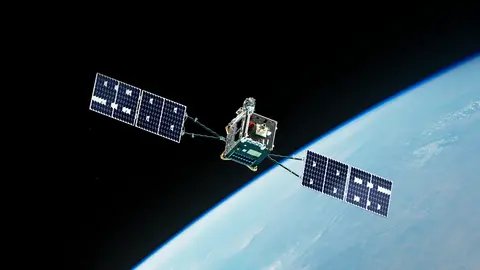
joshuark shares a report from Wired: After 22 years in orbit and a failed rescue mission this summer, it is highly likely that the Neil Gehrels Swift Observatory will crash into Earth sometime next week.
NASA-funded mission comes to a premature end due to glitch in fault protection system. Read More
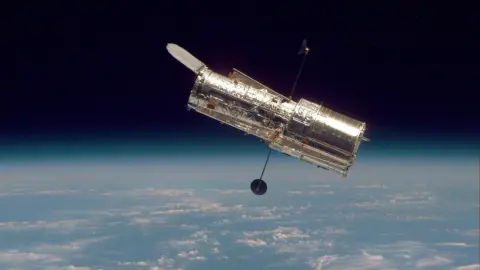
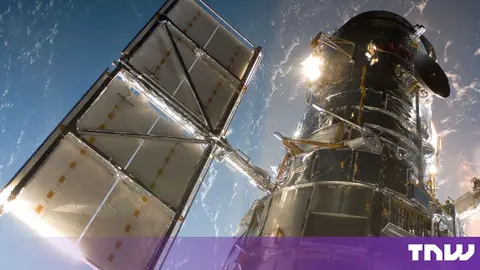
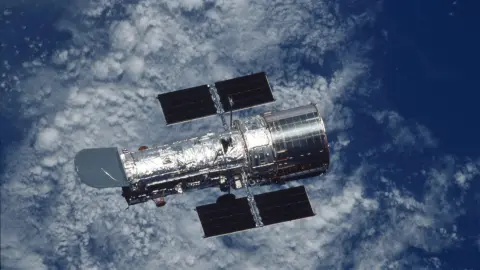
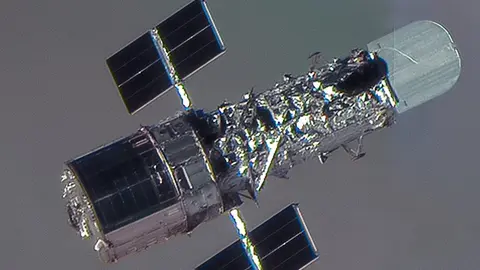
Gravity is a cruel mistress, slowly dragging the famed telescope ever closer to its ultimate demise with every day. Hubble is in no immediate danger of burning up in the Earth's atmosphere, but its time will run out in the early to mid 2030s unless its orbit is boosted.
Hubble has no engine of its own, and it is slowly sinking. NASA now wants companies to say how they could lift the 36-year-old telescope higher, service it, or steer it down safely, the agency said on Friday. The request for information went out on 29 October, and responses are due by 30 November.
Budget gutted and shuttles grounded, the federal agency can only appeal to the private sector for help.
The Hubble Space Telescope "will plunge back into the atmosphere in the early-to-mid-2030s," reports Ars Technica. So now NASA has released a Request For Information (RFI) "asking commercial companies for ideas on how to reboost, service, or a controlled disposal of Hubble." Specifically, NASA is…
The space agency solicited ideas for reboosting Hubble four years ago, but they didn't go anywhere.
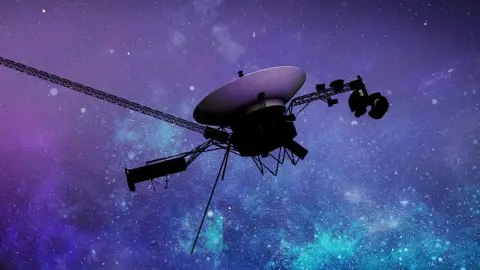
NASA briefly lost contact with Voyager 1 in mid-October after the nearly 50-year-old spacecraft stopped...
Showing 18 of 75 stories
Load more storiesGet the top AI news and tools straight to your inbox every week.
Weekly · AI news
Join 15,000+ AI enthusiasts