
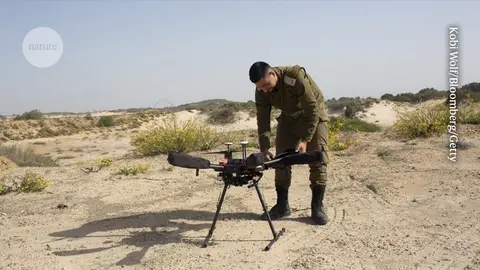
How big tech is building a military–industrial complex in the age of AI
Two books explore how warfare is being reshaped, with influence shifting from states to tech giants.
Nature AI4 min read
139 stories
Two books explore how warfare is being reshaped, with influence shifting from states to tech giants.

Outcomes have improved drastically in the United States for some forms of the disease, but those for others continue to lag.
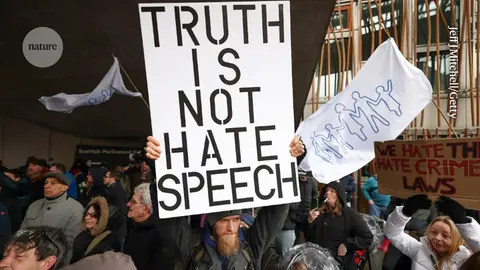
Psychologist Mirta Galesic discusses an increase in hateful comments online, and the science-backed way to react.

A queue of men and women, techies and academics, moved inch by inch down a corridor towards a large door.
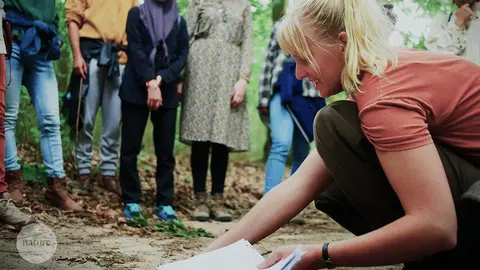
Advocates say that delivering lectures and presentations al fresco can energize students and provide them with a complete experience.
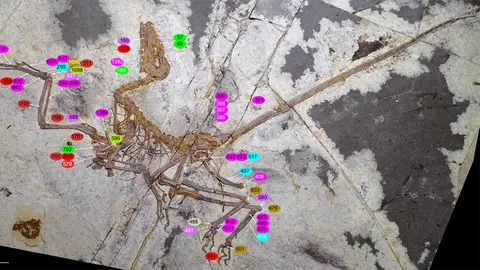
A fossil from a previously undiscovered species with feathery limbs, unearthed in China, adds to evidence that dinosaurs and birds evolved flight more than once.
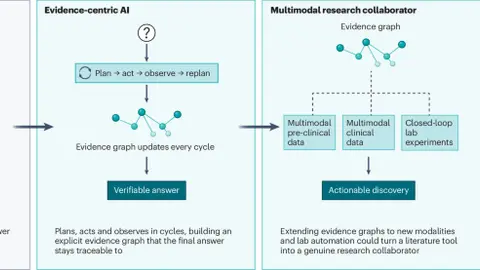
Biomedical discovery has entered an era in which the limiting resource is no longer data, but our ability to integrate and interpret evidence. DeepEvidence, a new deep research agent, goes beyond retrieving facts and constructs explicit representations of scientific evidence.
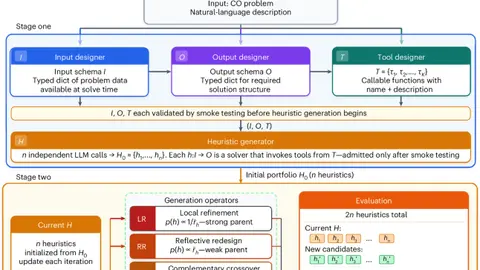
Combinatorial optimization (CO) underpins decision-making across science, engineering and industry, especially manufacturing, logistics, healthcare operations and energy management.
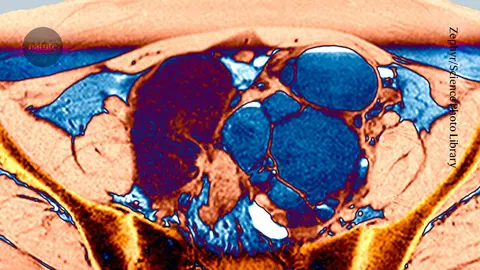
Modified medication targets the cells implicated in the condition’s tell-tale lesions.
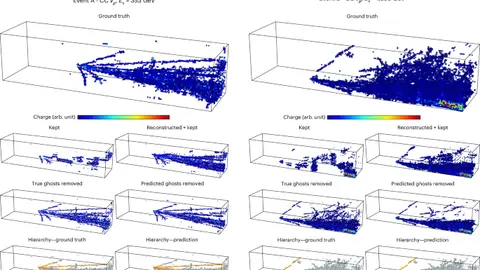
Accelerator-based neutrino physics is entering an energy-frontier regime in which interactions reach the tera-electronvolt scale and produce exceptionally dense, overlapping detector signatures.
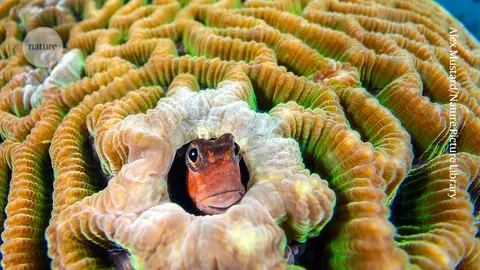
Researchers are trying everything they can to help coral reefs to survive severe heat stress from climate change, including playing sounds underwater.

Mother Nature spent millions of years perfecting the maple seed’s gentle spiral to the forest...
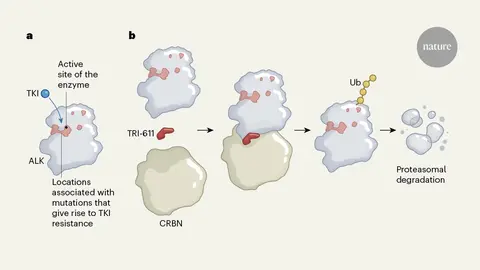
Inhibitors of tyrosine kinase enzymes have been a cornerstone in precision cancer treatments. Now, targeted protein degraders could reshape therapeutic options.
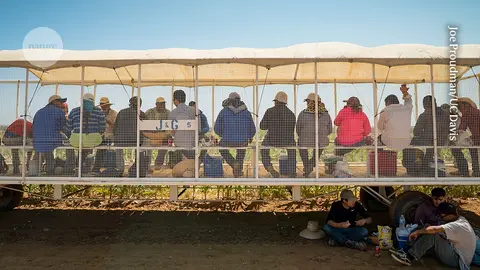
Researchers quantify the economic damage caused by climate-change-related heat stress on the global workforce.

In your Career feature, a PhD student distressed by killing two or three mice daily asks for “suggestions for coping mechanisms” (see Nature https://doi.org/rp77; 2026). The advice includes “getting enough sleep, eating well, exercising” and memorializing the euthanized animals.

Funders, journals and universities must reward the creation of new scientific terrain, not just the efficient mining of old ground.
Digital technologies increasingly shape everyday life. Computer scientist Francine Berman tells Nature that stronger safeguards are required to protect the public interest.

Rabah Arezki and Grégoire Rota-Graziosi (Nature 655, 302–305; 2026) make a valuable point by arguing that intellectual property, alongside geology, shapes critical-mineral supply chains. Their proposal of a patent pool modelled on the Medicines Patent Pool deserves serious consideration.
Showing 108 of 139 stories
Load more storiesGet the top AI news and tools straight to your inbox every week.
Weekly · AI news
Join 15,000+ AI enthusiasts