
Update on array API adoption in scikit-learn
Author: Lucy Liu Note: this blog post is a cross-post of a Quansight Labs blog post.
Scikit-Learn Documentation Blog10 min read
233 stories
Author: Lucy Liu Note: this blog post is a cross-post of a Quansight Labs blog post.
Millions of isolated SQLite databases that scale to zero, run at the edge, and stream changes to your React frontend in realtime.
Per-actor durable queues with a programmable run handler. Ordered processing, request/response, traffic spike absorption, and workflow integration.

Durable, replayable workflows for TypeScript. Sleep, join, race, retry, rollback, and human-in-the-loop with realtime frontend integration.
Two shipping dates, one product line. Radar OSS in January, Radar Cloud in February. Here's the scope, the split, and what won't make it into v1.
User experience (UX) has always been an important focus for scikit-learn. As we know, UX encompasses many aspects, but here we will focus specifically on how easy it is for the user to understand scikit-learn models during development, especially while using tools like jupyter notebooks.
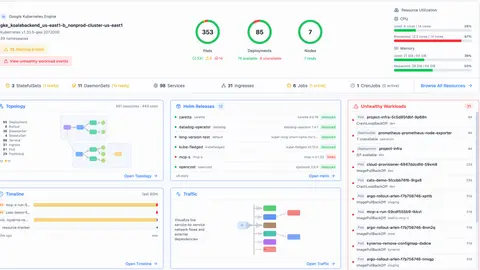
Radar is an open-source Kubernetes UI with a built-in MCP server for AI agents. Run it locally against any kubeconfig or deploy it in-cluster with Helm.
BIO: Virgil Chan is currently a Forward Deployed Engineer - Pre-Sales at Union.ai. Before that, he worked as a consultant in the San Francisco Bay Area, specialising in predictive data analytics and machine learning. Earlier, he studied mathematics before moving into data science.
An analysis of n8n's controversial new pricing model and how it creates vendor lock-in even for self-hosted users. Learn about alternatives and migration strategies.
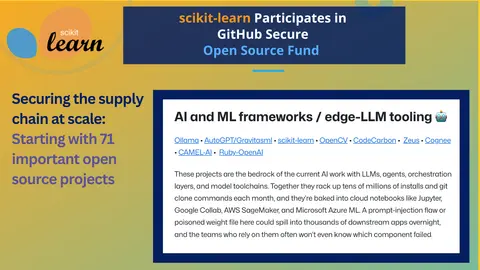
scikit-learn was honored to be selected to participate in Cohort 2 of the GitHub Secure Open Source Fund (OSF) Training Program. Cohort 1 took place earlier in 2025 with 19 projects, and Cohort 2 took place with 52 projects during June 2025.
This blog post has been submitted by Probabl, a sponsor of scikit-learn. The scikit-learn project values educational efforts that build and nurture a strong vibrant open-source community.
Historically, scikit-learn’s API has been divided into public and private. Public API is intended to be used by users, and private API is used internally in scikit-learn to develop new features and estimators.

I built Wealthfolio out of necessity because, honestly, I couldn’t find a decent desktop investment tracker that wasn’t a total mess. Everything out there was ridiculously complicated, stuffed with unnecessary features, and required uploading my financial data to someone else’s servers, usually for…
We are excited to announce the launch of the scikit-learn user survey! Scikit-learn continues to evolve thanks to contributions from its diverse user community. As we plan for future releases, we want to ensure we are focusing on what matters most to you — our users.
We are delighted to announce that scikit-learn has been awarded a grant from the Chan Zuckerberg Initiative (CZI)’s Essential Open Source Software for Science (EOSS) program. This grant is funded by Wellcome Trust.

Time series problems are ubiquitous, from forecasting weather and traffic patterns to understanding economic trends. Bayesian approaches start with an assumption about the data's patterns (prior probability), collecting evidence (e.g., new time series data), and continuously updating that…
Buck2, our extensible, performant, open source build system is designed to make your build experience better.
Showing 233 of 233 stories
You're all caught up.
Get the top AI news and tools straight to your inbox every week.
Weekly · AI news
Join 15,000+ AI enthusiasts