

What Makes an Agent Self-Evolving?
An agent can get better at its job without a new model. It can learn to find useful information, choose the right tool, or check that a task is finished before reporting success.
O'Reilly Radar - AI/ML8 min read
51 stories
An agent can get better at its job without a new model. It can learn to find useful information, choose the right tool, or check that a task is finished before reporting success.

The shift to agentic reality When Git was designed in 2005, Linus Torvalds solved a brilliant problem for humans collaborating over terminal windows by trading line-by-line diffs. Fast-forward to 2026: Autonomous coding agents don’t think in flat text files or line breaks.

Most of today’s AI entrepreneurs and social media enthusiasts are young. AI is the first technology revolution they’ve lived through. They don’t remember how unbelievably exciting it was in the late 1970s to get your own computer, instead of struggling to get time on one of the vast machines…

The following article was originally published on James Shore’s Successful Software blog and is being republished here with the author’s permission. AI is great for making teams faster. But is it sustainable? What about maintainability, burnout, and lock-in?

The following article originally appeared on the Asimov’s Addendum Substack and is being republished here with the author’s permission. This essay is based on my conversation with Demetrios Brinkmann for AAIF Live, recorded before my keynote at AGNTCon + MCPCon North America in San Jose on October…
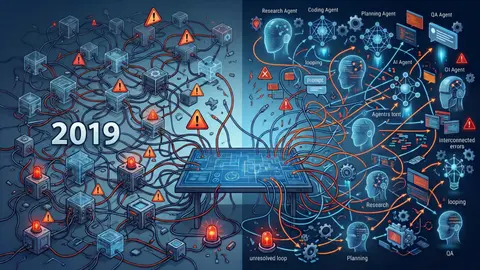
Microservices changed how we build software by breaking large applications into smaller, independently deployable services. That made systems easier to develop and scale, but it introduced a different class of problems: The behavior of the whole system got harder to see.

Remember back in 2019, when you had only a handful of language models to choose from, all with limited context windows? That world is gone, and it feels like a forgotten past.

At our recent Foo Camp, a number of people said something like, “I don’t want someone else’s code any more. I may have my agent take a look at it, but I want to extract just the parts that I want, and may rewrite even those in Rust. It’s just too easy to create just […]

When a new coding model comes out, I want to try it. New releases always carry a promise for me. Maybe it can handle a change that needed too much manual intervention before. Maybe it can find the problem an earlier model kept missing.

This event summary was created by Claude with editing by Tim O’Reilly, based on a transcript of the conversation. Alex Komoroske is the CEO and a cofounder of Common Fabric, a public benefit corporation building the infrastructure for human-centric agentic computing.

The following article was originally published on James Shore’s Successful Software blog and is being republished here with the author’s permission. Is AI making software development faster? Most people I talk to say yes. But how much? What value are you getting for your money?

The following article originally appeared on Addy Osmani’s Elevate blog and is being republished here with the author’s permission. The way that I typically work is I have anywhere between five and ten agents working at the same time in parallel.

The following article originally appeared on Tim O’Brien’s Medium blog and is being republished here with the author’s permission. I think we’re missing something in the conversation about agent security.

I recently used a coding agent to build Task Viewer, a small community helper for IBM Bob that we use internally at IBM. It’s a convenience plug-in to Bob, with no critical production role.

The PHP security incident is now (almost) old news. The timeline looks something like this: In late August, Wiz Research discovered two serious remote code execution vulnerabilities in PHP called PHP2Shell.

The following article was originally published on James Shore’s Successful Software blog and is being republished here with the author’s permission. Software development has emerged as the biggest beneficiary of AI automation.

Spend a week with almost any infrastructure team in 2026 and you’ll see one AI subscription producing five very different results. One engineer opens 40 pull requests before lunch across repositories they haven’t touched in a year.

Created by Claude with light editing by Tim O’Reilly Raffi Krikorian, Mozilla’s CTO, joined Tim O’Reilly at our recent AI Codecon to talk about open source AI. Mozilla, of course, is the nonprofit that helped to define the open source revolution back in the late 1990s.
Showing 18 of 51 stories
Load more storiesGet the top AI news and tools straight to your inbox every week.
Weekly · AI news
Join 15,000+ AI enthusiasts